Question: Case Study 2 TEAM-BASED INCENTIVES: NOT Conner organized his 20 sales reps into 4 teams YOUR USUAL OFFICE of 5 reps. Sales teams would pool
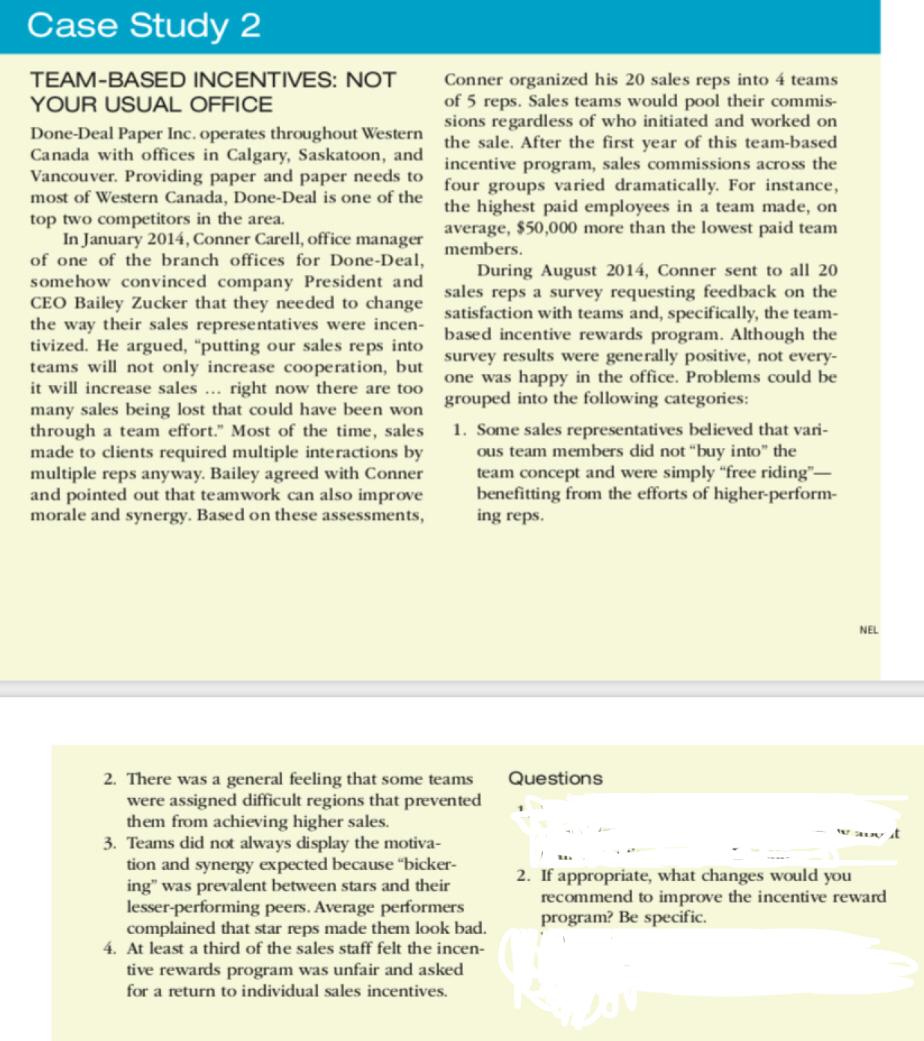
Case Study 2 TEAM-BASED INCENTIVES: NOT Conner organized his 20 sales reps into 4 teams YOUR USUAL OFFICE of 5 reps. Sales teams would pool their commis- sions regardless of who initiated and worked on Done-Deal Paper Inc. operates throughout Western Canada with offices in Calgary, Saskatoon, and the sale. After the first year of this team-based incentive program, sales commissions across the Vancouver. Providing paper and paper needs to four groups varied dramatically. For instance, most of Western Canada, Done-Deal is one of the the highest paid employees in a team made, on top two competitors in the area. average, $50,000 more than the lowest paid team In January 2014, Conner Carell, office manager members. of one of the branch offices for Done-Deal, During August 2014, Conner sent to all 20 somehow convinced company President and CEO Bailey Zucker that they needed to change sales reps a survey requesting feedback on the satisfaction with teams and, specifically, the team- the way their sales representatives were incen- based incentive rewards program. Although the tivized. He argued, "putting our sales reps into teams will not only increase cooperation, but survey results were generally positive, not every- it will increase sales ... right now there are too grouped into the following categories: one was happy in the office. Problems could be many sales being lost that could have been won through a team effort." Most of the time, sales 1. Some sales representatives believed that vari- made to clients required multiple interactions by ous team members did not "buy into the multiple reps anyway. Bailey agreed with Conner team concept and were simply "free riding" and pointed out that teamwork can also improve benefitting from the efforts of higher-perform- morale and synergy. Based on these assessments, ing reps. NEL Questions 2. There was a general feeling that some teams were assigned difficult regions that prevented them from achieving higher sales. 3. Teams did not always display the motiva- tion and synergy expected because "bicker- ing" was prevalent between stars and their lesser-performing peers. Average performers complained that star reps made them look bad. 4. At least a third of the sales staff felt the incen- tive rewards program was unfair and asked for a return to individual sales incentives. 2. If appropriate, what changes would you recommend to improve the incentive reward program? Be specific









 Study Help