







Question: CASE STUDY ACCORDING TO WORK DESIGN APPROACHES, WHICH APPROACH UESD IN THIS CASE? AND EXPLORE AND EVALUATE THE APPROACH. Engineering: Traditional Jobs & Groups High
CASE STUDY
ACCORDING TO WORK DESIGN APPROACHES, WHICH APPROACH UESD IN THIS CASE? AND EXPLORE AND EVALUATE THE APPROACH.
Engineering: Traditional Jobs & Groups
High specification and routinization /Low task variety and autonomy
Reengineering
Revolutionary, radical change in work processes / Integrated jobs, tasks and structures
Motivational: Enriched Jobs
High task variety and autonomy / Feedback of results
Sociotechnical: Self-Managing Teams
Control over total task / Multi-skilled, flexible, and self-regulating
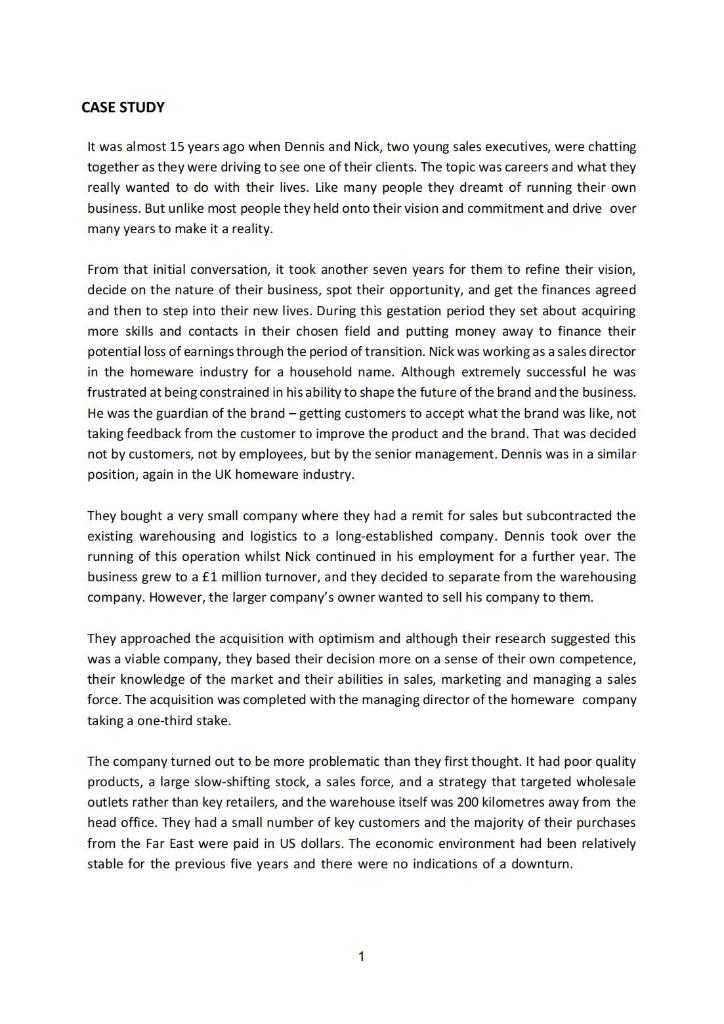
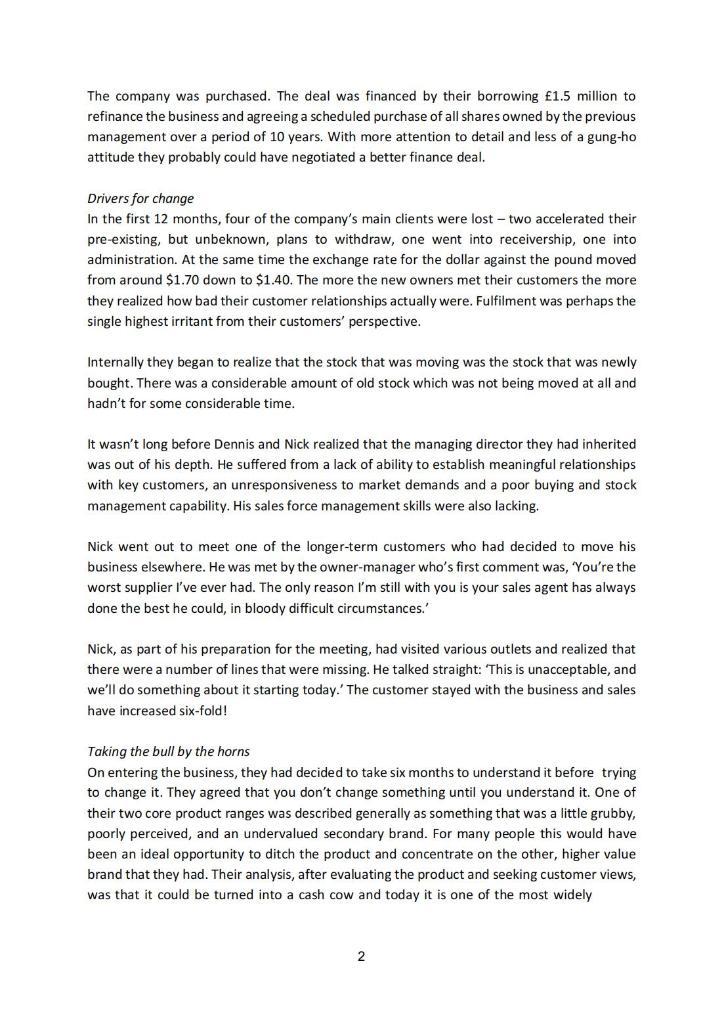
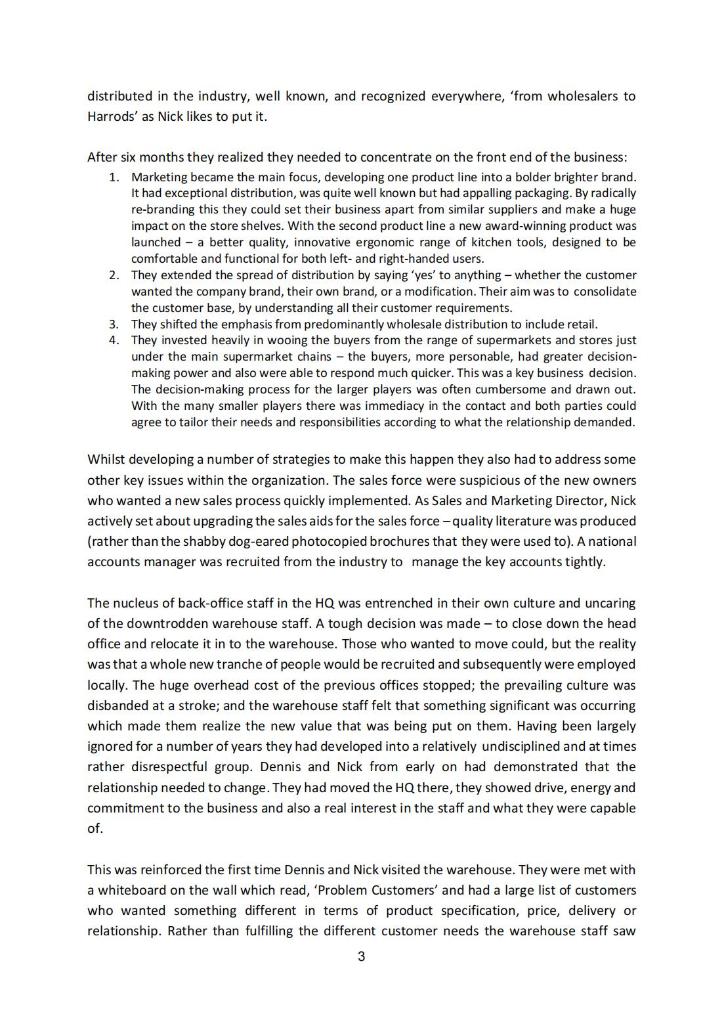
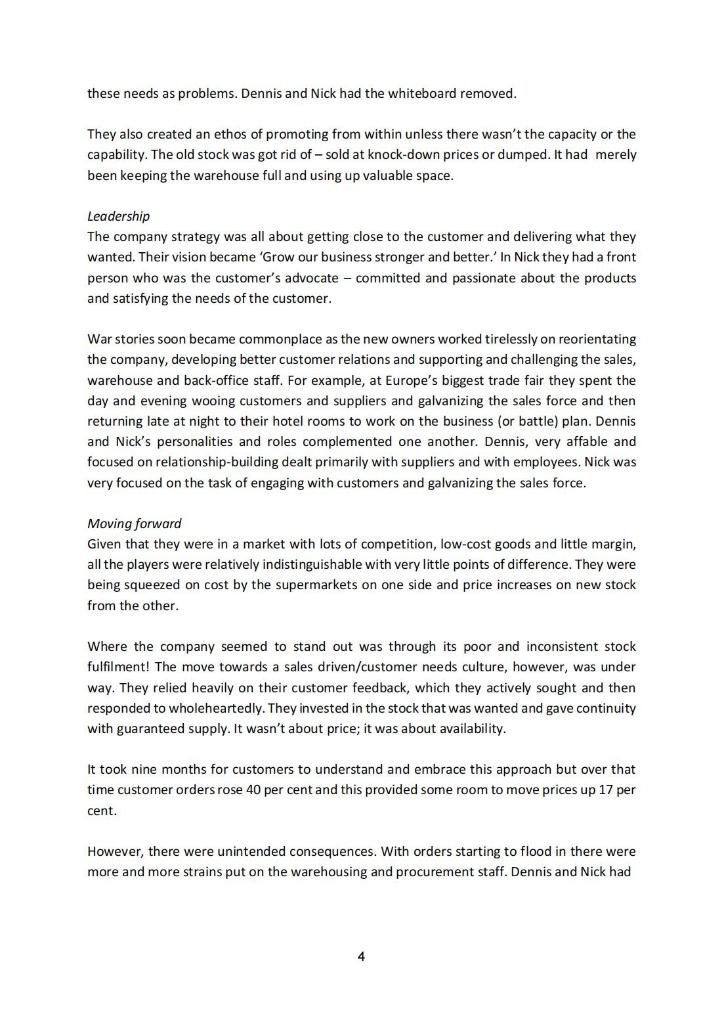
CASE STUDY It was almost 15 years ago when Dennis and Nick, two young sales executives, were chatting together as they were driving to see one of their clients. The topic was careers and what they really wanted to do with their lives. Like many people they dreamt of running their own business. But unlike most people they held onto their vision and commitment and drive over many years to make it a reality. From that initial conversation, it took another seven years for them to refine their vision, decide on the nature of their business, spot their opportunity, and get the finances agreed and then to step into their new lives. During this gestation period they set about acquiring more skills and contacts in their chosen field and putting money away to finance their potential loss of earnings through the period of transition. Nick was working as a sales director in the homeware industry for a household name. Although extremely successful he was frustrated at being constrained in his ability to shape the future of the brand and the business. He was the guardian of the brand - getting customers to accept what the brand was like, not taking feedback from the customer to improve the product and the brand. That was decided not by customers, not by employees, but by the senior management. Dennis was in a similar position, again in the UK homeware industry. They bought a very small company where they had a remit for sales but subcontracted the existing warehousing and logistics to a long-established company. Dennis took over the running of this operation whilst Nick continued in his employment for a further year. The business grew to a 1 million turnover, and they decided to separate from the warehousing company. However, the larger company's owner wanted to sell his company to them. They approached the acquisition with optimism and although their research suggested this was a viable company, they based their decision more on a sense of their own competence, their knowledge of the market and their abilities in sales, marketing and managing a sales force. The acquisition was completed with the managing director of the homeware company taking a one-third stake. The company turned out to be more problematic than they first thought. It had poor quality products, a large slow-shifting stock, a sales force, and a strategy that targeted wholesale outlets rather than key retailers, and the warehouse itself was 200 kilometres away from the head office. They had a small number of key customers and the majority of their purchases from the Far East were paid in US dollars. The economic environment had been relatively stable for the previous five years and there were no indications of a downturn. 1 The company was purchased. The deal was financed by their borrowing 1.5 million to refinance the business and agreeing a scheduled purchase of all shares owned by the previous management over a period of 10 years. With more attention to detail and less of a gung-ho attitude they probably could have negotiated a better finance deal. Drivers for change In the first 12 months, four of the company's main clients were lost - two accelerated their pre-existing, but unbeknown, plans to withdraw, one went into receivership, one into administration. At the same time the exchange rate for the dollar against the pound moved from around $1.70 down to $1.40. The more the new owners met their customers the more they realized how bad their customer relationships actually were. Fulfilment was perhaps the single highest irritant from their customers' perspective. Internally they began to realize that the stock that was moving was the stock that was newly bought. There was a considerable amount of old stock which was not being moved at all and hadn't for some considerable time. It wasn't long before Dennis and Nick realized that the managing director they had inherited was out of his depth. He suffered from a lack of ability to establish meaningful relationships with key customers, an unresponsiveness to market demands and a poor buying and stock management capability. His sales force management skills were also lacking. Nick went out to meet one of the longer-term customers who had decided to move his business elsewhere. He was met by the owner-manager who's first comment was, 'You're the worst supplier I've ever had. The only reason I'm still with you is your sales agent has always done the best he could, in bloody difficult circumstances.' Nick, as part of his preparation for the meeting, had visited various outlets and realized that there were a number of lines that were missing. He talked straight: 'This is unacceptable, and we'll do something about it starting today.' The customer stayed with the business and sales have increased six-fold! Taking the bull by the horns On entering the business, they had decided to take six months to understand it before trying to change it. They agreed that you don't change something until you understand it. One of their two core product ranges was described generally as something that was a little grubby, poorly perceived, and an undervalued secondary brand. For many people this would have been an ideal opportunity to ditch the product and concentrate on the other, higher value brand that they had. Their analysis, after evaluating product and seeking customer views, was that it could be turned into a cash cow and today it is one of the most widely 2 distributed in the industry, well known, and recognized everywhere, 'from wholesalers to Harrods' as Nick likes to put it. After six months they realized they needed to concentrate on the front end of the business: 1. Marketing became the main focus, developing one product line into a bolder brighter brand. It had exceptional distribution, was quite well known but had appalling packaging. By radically re-branding this they could set their business apart from similar suppliers and make a huge impact on the store shelves. With the second product line a new award-winning product was a | launched - a better quality, innovative ergonomic range of kitchen tools, designed to be comfortable and functional for both left- and right-handed users. 2. They extended the spread of distribution by saying 'yes' to anything - whether the customer dibat wanted the company brand, their own brand, or a modification. Their aim was to consolidate the customer base, by y understanding all their customer requirements. 3. They shifted the emphasis from predominantly wholesale distribution to include retail. .. 4. They invested heavily in wooing the buyers from the range of supermarkets and stores just under the main supermarket chains - the buyers, more personable, had greater decision- making power and also were able to respond much quicker. This was a key business decision. The decision-making process for the larger players was often cumbersome and drawn out. With the many smaller players there was immediacy in the contact and both parties could agree to tailor their needs and responsibilities according to what the relationship demanded. Whilst developing a number of strategies to make this happen they also had to address some other key issues within the organization. The sales force were suspicious of the new owners who wanted a new sales process quickly implemented. As Sales and Marketing Director, Nick actively set about upgrading the sales aids for the sales force-quality literature was produced (rather than the shabby dog-eared photocopied brochures that they were used to). A national accounts manager was recruited from the industry to manage the key accounts tightly. The nucleus of back-office staff in the HQ was entrenched in their own culture and uncaring of the downtrodden warehouse staff. A tough decision was made-to close down the head office and relocate it in to the warehouse. Those who wanted to move could, but the reality was that a whole new tranche of people would be recruited and subsequently were employed locally. The huge overhead cost of the previous offices stopped; the prevailing culture was disbanded at a stroke; and the warehouse staff felt that something significant was occurring which made them realize the new value that was being put on them. Having been largely ignored for a number of years they had developed into a relatively undisciplined and at times rather disrespectful group. Dennis and Nick from early on had demonstrated that the relationship needed to change. They had moved the HQ there, they showed drive, energy and commitment to the business and also a real interest in the staff and what they were capable of. This was reinforced the first time Dennis and Nick visited the warehouse. They were met with a whiteboard on the wall which read, 'Problem Customers' and had a large list of customers who wanted something different in terms of product specification, price, delivery or relationship. Rather than fulfilling the different customer needs the warehouse staff saw 3 these needs as problems. Dennis and Nick had the whiteboard removed. They also created an ethos of promoting from within unless there wasn't the capacity or the capability. The old stock was got rid of - sold at knock-down prices or dumped. It had merely been keeping the warehouse full and using up valuable space. Leadership The company strategy was all about getting close to the customer and delivering what they wanted. Their vision became 'Grow our business stronger and better.' In Nick they had a front person who was the customer's advocate - committed and passionate about the products and satisfying the needs of the customer. War stories soon became commonplace as the new owners worked tirelessly on reorientating the company, developing better customer relations and supporting and challenging the sales, warehouse and back-office staff. For example, at Europe's biggest trade fair they spent the day and evening wooing customers and suppliers and galvanizing the sales force and then returning late at night to their hotel rooms to work on the business (or battle) plan. Dennis and Nick's personalities and roles complemented one another. Dennis, very affable and focused on relationship-building dealt primarily with suppliers and with employees. Nick was very focused on the task of engaging with customers and galvanizing the sales force. Moving forward Given that they were in a market with lots of competition, low-cost goods and little margin, all the players were relatively indistinguishable with very little points of difference. They were being squeezed on cost by the supermarkets on one side and price increases on new stock from the other. Where the company seemed to stand out was through its poor and inconsistent stock fulfilment! The move towards a sales driven/customer needs culture, however, was under way. They relied heavily on their customer feedback, which they actively sought and then responded to wholeheartedly. They invested in the stock that was wanted and gave continuity with guaranteed supply. It wasn't about price; it was about availability. It took nine months for customers to understand and embrace this approach but over that time customer orders rose 40 per cent and this provided some room to move prices up 17 per cent. However, there were unintended consequences. With orders starting to flood in there were more and more strains put on the warehousing and procurement staff. Dennis and Nick had 4 put the majority of their efforts into the customer-facing front end. When orders flooded in, the back end collapsed. The sales effort had created real success and orders were climbing month on month. However, the warehouse was falling behind in its fulfilment. Indeed, events came to a head and Nick one day dramatically took his whole sales force off the road and brought them into the warehouse to pick orders. They had inherited a nightmare in the warehouse - there were 36,000 square feet and 2,000 active stock lines but no stock management system. They had tried appointing a stock manager from within but there was no real expertise in the company, so they externally recruited a capable operations manager, but it still took 18 months to produce an efficient and effective system. Stakeholders Staff were treated as colleagues with an open-door policy and ability to contact managers at any time. Significant policy changes were communicated early, and discussions were held about significant company issues and any customers' needs. The sales force is involved with setting the sales plan. The plan is agreed using a bottom-up process with all the sales force engaged in agreeing their targets with their managers and the final sales plan is endorsed by them. Other staff ownership is connected into the customer supply chain developing a teamwork ethic where there is no divide or barriers between sales force, warehouse staff and administration. As one of the staff said, 'It's not just about moving boxes, it's about making our customers feel they've chosen the right company to supply them.' The small number of private investors is clearly a crucial stakeholder group, with most dealings and the bulk of communication through the major shareholder who heads the group of investors. As Chairman and non-executive director, Paul takes the role as the fulcrum. He is highly credible, financially minded and trusted by both the managers and the other shareholders. Whilst Dennis and Nick take full responsibility for day-to-day operations, the Chairman is fully consulted at critical stages in the yearly cycle. Although primarily 'hands off", the Chairman, as the major investor, is clearly very interested in how the business has been running and was able to identify certain key issues which needed rectifying. The static stock lines were a case in point. He was clear that all that was being done with these lines was they were being housed and heated and dusted from time to time. Whatever their book value they needed to be sold, whatever the price. Likewise, he identified the poor product literature as something which just shouldn't be put up with. Although funds were short the message was clear - invest in new marketing literature and it will repay the investment. a thing that plays a central or essential role in an activity, event, or situation 5 One of the things the Chairman brought was the role modelling of identifying key business issues, assessing the risk between taking or not taking action, and then making the decision and getting on with it. Business is about taking risks and both Dennis and Nick began to see that it's better to take a qualified risk, make a decision and live with the consequences, rather than letting things continue in a sub-optimal state. 'If you're not growing then you're dying,' Paul would say. Having chosen to invest in the company he was focused on making it profitable in the short term and a viable business in the medium to long term. He worked at arm's length with Dennis and Nick, believing that they were there to manage suppliers, customers and all the operations in between, seeing one of his key roles as being to question and challenge. Coming from a finance and banking background he was focused on getting a good return on sales and establishing a higher profitability relatively quickly. That did not necessarily mean increasing sales but stabilizing them whilst developing excellent customer relationships and good products and ensuring that operations were cost-effective. Working on the business plan with Dennis and Nick they decided on a few key performance indicators, set realistic but stretching targets, and then established good monitoring processes. Paul wanted to give the work back to the people'-enabling them to do the job they're best at, matching people and their skills to the roles critical for business success. He played to people's strengths by giving them the leeway and headroom to get on with the job whilst mitigating their weaknesses by getting others to take on those aspects of the job. Paul's entrepreneurial style was encapsulated by the desire to make decisions, take action, review progress and, if necessary, take remedial action. Although reviews and reflection were built into the process, Paul believed that the company needed to capitalize on opportunities when they came along. Mistakes were perhaps inevitable, but if you create an open culture and if everyone learns from the mistakes then this will lead to better performance. Paul believed more in evolutionary change than coming into a business and causing maximum upheaval and distress. Focusing on performance, reducing blockages, those people who felt they had a contribution to make would stay and they would contribute; those who didn't fit the culture would leave. Paul also believed in more emergent change rather than overly planned change. Yes, there was a business plan, which was monitored, and questions asked if there were deviations. But there was also a culture established which sought opportunities when they arose. The failure of a competing business led the very same day to establishing contact to buy them out. 6 Paul was concerned to maintain the momentum for growth within the company, whilst at the same time not wishing to lose the entrepreneurial culture that Dennis and Nick had established. 7
Step by Step Solution
There are 3 Steps involved in it
1 Expert Approved Answer
Step: 1 Unlock

Question Has Been Solved by an Expert!
Get step-by-step solutions from verified subject matter experts
Step: 2 Unlock
Step: 3 Unlock
 Study Help