







Question: Case Study: Compliance with Tax Laws in E - Commerce Businesses In recent years, the rise of e - commerce has revolutionized the way businesses
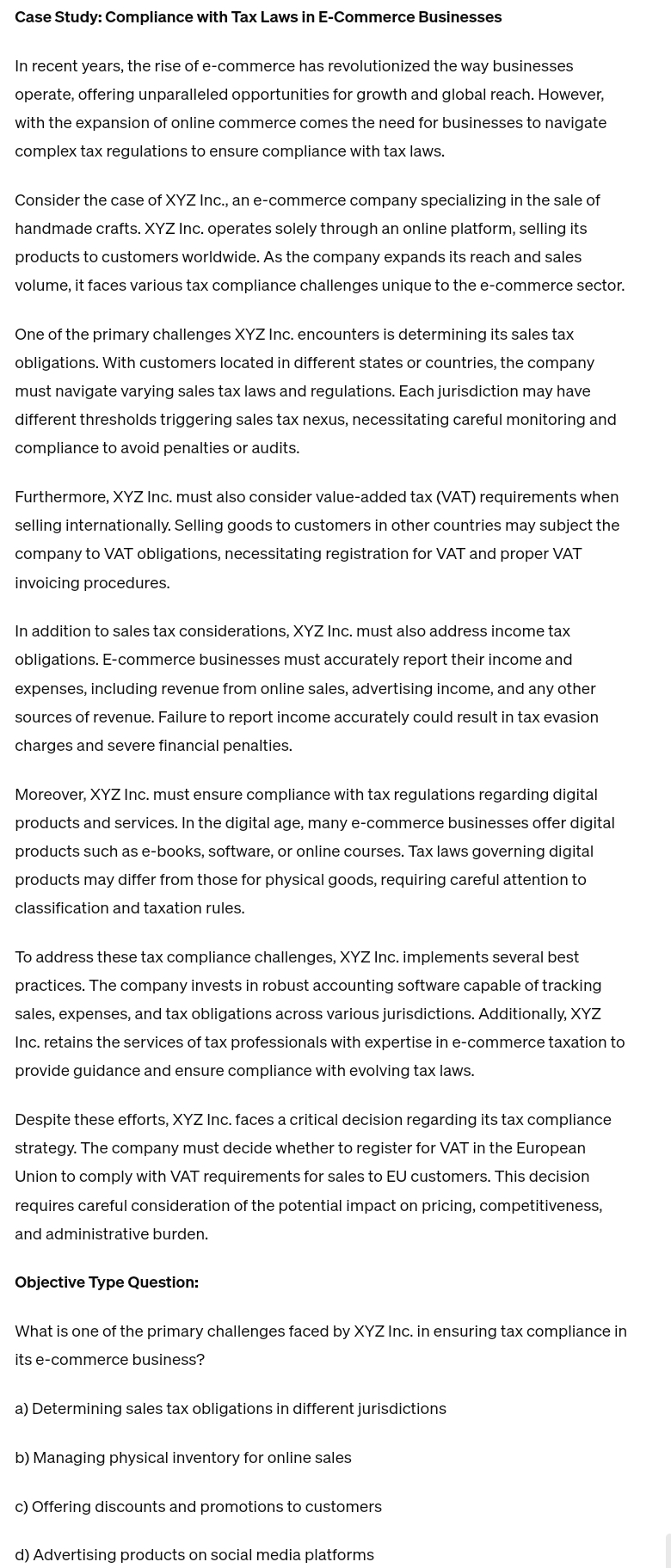
Case Study: Compliance with Tax Laws in ECommerce Businesses
In recent years, the rise of ecommerce has revolutionized the way businesses operate, offering unparalleled opportunities for growth and global reach. However, with the expansion of online commerce comes the need for businesses to navigate complex tax regulations to ensure compliance with tax laws.
Consider the case of XYZ Inc., an ecommerce company specializing in the sale of handmade crafts. XYZ Inc. operates solely through an online platform, selling its products to customers worldwide. As the company expands its reach and sales volume, it faces various tax compliance challenges unique to the ecommerce sector.
One of the primary challenges XYZ Inc. encounters is determining its sales tax obligations. With customers located in different states or countries, the company must navigate varying sales tax laws and regulations. Each jurisdiction may have different thresholds triggering sales tax nexus, necessitating careful monitoring and compliance to avoid penalties or audits.
Furthermore, XYZ Inc. must also consider valueadded tax VAT requirements when selling internationally. Selling goods to customers in other countries may subject the company to VAT obligations, necessitating registration for VAT and proper VAT invoicing procedures.
In addition to sales tax considerations, XYZ Inc. must also address income tax obligations. Ecommerce businesses must accurately report their income and expenses, including revenue from online sales, advertising income, and any other sources of revenue. Failure to report income accurately could result in tax evasion charges and severe financial penalties.
Moreover, XYZ Inc. must ensure compliance with tax regulations regarding digital products and services. In the digital age, many ecommerce businesses offer digital products such as ebooks, software, or online courses. Tax laws governing digital products may differ from those for physical goods, requiring careful attention to classification and taxation rules.
To address these tax compliance challenges, XYZ Inc. implements several best practices. The company invests in robust accounting software capable of tracking sales, expenses, and tax obligations across various jurisdictions. Additionally, XYZ Inc. retains the services of tax professionals with expertise in ecommerce taxation to provide guidance and ensure compliance with evolving tax laws.
Despite these efforts, XYZ Inc. faces a critical decision regarding its tax compliance strategy. The company must decide whether to register for VAT in the European Union to comply with VAT requirements for sales to EU customers. This decision requires careful consideration of the potential impact on pricing, competitiveness, and administrative burden.
Objective Type Question:
What is one of the primary challenges faced by XYZ Inc. in ensuring tax compliance in its ecommerce business?
a Determining sales tax obligations in different jurisdictions
b Managing physical inventory for online sales
c Offering discounts and promotions to customers
d Advertising products on social media platforms
Step by Step Solution
There are 3 Steps involved in it
1 Expert Approved Answer
Step: 1 Unlock

Question Has Been Solved by an Expert!
Get step-by-step solutions from verified subject matter experts
Step: 2 Unlock
Step: 3 Unlock
 Study Help