







Question: CASE STUDY Constratas Construction Company Constratas is a medium-size construction company that specializes in the detail design and construction of bridges that combine steel and
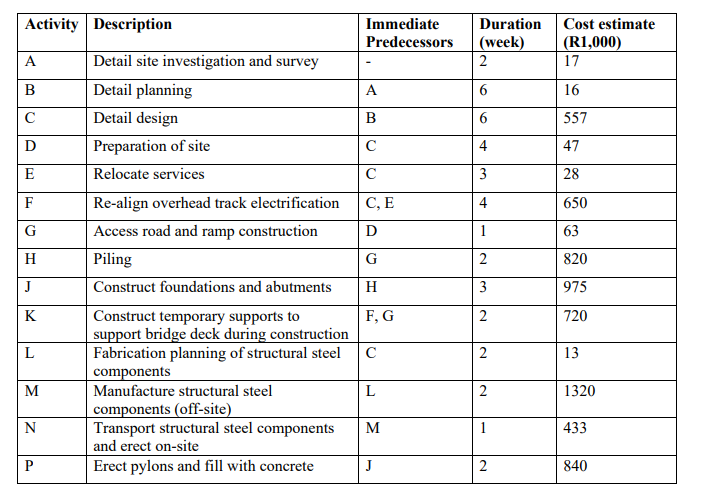
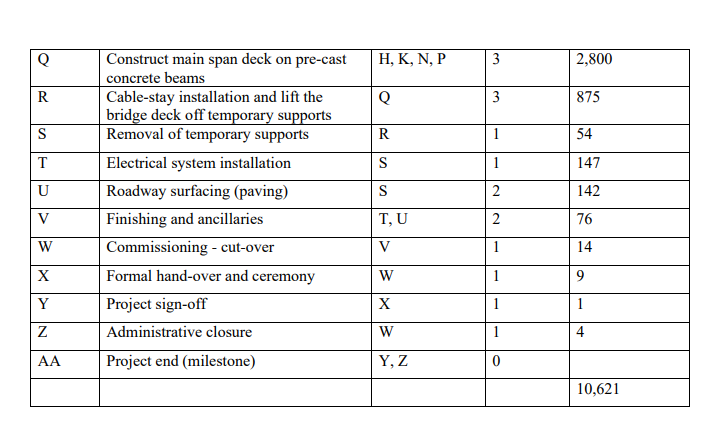
CASE STUDY Constratas Construction Company Constratas is a medium-size construction company that specializes in the detail design and construction of bridges that combine steel and concrete elements. The Marketing Division is responsible for the first phase in the Constratas project management methodology that includes the identification of an opportunity as well as an assessment of the alignment of the opportunity with strategic guidelines. An opportunity has recently been identified by Marketing: A well-known bridge architect has just completed the concept design of a cable-stayed bridge, intended to cross over electrified railway lines. The senior managers are excited about this opportunity, and this marks the end of the first phase. Constratas now enters the second phasethe Estimating phase. This phase includes site visits by the estimating team, review of resources and skills available, a more detailed risk review than the one done during the first phase, as well as a preliminary plan for detail design, procurement, logistics, and construction. The deliverable of this phase is an initial presentation to the customer. The third phase (Pre-contract phase) should lead to a contract signed by both Constratas and the customer. In Table, Activities A and B are required for preparing a bid for building the bridge and form part of the second phase. The project manager who leads the estimating team sets up a number of meetings with stakeholders. First meetings were held with the bridge architect and structural engineers who produced the concept design in order to acquaint the estimating team with the design. The estimating team then meets with subcontractors who might be selected for piling and for fabrication of steel components. The columns initial duration estimate and initial cost estimate of Table are completed subsequent to these meetings. The RFP (request for proposal) for building the bridge indicates acceptance of the plan by the rail authority as one of the criteria for the selection of a contractor. At this stage it is evident that, from the start of Activity D until the completion of Activity S, the operation of one of the railway lines will be impaired, and a preliminary, informal discussion with someone from the rail authority indicates that this might be acceptable. On a subsequent meeting with the rail authorities, concern is expressed about the planned 17 weeks of impaired operation and Constratas is requested to reconsider the duration of this period. The estimating team now suggests the following possibilities: The duration of Activity N could be reduced from 1 week to half a week by hiring additional trucks. The additional cost would be R33,000. An alternative subcontractor for piling has been approached. This subcontractor indicates that it would be able to halve the time of Activity H and provides a first round cost indication of R960,000 for such an expedited piling operation. 3 Two steps to shorten the duration of Activity D are possible: First, additional temporary workers could be employed. This would reduce the duration to 3 weeks and increase the cost to R147,000. Second, a team of workers highly skilled in this type of procedure (with their equipment) could be temporarily reallocated from another site to this project, and the estimating team believes that adding this team to the original team and temporary workers would lead to completion of the work within 1 week. The project manager of the other project indicates that such a reallocation would cause him to forfeit an incentive fee of R150,000 for finishing his project early. The two project managers agree that, should the reallocation be made, the value of incentive fee would be booked as a cost against the cable-stayed bridge project and transferred to the other project. The duration of Activity F can also be reduced. A step that would reduce duration to 3 weeks would increase the cost to R730,000 while a further step to reduce duration to 2 weeks would bring the total cost of this activity to R820,000. An increase of expenditures on Activity Q to a total of R2,929,000 would reduce the duration of this activity to 2 weeks.CASE STUDY Constratas Construction Company Constratas is a medium-size construction company that specializes in the detail design and construction of bridges that combine steel and concrete elements. The Marketing Division is responsible for the first phase in the Constratas project management methodology that includes the identification of an opportunity as well as an assessment of the alignment of the opportunity with strategic guidelines. An opportunity has recently been identified by Marketing: A well-known bridge architect has just completed the concept design of a cable-stayed bridge, intended to cross over electrified railway lines. The senior managers are excited about this opportunity, and this marks the end of the first phase. Constratas now enters the second phasethe Estimating phase. This phase includes site visits by the estimating team, review of resources and skills available, a more detailed risk review than the one done during the first phase, as well as a preliminary plan for detail design, procurement, logistics, and construction. The deliverable of this phase is an initial presentation to the customer. The third phase (Pre-contract phase) should lead to a contract signed by both Constratas and the customer. In Table, Activities A and B are required for preparing a bid for building the bridge and form part of the second phase. The project manager who leads the estimating team sets up a number of meetings with stakeholders. First meetings were held with the bridge architect and structural engineers who produced the concept design in order to acquaint the estimating team with the design. The estimating team then meets with subcontractors who might be selected for piling and for fabrication of steel components. The columns initial duration estimate and initial cost estimate of Table are completed subsequent to these meetings. The RFP (request for proposal) for building the bridge indicates acceptance of the plan by the rail authority as one of the criteria for the selection of a contractor. At this stage it is evident that, from the start of Activity D until the completion of Activity S, the operation of one of the railway lines will be impaired, and a preliminary, informal discussion with someone from the rail authority indicates that this might be acceptable. On a subsequent meeting with the rail authorities, concern is expressed about the planned 17 weeks of impaired operation and Constratas is requested to reconsider the duration of this period. The estimating team now suggests the following possibilities: The duration of Activity N could be reduced from 1 week to half a week by hiring additional trucks. The additional cost would be R33,000. An alternative subcontractor for piling has been approached. This subcontractor indicates that it would be able to halve the time of Activity H and provides a first round cost indication of R960,000 for such an expedited piling operation. 3 Two steps to shorten the duration of Activity D are possible: First, additional temporary workers could be employed. This would reduce the duration to 3 weeks and increase the cost to R147,000. Second, a team of workers highly skilled in this type of procedure (with their equipment) could be temporarily reallocated from another site to this project, and the estimating team believes that adding this team to the original team and temporary workers would lead to completion of the work within 1 week. The project manager of the other project indicates that such a reallocation would cause him to forfeit an incentive fee of R150,000 for finishing his project early. The two project managers agree that, should the reallocation be made, the value of incentive fee would be booked as a cost against the cable-stayed bridge project and transferred to the other project. The duration of Activity F can also be reduced. A step that would reduce duration to 3 weeks would increase the cost to R730,000 while a further step to reduce duration to 2 weeks would bring the total cost of this activity to R820,000. An increase of expenditures on Activity Q to a total of R2,929,000 would reduce the duration of this activity to 2 weeks.
QUESTIONS 1. Draw the project networks (AON) showing the duration, the early start and finish, later start and later finish for each activity, and the critical path and its total budget. (Marks: 30) 2. Compile a list showing the reduced periods for impairment of the rail operation and the associated additional costs. (Marks: 15) 3. Compile a short about the role that the project management team may play to deal with the risk of not meeting the committed due date.
Activity Description Immediate Predecessors Duration (week) 2 Cost estimate (R1,000) 17 A B A 6 16 B 6 557 D 4 47 E 3 28 F 4 650 C, E D G 1 63 H Detail site investigation and survey Detail planning Detail design Preparation of site Relocate services Re-align overhead track electrification Access road and ramp construction Piling Construct foundations and abutments Construct temporary supports to support bridge deck during construction Fabrication planning of structural steel components Manufacture structural steel components (off-site) Transport structural steel components and erect on-site Erect pylons and fill with concrete G N 820 J H 3 975 K F G N 720 L 2 13 M L 2 1320 N M 1 433 P J 2 840 Q H, K, N, P 3 2,800 R Q 3 875 S R 1 54 T S 1 147 U S 2 142 V Construct main span deck on pre-cast concrete beams Cable-stay installation and lift the bridge deck off temporary supports Removal of temporary supports Electrical system installation Roadway surfacing (paving) Finishing and ancillaries Commissioning - cut-over Formal hand-over and ceremony Project sign-off Administrative closure Project end (milestone) T, U 2 76 W V 1 14 X W 1 9 Y X 1 1 Z W 1 4 AA Y, Z 0 10,621Step by Step Solution
There are 3 Steps involved in it

Get step-by-step solutions from verified subject matter experts
 Study Help