







Question: CASE STUDY: Gnomial Functions, Inc. (GFI), is a medium-sized consulting firm in San Francisco that specializes in developing various forecasts of product demand, sales, consumption,
CASE STUDY:
Gnomial Functions, Inc. (GFI), is a medium-sized consulting firm in San Francisco that specializes in developing various forecasts of product demand, sales, consumption, or other information for its clients. To a lesser degree, it also has developed ongoing models for internal use by its clients. When contacted by a potential client, GFI usually establishes a basic work agreement with the firms top management that sets out the general goals of the end product, primary contact personnel in both firms, and an outline of the projects overall scope (including any necessary time constraints for intermediate and final completion and a rough price estimate for the contract).
Following this step, a team of GFI personnel is assembled to determine the most appropriate forecasting technique and develop a more detailed work program to be used as the basis for final contract negotiations. This team, which can vary in size according to the scope of the project and the clients needs, will perform the tasks that are established by the work program in conjunction with any personnel from the client firm who would be included in the team.
Recently, GFI was contacted by a rapidly growing regional firm that manufactures, sells, and installs active solar waterheating equipment for commercial and residential applications. DynaSol Industries has seen its sales increase by more than 200 percent during the past 18 months, and it wishes to obtain a reliable estimate of its sales during the next 18 months.
The company management expects that sales should increase substantially because of competing energy costs, tax-credit availability, and fundamental shifts in the attitudes of the regional population toward so-called exotic solar systems. The company also faces increasing competition within this burgeoning market. This situation requires major strategic decisions concerning the companys future. When GFI was contacted, DynaSol almost had reached the manufacturing capacity of its present facility, and if it wishes to continue growing with the market, it must expand either by relocating to a new facility entirely or by developing a second manufacturing location. Each involves certain known costs, and each has its advantages and disadvantages. The major unknown factors as far as management is concerned are growth of the overall market for this type of product and how large a market share the company would be able to capture.
** Once you read the case, you will answer the following questions in order to analyze the case. Your answers need to be well thought out and provide information that is related to continued theory and practice that is included within the text.
Text: Service Management: Operations, Strategy, Information Technology (Ninth Edition)
Q: Assume that you are a member of DynaSol's small marketing department and that the contract negotiations with GFI have fallen through irrevocably. The company's top management has decided to use your expertise to develop a forecast for the next 6 months (and, perhaps for the 6-month period following that one as well), because it must have some information on which to base a decision about expanding its operations. Develop such a forecast, and for the benefit of top management, note any reservations or qualifications you feel are vital to its understanding and use of the information.
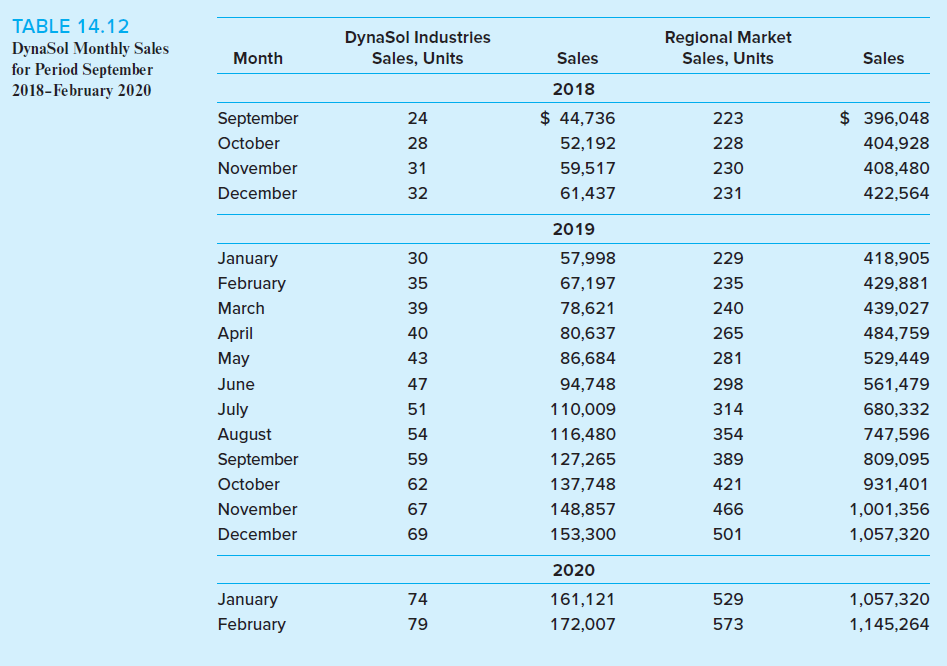
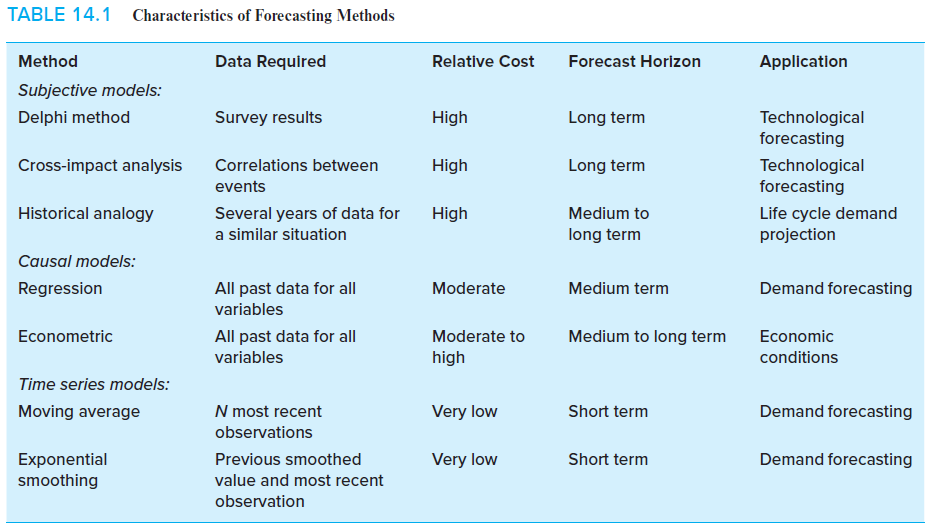
** Please answer from a more "choosing the right forecasting method and the criteria for selecting that method" vs. a mathematical perspective.
SOME EXAMPLES OF METHODS:
Step by Step Solution
There are 3 Steps involved in it

Get step-by-step solutions from verified subject matter experts
 Study Help