



Question: Ch 17 12. Statement evaluation. Determine whether each of the following statements is (i)always true, (ii) sometimes true, or (iii) never true. For those that
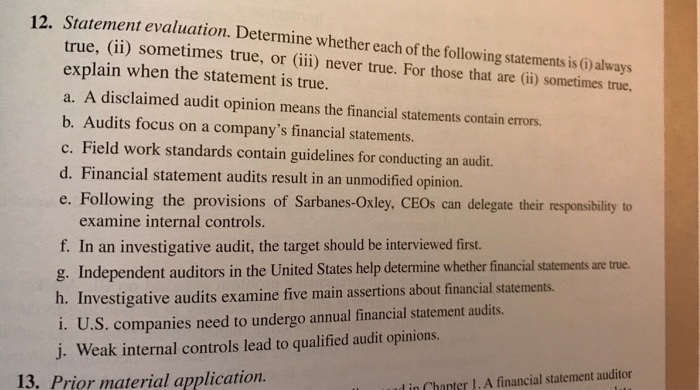
12. Statement evaluation. Determine whether each of the following statements is (i)always true, (ii) sometimes true, or (iii) never true. For those that are () sometimes true explain when the statement is true. a. A disclaimed audit opinion means the financial statements contain errors. b. Audits focus on a company's financial statements. c. Field work standards contain guidelines for conducting an audit. d. Financial statement audits result in an unmodified opinion. e. Following the provisions of Sarbanes-Oxley, CEOs can delegate their responsibility to examine internal controls. f. In an investigative audit, the target should be interviewed first. g. Independent auditors in the United States help determine whether financial statements are true h. Investigative audits examine five main assertions about financial statements. i. U.s. companies need to undergo annual financial statement audits. j. Weak internal controls lead to qualified audit opinions. 13. Prior material application. in Chanter I. A financial statement auditor
Step by Step Solution
There are 3 Steps involved in it

Get step-by-step solutions from verified subject matter experts