







Question: Challenge question. In the chapter text, we dealt exclusively with a single lump sum, but often we may be looking at several lump-sum values simultaneously.
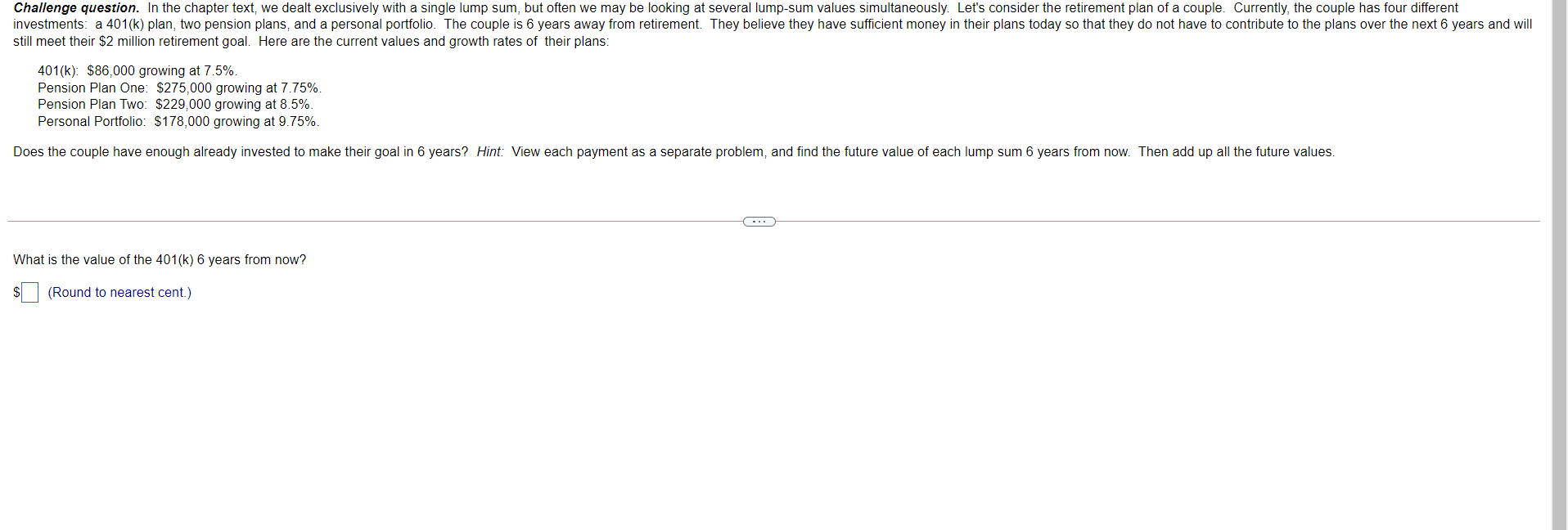
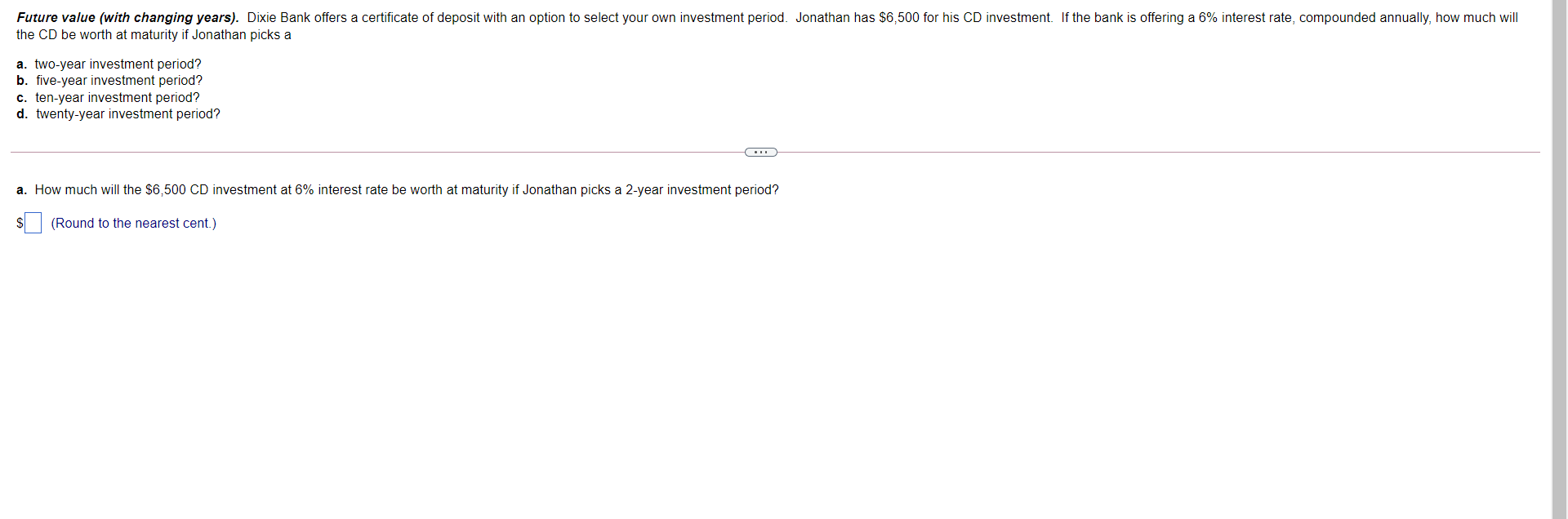
Challenge question. In the chapter text, we dealt exclusively with a single lump sum, but often we may be looking at several lump-sum values simultaneously. Let's consider the retirement plan of a couple. Currently, the couple has four different investments: a 401(k) plan, two pension plans, and a personal portfolio. The couple is 6 years away from retirement. They believe they have sufficient money in their plans today so that they do not have to contribute to the plans over the next 6 years and will still meet their $2 million retirement goal. Here are the current values and growth rates of their plans: 401(k): $86,000 growing at 7.5% Pension Plan One: $275,000 growing at 7.75%. Pension Plan Two: $229,000 growing at 8.5%. Personal Portfolio: $ 178,000 growing at 9.75%. Does the couple have enough already invested to make their goal in 6 years? Hint: View each payment as a separate problem, and find the future value of each lump sum 6 years from now. Then add up all the future values. ... What is the value of the 401(k) 6 years from now? $ (Round to nearest cent.) Future value (with changing years). Dixie Bank offers a certificate of deposit with an option to select your own investment period. Jonathan has $6,500 for his CD investment. If the bank is offering a 6% interest rate, compounded annually, how much will the CD be worth at maturity if Jonathan picks a a. two-year investment period? b. five-year investment period? c. ten-year investment period? d. twenty-year investment period? I a. How much will the $6,500 CD investment at 6% interest rate be worth at maturity if Jonathan picks a 2-year investment period? (Round to the nearest cent.)
Step by Step Solution
There are 3 Steps involved in it

Get step-by-step solutions from verified subject matter experts
 Study Help