







Question: Chapter 12. Cash Flow Estimation and Risk Analysis This spreadsheet model is designed to be used in conjunction with the chapter's integrated case and the
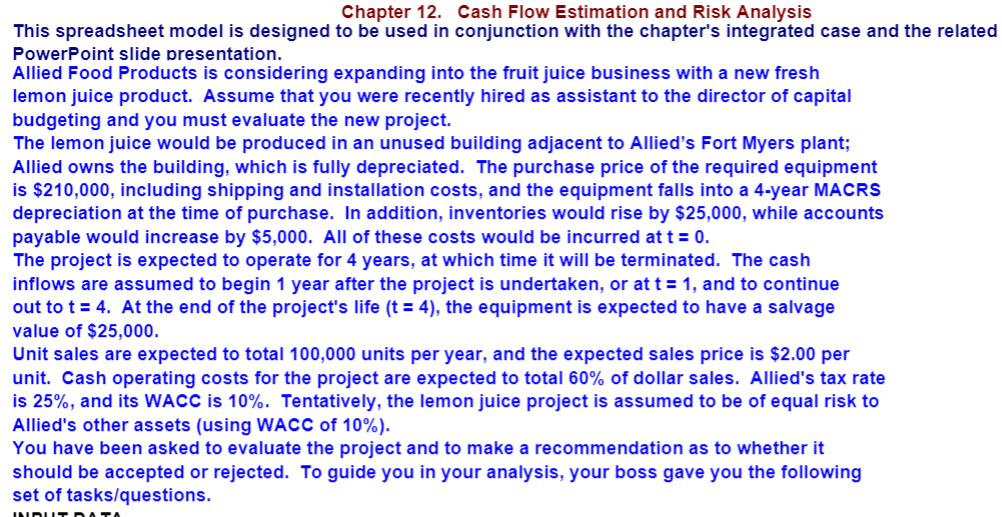
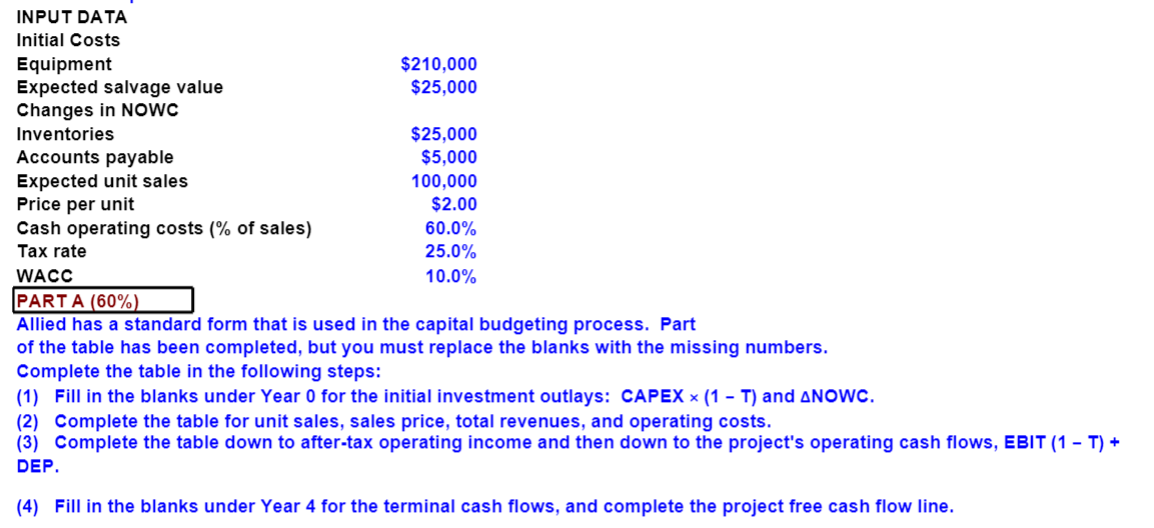
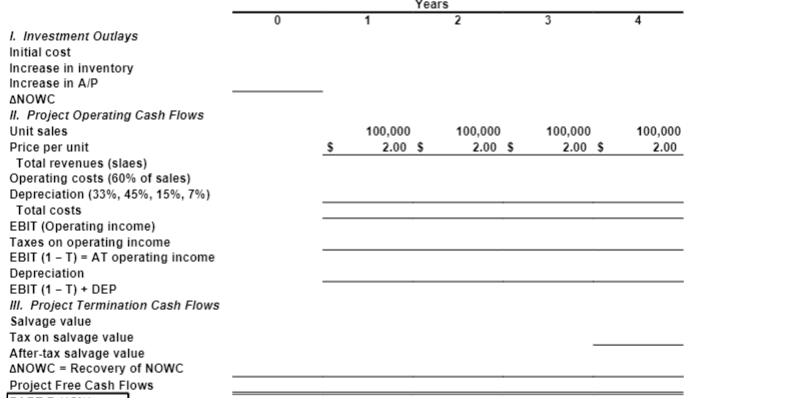
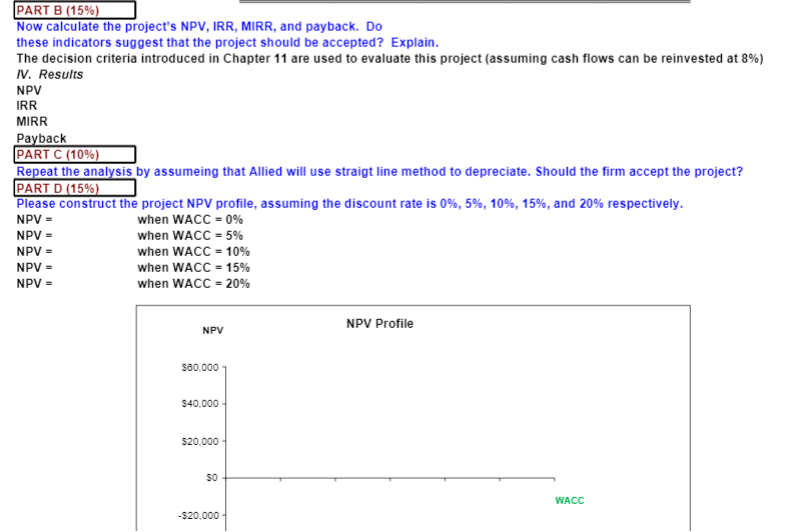
Chapter 12. Cash Flow Estimation and Risk Analysis This spreadsheet model is designed to be used in conjunction with the chapter's integrated case and the related PowerPoint slide presentation. Allied Food Products is considering expanding into the fruit juice business with a new fresh lemon juice product. Assume that you were recently hired as assistant to the director of capital budgeting and you must evaluate the new project. The lemon juice would be produced in an unused building adjacent to Allied's Fort Myers plant; Allied owns the building, which is fully depreciated. The purchase price of the required equipment is $210,000, including shipping and installation costs, and the equipment falls into a 4-year MACRS depreciation at the time of purchase. In addition, inventories would rise by $25,000, while accounts payable would increase by $5,000. All of these costs would be incurred at t = 0. The project is expected to operate for 4 years, at which time it will be terminated. The cash inflows are assumed to begin 1 year after the project is undertaken, or at t = 1, and to continue out to t= 4. At the end of the project's life (t = 4), the equipment is expected to have a salvage value of $25,000. Unit sales are expected to total 100,000 units per year, and the expected sales price is $2.00 per unit. Cash operating costs for the project are expected to total 60% of dollar sales. Allied's tax rate is 25%, and its WACC is 10%. Tentatively, the lemon juice project is assumed to be of equal risk to Allied's other assets (using WACC of 10%). You have been asked to evaluate the project and to make a recommendation as to whether it should be accepted or rejected. To guide you in your analysis, your boss gave you the following set of tasks/questions. INPUT DATA Initial Costs Equipment $210,000 Expected salvage value $25,000 Changes in NOWC Inventories $25,000 Accounts payable $5,000 Expected unit sales 100,000 Price per unit $2.00 Cash operating costs (% of sales) 60.0% Tax rate 25.0% WACC 10.0% PARTA (60%) Allied has a standard form that is used in the capital budgeting process. Part of the table has been completed, but you must replace the blanks with the missing numbers. Complete the table in the following steps: (1) Fill in the blanks under Year 0 for the initial investment outlays: CAPEX
Step by Step Solution
There are 3 Steps involved in it

Get step-by-step solutions from verified subject matter experts
 Study Help