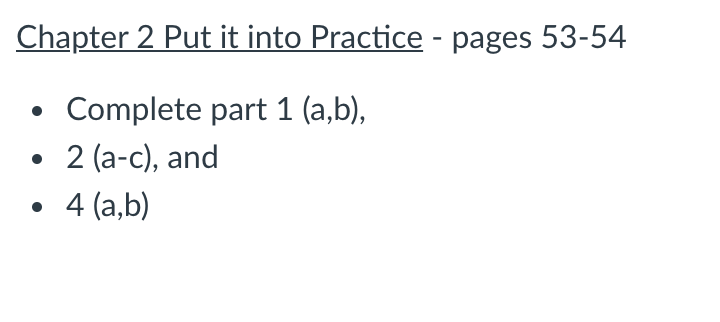
Question: Chapter 2 Put it into Practice - pages 53-54 O Complete part 1 (a,b), 2 (a-c), and 4 (a,b) O ERE Test Your Knowledge 1.
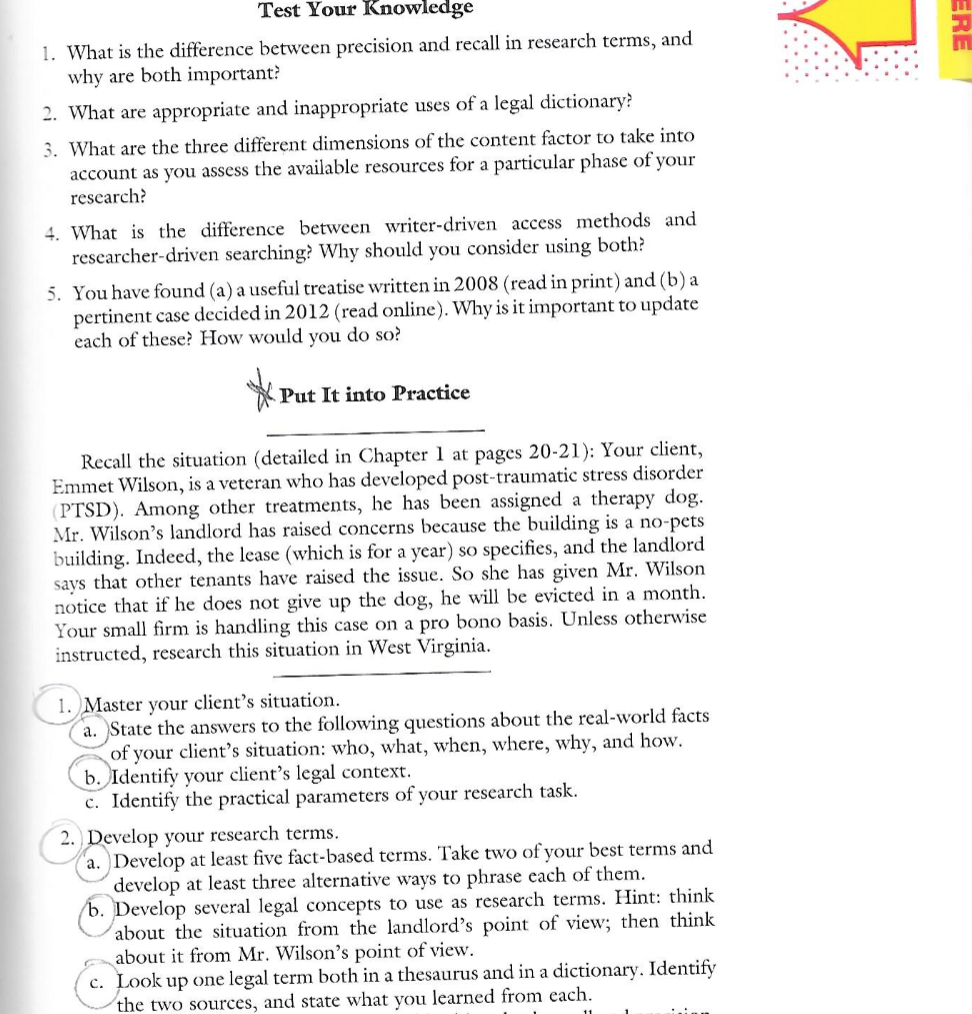
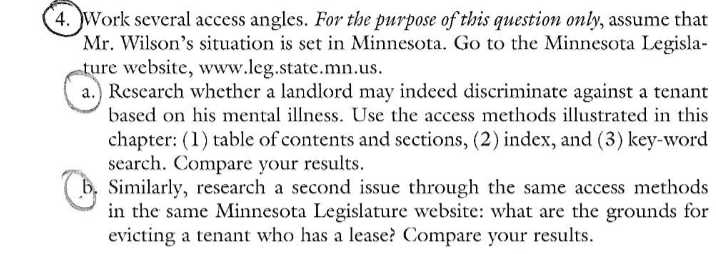
Chapter 2 Put it into Practice - pages 53-54 O Complete part 1 (a,b), 2 (a-c), and 4 (a,b) O ERE Test Your Knowledge 1. What is the difference between precision and recall in research terms, and why are both important? 2. What are appropriate and inappropriate uses of a legal dictionary? 3. What are the three different dimensions of the content factor to take into account as you assess the available resources for a particular phase of your research? 4. What is the difference between writer-driven access methods and researcher-driven searching? Why should you consider using both? 5. You have found (a) a useful treatise written in 2008 (read in print) and (b) a pertinent case decided in 2012 (read online). Why is it important to update each of these? How would you do so? Put It into Practice Recall the situation (detailed in Chapter 1 at pages 20-21): Your client, Emmet Wilson, is a veteran who has developed post-traumatic stress disorder (PTSD). Among other treatments, he has been assigned a therapy dog. Mr. Wilson's landlord has raised concerns because the building is a no-pets building. Indeed, the lease (which is for a year) so specifies, and the landlord says that other tenants have raised the issue. So she has given Mr. Wilson notice that if he does not give up the dog, he will be evicted in a month. Your small firm is handling this case on a pro bono basis. Unless otherwise instructed, research this situation in West Virginia. 1. Master your client's situation. a. State the answers to the following questions about the real-world facts of your client's situation: who, what, when, where, why, and how. b. Identify your client's legal context. c. Identify the practical parameters of your research task. 2. Develop your research terms. a. Develop at least five fact-based terms. Take two of your best terms and develop at least three alternative ways to phrase each of them. b. Develop several legal concepts to use as research terms. Hint: think about the situation from the landlord's point of view; then think about it from Mr. Wilson's point of view. c. Look up one legal term both in a thesaurus and in a dictionary. Identify the two sources, and state what you learned from each. 4. Work several access angles. For the purpose of this question only, assume that Mr. Wilson's situation is set in Minnesota. Go to the Minnesota Legisla- ture website, www.leg.state.mn.us. a. Research whether a landlord may indeed discriminate against a tenant based on his mental illness. Use the access methods illustrated in this chapter: (1) table of contents and sections, (2) index, and (3) key-word search. Compare your results. Similarly, research a second issue through the same access methods in the same Minnesota Legislature website: what are the grounds for evicting a tenant who has a lease? Compare your results. Chapter 2 Put it into Practice - pages 53-54 O Complete part 1 (a,b), 2 (a-c), and 4 (a,b) O ERE Test Your Knowledge 1. What is the difference between precision and recall in research terms, and why are both important? 2. What are appropriate and inappropriate uses of a legal dictionary? 3. What are the three different dimensions of the content factor to take into account as you assess the available resources for a particular phase of your research? 4. What is the difference between writer-driven access methods and researcher-driven searching? Why should you consider using both? 5. You have found (a) a useful treatise written in 2008 (read in print) and (b) a pertinent case decided in 2012 (read online). Why is it important to update each of these? How would you do so? Put It into Practice Recall the situation (detailed in Chapter 1 at pages 20-21): Your client, Emmet Wilson, is a veteran who has developed post-traumatic stress disorder (PTSD). Among other treatments, he has been assigned a therapy dog. Mr. Wilson's landlord has raised concerns because the building is a no-pets building. Indeed, the lease (which is for a year) so specifies, and the landlord says that other tenants have raised the issue. So she has given Mr. Wilson notice that if he does not give up the dog, he will be evicted in a month. Your small firm is handling this case on a pro bono basis. Unless otherwise instructed, research this situation in West Virginia. 1. Master your client's situation. a. State the answers to the following questions about the real-world facts of your client's situation: who, what, when, where, why, and how. b. Identify your client's legal context. c. Identify the practical parameters of your research task. 2. Develop your research terms. a. Develop at least five fact-based terms. Take two of your best terms and develop at least three alternative ways to phrase each of them. b. Develop several legal concepts to use as research terms. Hint: think about the situation from the landlord's point of view; then think about it from Mr. Wilson's point of view. c. Look up one legal term both in a thesaurus and in a dictionary. Identify the two sources, and state what you learned from each. 4. Work several access angles. For the purpose of this question only, assume that Mr. Wilson's situation is set in Minnesota. Go to the Minnesota Legisla- ture website, www.leg.state.mn.us. a. Research whether a landlord may indeed discriminate against a tenant based on his mental illness. Use the access methods illustrated in this chapter: (1) table of contents and sections, (2) index, and (3) key-word search. Compare your results. Similarly, research a second issue through the same access methods in the same Minnesota Legislature website: what are the grounds for evicting a tenant who has a lease? Compare your results









 Study Help