







Question: Chapter 3 NPV Using Constant Discounting (continued). 9 If we add the inflation rate and the real discount rate to get the nominal discount rate,
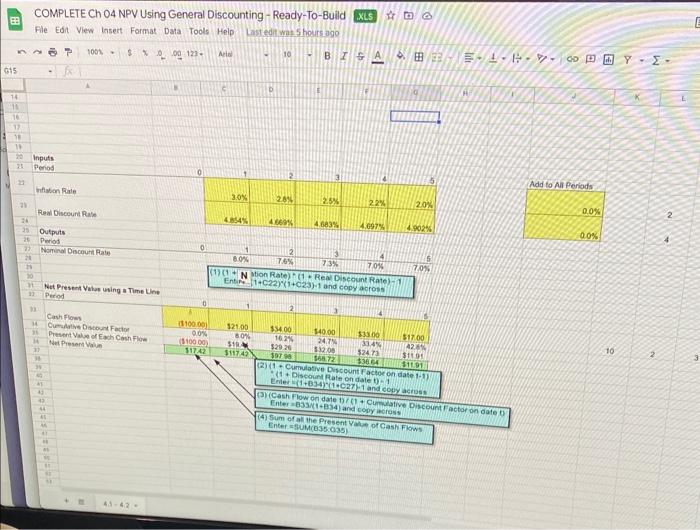
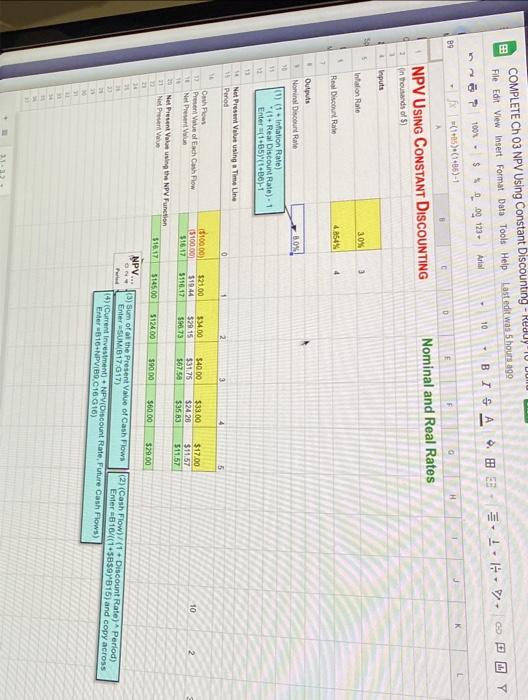
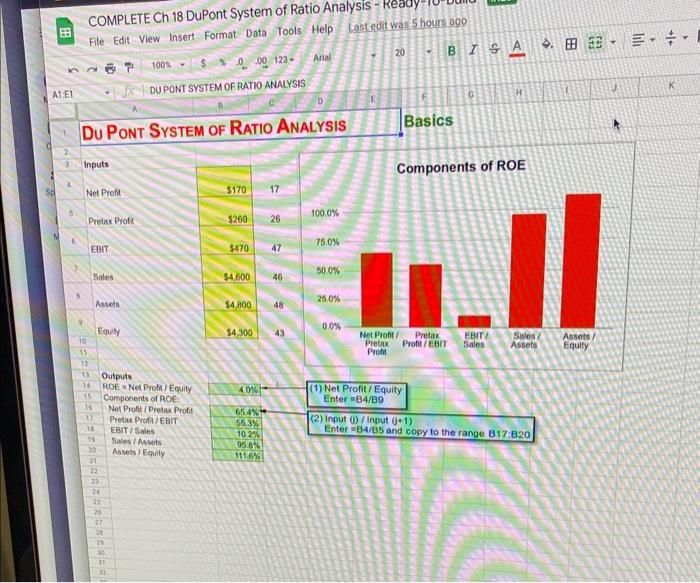
Chapter 3 NPV Using Constant Discounting (continued). 9 If we add the inflation rate and the real discount rate to get the nominal discount rate, fully state what we will miss compared to the formula in cell B9 of Figure 3.2. Chapter 4 NPV Using General Discounting 12 Can the general discount rate method shown in Figure 4.1 be used to calculate NPV if the discount rate is constant over time? If yes, how? 12 In calculating the Present Value of Each Cash Flow in cell G35 of Figure 4.1, why is the denominator ( 1 + Cumulative Discount Factor on date t) not raised to the power t ? 12 Can Excel's NPV function be used to calculate the Net Present Value in the general case in Figure 4.1, where the discount rate changes over time? Why or why not? 13 Fully explain why the NPV with general inflation and real discount rates in Figure 4.2 is higher than the NPV with the constant inflation and real discount rates in Figure 3.2. Chapter 5 Loan Amortization 16 Fully describe and explain the pattern of interest and principal components over the 30 -year period of the amortized loan in the Chart in Figure 5.1. 17 In which year is the interest component of the payment amount of a 30-year amortized loan at its highest level? Why? 17 In which year is the principal component of the payment amount of a 30-year amortized loan at its highest level? Why? Chapter 18 Du Pont System of Ratio Analysis 135 List the intuitive interpretations (names) of the five components of the Return on Equity in the Du Pont System of Ratio Analysis. 135 State whether a firm's tax-burden ratio will be higher or lower if it pays less taxes relative to pretax profit and give the reason for your answer. 135 State whether a firm's interest-burden ratio will be higher or lower if it pays more Interest relative to Earnings Before Interest and Taxes and give the reason for your answer. Chapter 1 Single Cash Flow 1 Fully list the three equivalent ways of calculating the present value of a single cash flow. 1 State and explain the effect on the future value of a single cash flow when you increase the: 1. Present Value 2. Discount Rate 3. Number of Periods Chapter 2 Annuity 5. Fully explain the formula used for calculating the Future Value of Each Cash Flow in cell C17 of Figure 2.2. 6 What is the name of the term that the Present Value is divided by to get the Payment in cell B28 of Figure 2.3? Explain why this formula gives the payment amount. 6 Show the formula for calculating the Annuity Future Value (AFV) using the Annuity Present Value (APV), Discount Rate (r), and Number of Periods (t), in Excel notation. 7 State and explain the effect on an Annuity Present Value if you: 1. Decrease the payment amount 2. Decrease the discount rate per period COMPLETE Ch 04 NPV Using General Discounting - Ready-To-Build XLS 0 file Ean view lnsert Format data Tools Help Layedinwatshoursago Net Present Velust using a Time Lirie COMPLETE Ch 18 DuPont System of Ratio Analysis - Ready - File Edit View Insert Format Data Tools Help Lasteditwas 5 hors ago AIEI - IX DUPONT SYSTEM OF RATIO ANALYSIS Du PONT SYSTEM OF RATIO ANALYSIS Chapter 3 NPV Using Constant Discounting (continued). 9 If we add the inflation rate and the real discount rate to get the nominal discount rate, fully state what we will miss compared to the formula in cell B9 of Figure 3.2. Chapter 4 NPV Using General Discounting 12 Can the general discount rate method shown in Figure 4.1 be used to calculate NPV if the discount rate is constant over time? If yes, how? 12 In calculating the Present Value of Each Cash Flow in cell G35 of Figure 4.1, why is the denominator ( 1 + Cumulative Discount Factor on date t) not raised to the power t ? 12 Can Excel's NPV function be used to calculate the Net Present Value in the general case in Figure 4.1, where the discount rate changes over time? Why or why not? 13 Fully explain why the NPV with general inflation and real discount rates in Figure 4.2 is higher than the NPV with the constant inflation and real discount rates in Figure 3.2. Chapter 5 Loan Amortization 16 Fully describe and explain the pattern of interest and principal components over the 30 -year period of the amortized loan in the Chart in Figure 5.1. 17 In which year is the interest component of the payment amount of a 30-year amortized loan at its highest level? Why? 17 In which year is the principal component of the payment amount of a 30-year amortized loan at its highest level? Why? Chapter 18 Du Pont System of Ratio Analysis 135 List the intuitive interpretations (names) of the five components of the Return on Equity in the Du Pont System of Ratio Analysis. 135 State whether a firm's tax-burden ratio will be higher or lower if it pays less taxes relative to pretax profit and give the reason for your answer. 135 State whether a firm's interest-burden ratio will be higher or lower if it pays more Interest relative to Earnings Before Interest and Taxes and give the reason for your answer. Chapter 1 Single Cash Flow 1 Fully list the three equivalent ways of calculating the present value of a single cash flow. 1 State and explain the effect on the future value of a single cash flow when you increase the: 1. Present Value 2. Discount Rate 3. Number of Periods Chapter 2 Annuity 5. Fully explain the formula used for calculating the Future Value of Each Cash Flow in cell C17 of Figure 2.2. 6 What is the name of the term that the Present Value is divided by to get the Payment in cell B28 of Figure 2.3? Explain why this formula gives the payment amount. 6 Show the formula for calculating the Annuity Future Value (AFV) using the Annuity Present Value (APV), Discount Rate (r), and Number of Periods (t), in Excel notation. 7 State and explain the effect on an Annuity Present Value if you: 1. Decrease the payment amount 2. Decrease the discount rate per period COMPLETE Ch 04 NPV Using General Discounting - Ready-To-Build XLS 0 file Ean view lnsert Format data Tools Help Layedinwatshoursago Net Present Velust using a Time Lirie COMPLETE Ch 18 DuPont System of Ratio Analysis - Ready - File Edit View Insert Format Data Tools Help Lasteditwas 5 hors ago AIEI - IX DUPONT SYSTEM OF RATIO ANALYSIS Du PONT SYSTEM OF RATIO ANALYSIS
Step by Step Solution
There are 3 Steps involved in it

Get step-by-step solutions from verified subject matter experts
 Study Help