







Question: CHAPTER 4 THE RECORDING PROCESS: THE JOURNAL, THE LEDGER, AND THE TRIAL BALANCE TRUE-FALSE STATEMENTS Transactions are entered in the ledger first and then they
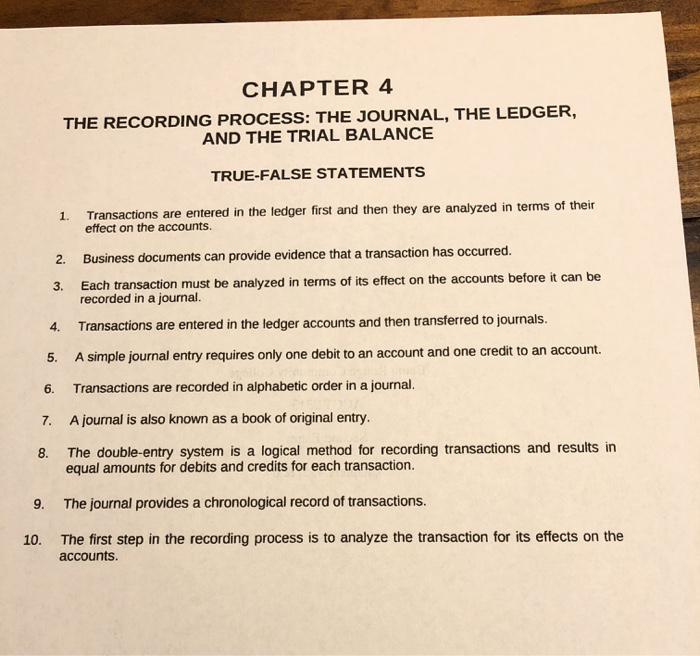
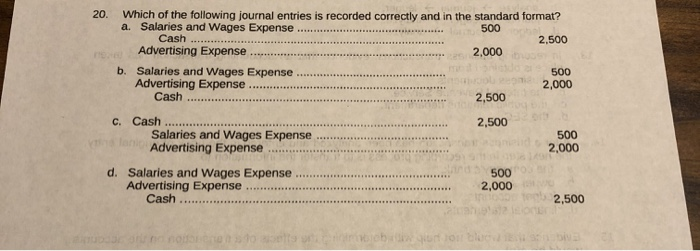
CHAPTER 4 THE RECORDING PROCESS: THE JOURNAL, THE LEDGER, AND THE TRIAL BALANCE TRUE-FALSE STATEMENTS Transactions are entered in the ledger first and then they are analyzed in terms of their 1. effect on the accounts. Business documents can provide evidence that a transaction has occurred. 2. Each transaction must be analyzed in terms of its effect on the accounts before it can be 3. recorded in a journal Transactions are entered in the ledger accounts and then transferred to journals. 4. A simple journal entry requires only one debit to an account and one credit to an account 5. Transactions are recorded in alphabetic order in a journal 6. A journal is also known as a book of original entry. 7. The double-entry system is a logical method for recording transactions and results in 8 equal amounts for debits and credits for each transaction. 9. The journal provides a chronological record of transactions. The first step in the recording process is to analyze the transaction for its effects on the 10. accounts. 20. Which of the following journal entries is recorded correctly and in the standard format? a. Salaries and Wages Expense 500 Cash 2,500 Advertising Expense 2,000 b. Salaries and Wages Expense Advertising Expense Cash 500 2,000 2,500 c. Cash 2,500 Salaries and Wages Expense Advertising Expense 500 2,000 d. Salaries and Wages Expense Advertising Expense Cash 500 2,000 2,500
Step by Step Solution
There are 3 Steps involved in it

Get step-by-step solutions from verified subject matter experts
 Study Help