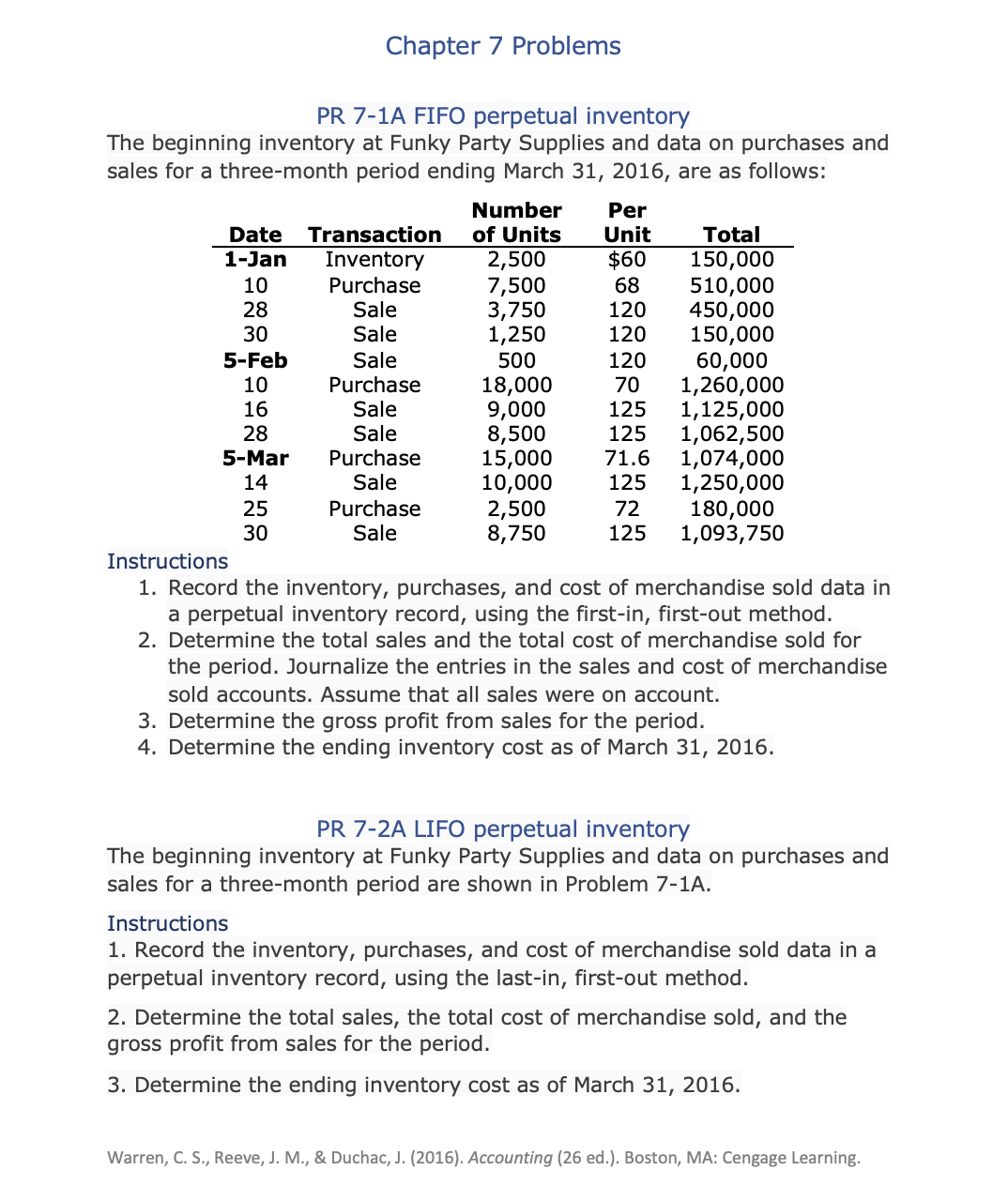
Question: Chapter 7 Problems PR 7-1A FIFO perpetual inventory The beginning inventory at Funky Party Supplies and data on purchases and sales for a three-month period
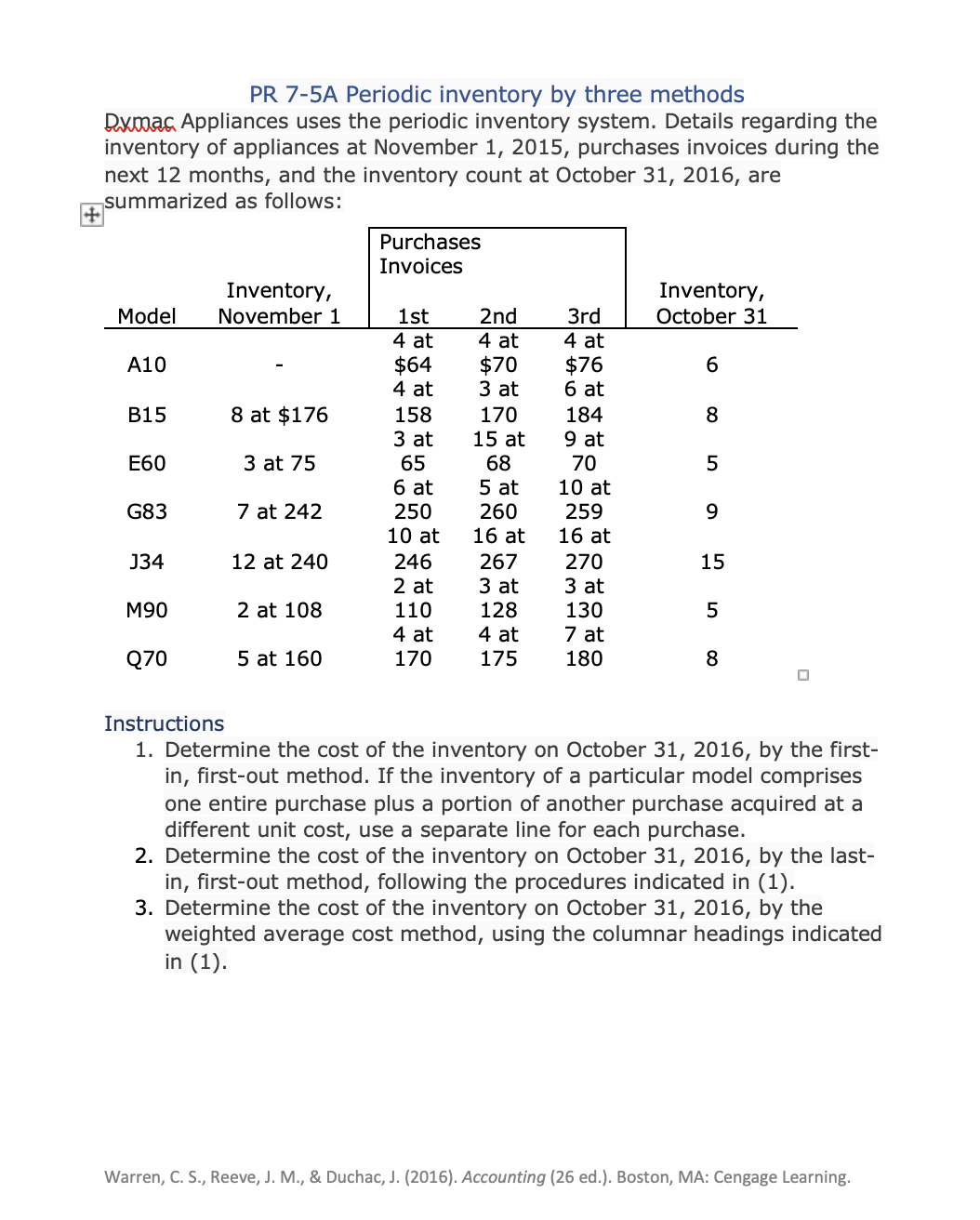
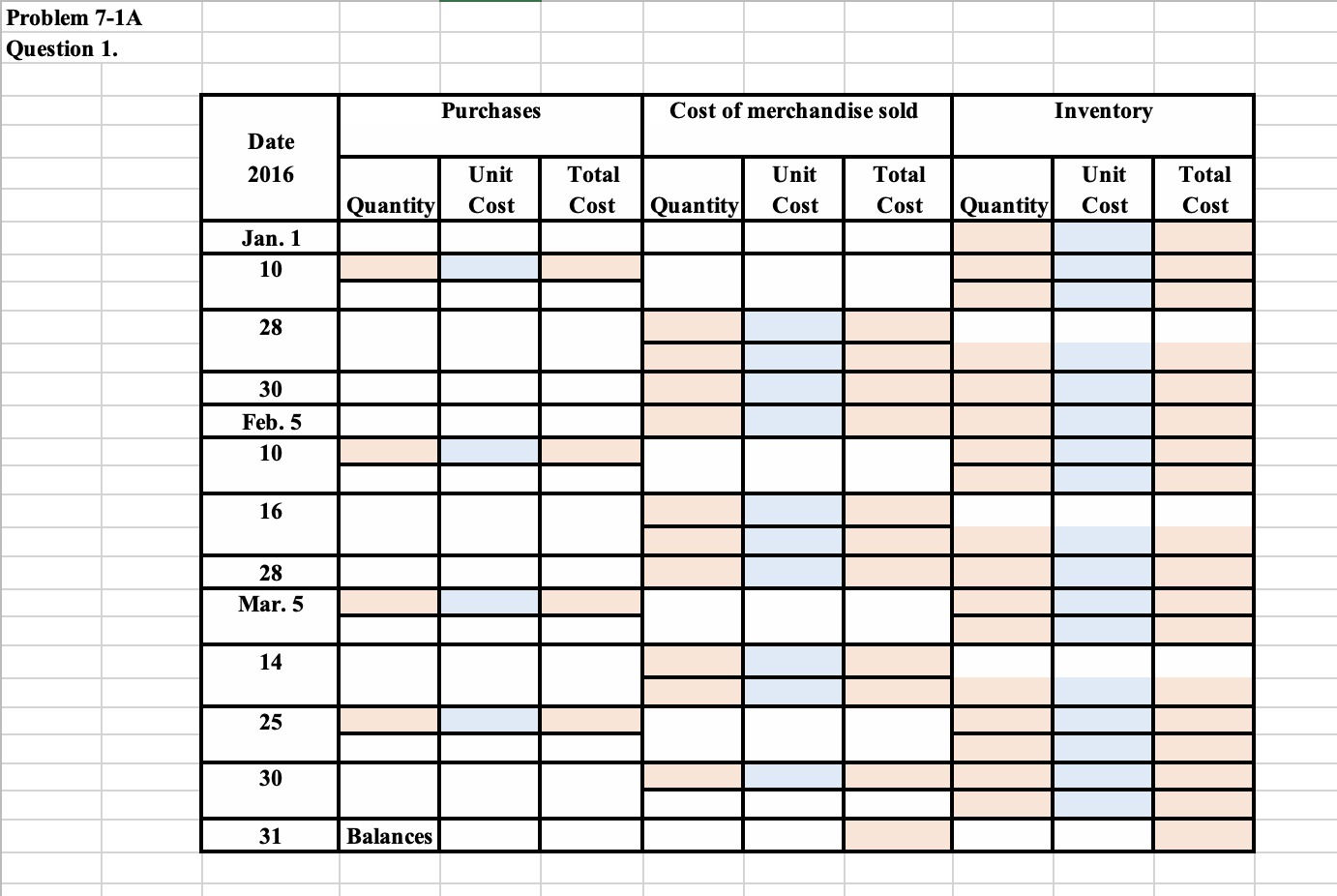
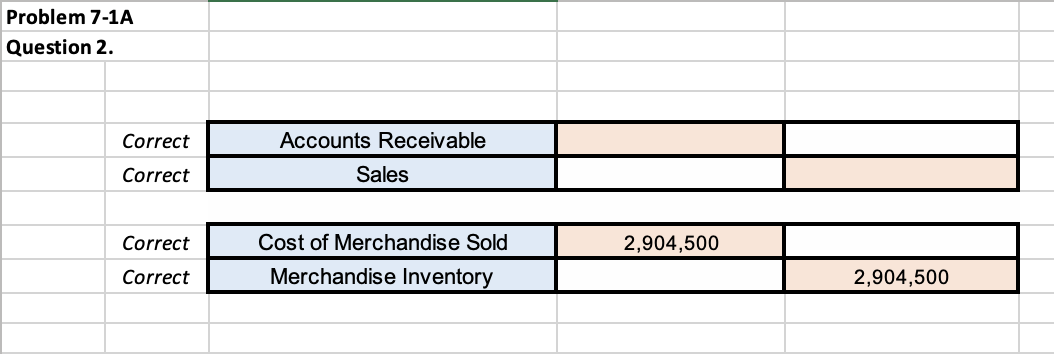
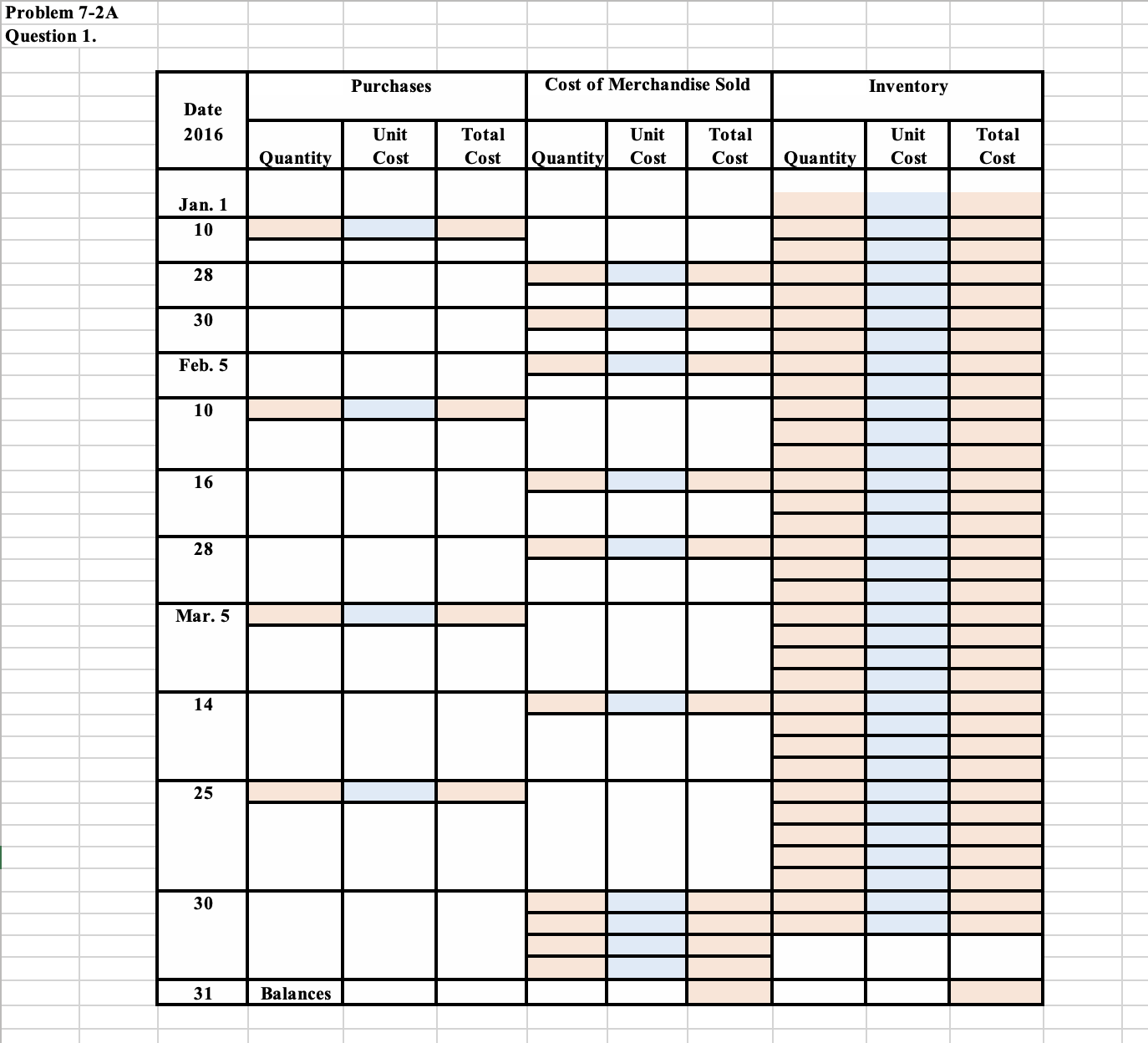
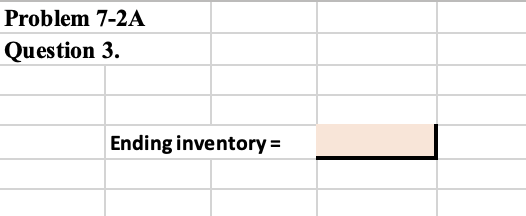
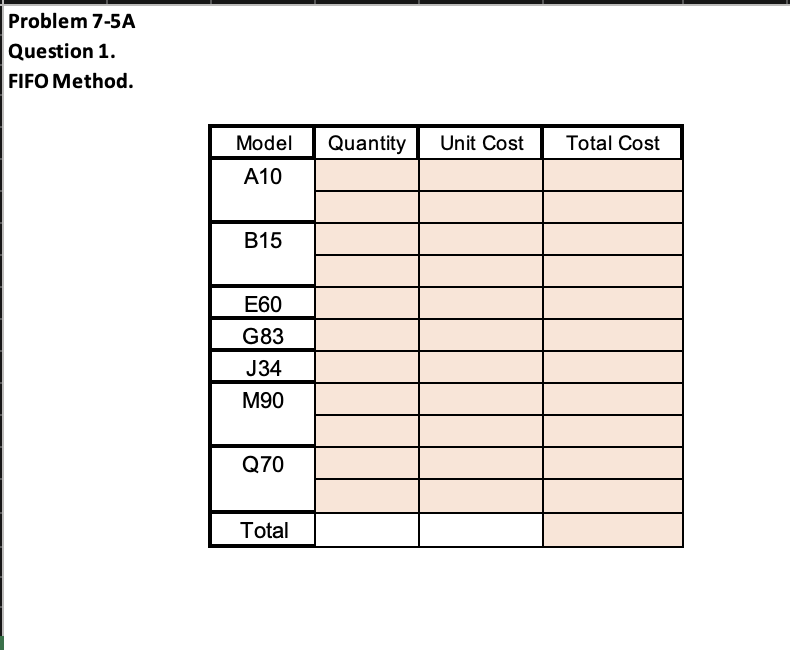
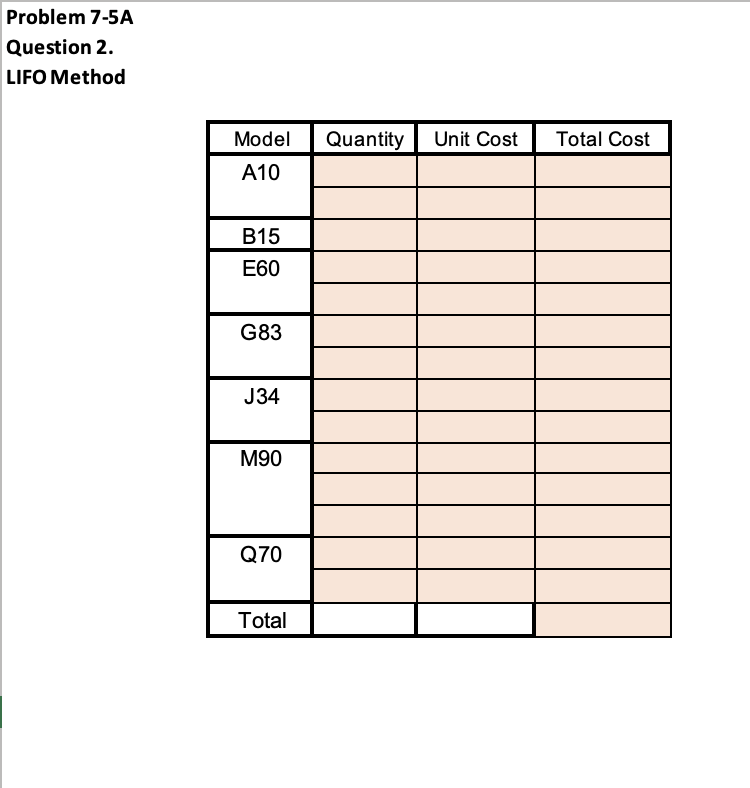
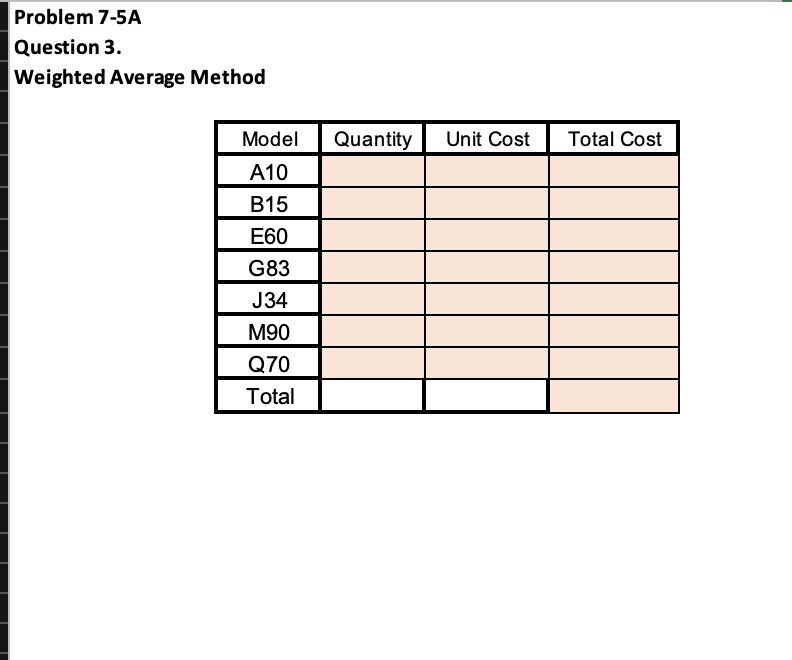
Chapter 7 Problems PR 7-1A FIFO perpetual inventory The beginning inventory at Funky Party Supplies and data on purchases and sales for a three-month period ending March 31, 2016, are as follows: Number Per Date Transaction of Units Unit Total 1-Jan Inventory 2,500 $60 150,000 10 Purchase 7,500 68 510,000 28 Sale 3,750 120 450,000 30 Sale 1,250 120 150,000 5-Feb Sale 500 120 60,000 10 Purchase 18,000 70 1,260,000 16 Sale 9,000 125 1,125,000 28 Sale 8,500 125 1,062,500 5-Mar Purchase 15,000 71.6 1,074,000 14 Sale 10,000 125 1,250,000 25 Purchase 2,500 72 180,000 30 Sale 8,750 125 1,093,750 Instructions 1. Record the inventory, purchases, and cost of merchandise sold data in a perpetual inventory record, using the rstin, first-out method. 2. Determine the total sales and the total cost of merchandise sold for the period. Journalize the entries in the sales and cost of merchandise sold accounts. Assume that all sales were on account. Determine the gross prot from sales for the period. Determine the ending inventory cost as of March 31, 2016. PE\" PR 7-2A LIFO perpetual inventory The beginning inventory at Funky Party Supplies and data on purchases and sales for a three-month period are shown in Problem 7-1A. Instructions 1. Record the inventory, purchases, and cost of merchandise sold data in a perpetual inventory record, using the last-in, firstout method. 2. Determine the total sales, the total cost of merchandise sold, and the gross profit from sales for the period. 3. Determine the ending inventory cost as of March 31, 2016. Warren, C. 5., Reeve, J. M, 8\" Duchac,J. {2016}. Accounting {26 ed.]. Boston, MA: Cengage Learning. PR 75A Periodic inventory by three methods WAppliances uses the periodic inventory system. Details regarding the inventory of appliances at November 1, 2015, purchases invoices during the next 12 months, and the inventory count at October 31, 2016, are msummarized as follows: Purchases Invoices Inventory, Inventory, Model November 1 lst 2nd October 31 4 at 4 at 4 at A10 - $64 $70 $76 6 4 at 3 at 6 at 815 8 at $176 158 170 184 8 3 at 15 at 9 at E60 3 at 75 65 68 70 5 6 at 5 at 10 at (383 7 at 242 250 260 259 9 10 at 16 at 16 at J34 12 at 240 246 267 270 15 2 at 3 at 3 at M90 2 at 108 110 128 130 5 4 at 4 at 7 at Q70 5 at 160 170 175 180 8 Instructions 1. Determine the cost of the inventory on October 31, 2016, by the first- in, rst-out method. If the inventory of a particular model comprises one entire purchase plus a portion of another purchase acquired at a different unit cost, use a separate line for each purchase. 2. Determine the cost of the inventory on October 31, 2016, by the last- in, rst-out method, following the procedures indicated in (1). 3. Determine the cost of the inventory on October 31, 2016, by the weighted average cost method, using the columnar headings indicated in (1). Warren, C. 5., Reeve, J. M, & Duchac,J. {2016}. Accounting {26 ed.}. Boston, MA: Cengage Learning. Problem 7-1A Question 1. Date Quantity Cast Cast Quantity Cast Cast Quantity Cost Cost Problem 7-1A Question 2. correct Accounts Receivable Correct Correct Cost of Merchandise Sold 2.904.500 Correct Merchandise Inventory 2,904,500 \fProblem 7-1A Question 4. Ending inventory =Problem 7-2A Question 1. Purchases Cost of Merchandise Sold Inventory Date 2016 Unit Total Unit Total Unit Total Quantity Cost Cost Quantity Cost Cost Quantity Cost Cost Jan. 1 10 28 30 Feb. 5 10 16 87 Mar. 5 14 25 30 31 BalancesProblem 7-2A Question 2. Total Sales Total Cost of Merchandise Sold I Gross Prot _ Problem 7-2A Question 3. Ending inventory =Problem 7-5A Question 1. FIFO Method. Model Quantity Unit Cost Total Cost A10 B15 E60 G83 J34 M90 Q70 TotalProblem 7-5A Question 2. LIFO Method Model Quantity Unit Cost Total Cost A10 B15 E60 G83 J34 M90 Q70 Total\f
Step by Step Solution
There are 3 Steps involved in it
1 Expert Approved Answer
Step: 1 Unlock
Question Has Been Solved by an Expert!
Get step-by-step solutions from verified subject matter experts
Step: 2 Unlock
Step: 3 Unlock
Students Have Also Explored These Related Accounting Questions!









 Study Help