







Question: class A { } private int value; public A (int v) {value 10;} public int getValue() {return value; } class B extends A {
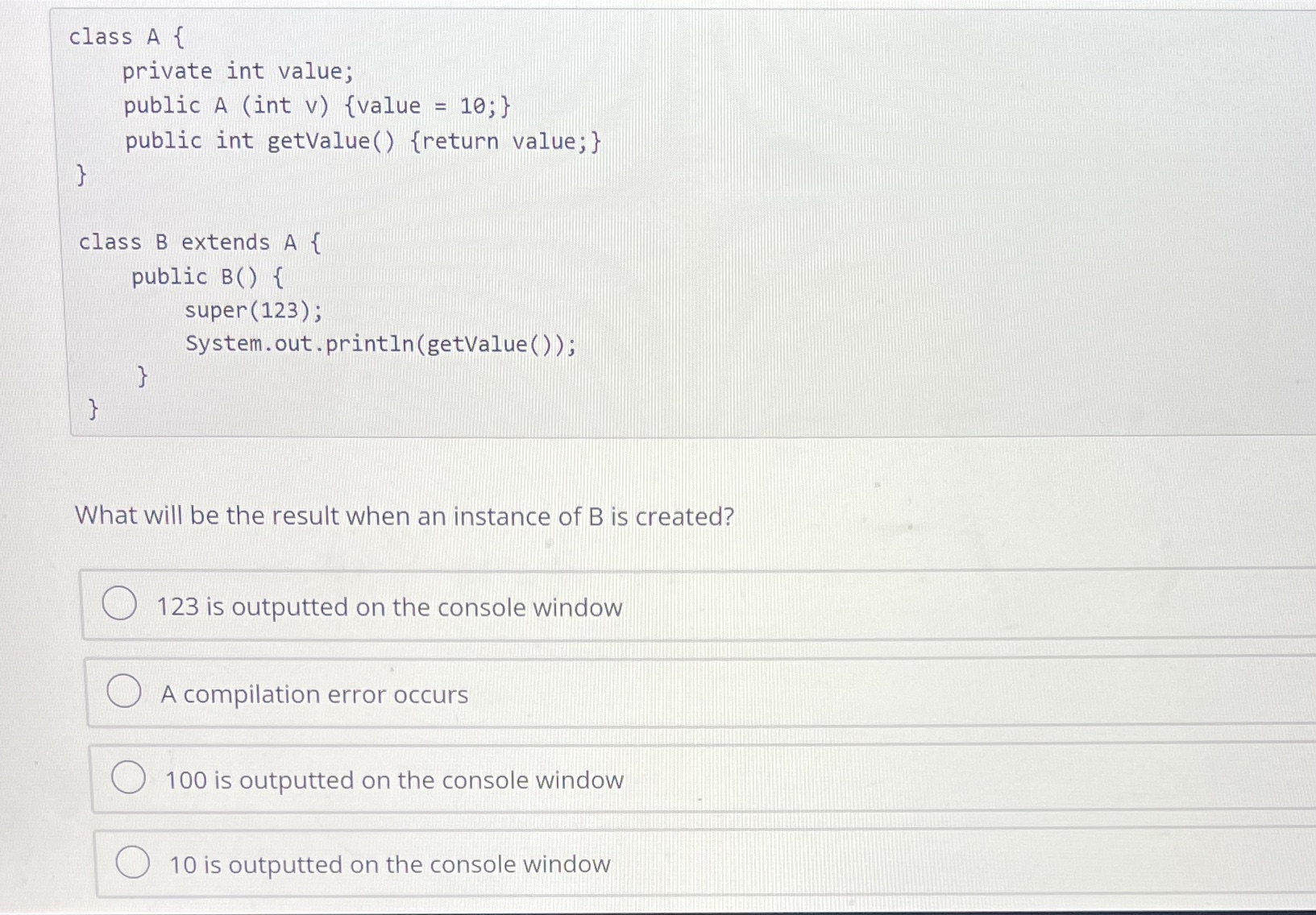
class A { } private int value; public A (int v) {value 10;} public int getValue() {return value; } class B extends A { public B() { } } super (123); - System.out.println(getValue()); What will be the result when an instance of B is created? 123 is outputted on the console window A compilation error occurs 100 is outputted on the console window 10 is outputted on the console window class A { } private int value; public A (int v) {value 10;} public int getValue() {return value; } class B extends A { public B() { } } super (123); - System.out.println(getValue()); What will be the result when an instance of B is created? 123 is outputted on the console window A compilation error occurs 100 is outputted on the console window 10 is outputted on the console window
Step by Step Solution
There are 3 Steps involved in it
Answer When an instance of class B is created the constructor of class B is invoked The constructor ... View full answer

Get step-by-step solutions from verified subject matter experts
 Study Help