Question: Class: Research Methods in Psychology Prompt: Read the correlation study down below as you answer the questions! FILL OUT ANSWERS. (DO NOT USE ANY EXAMPLES)
Class: Research Methods in Psychology
Prompt:
Read the correlation study down below as you answer the questions!
FILL OUT ANSWERS.
(DO NOT USE ANY EXAMPLES)
Read the correlation study down (IN THE IMAGES) below!:
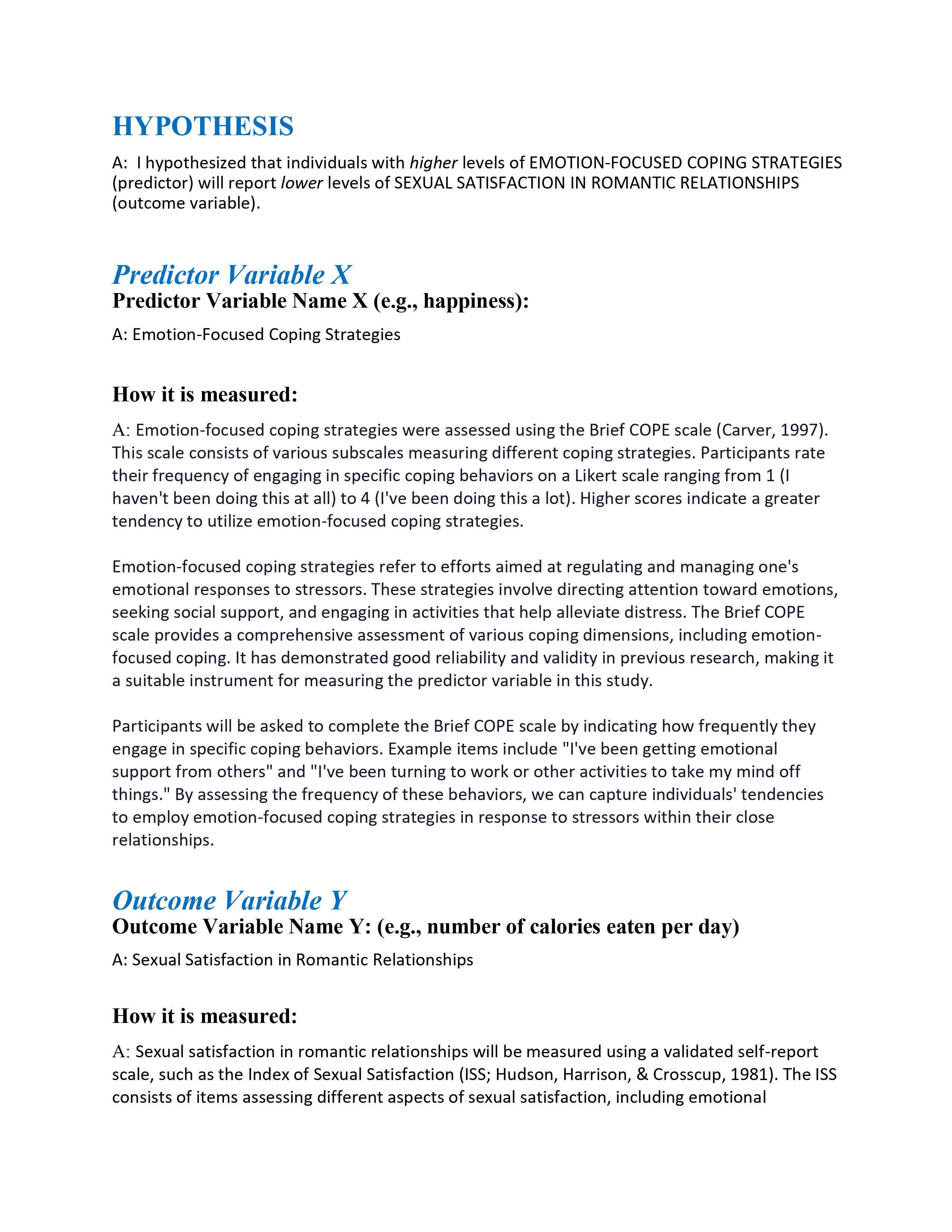
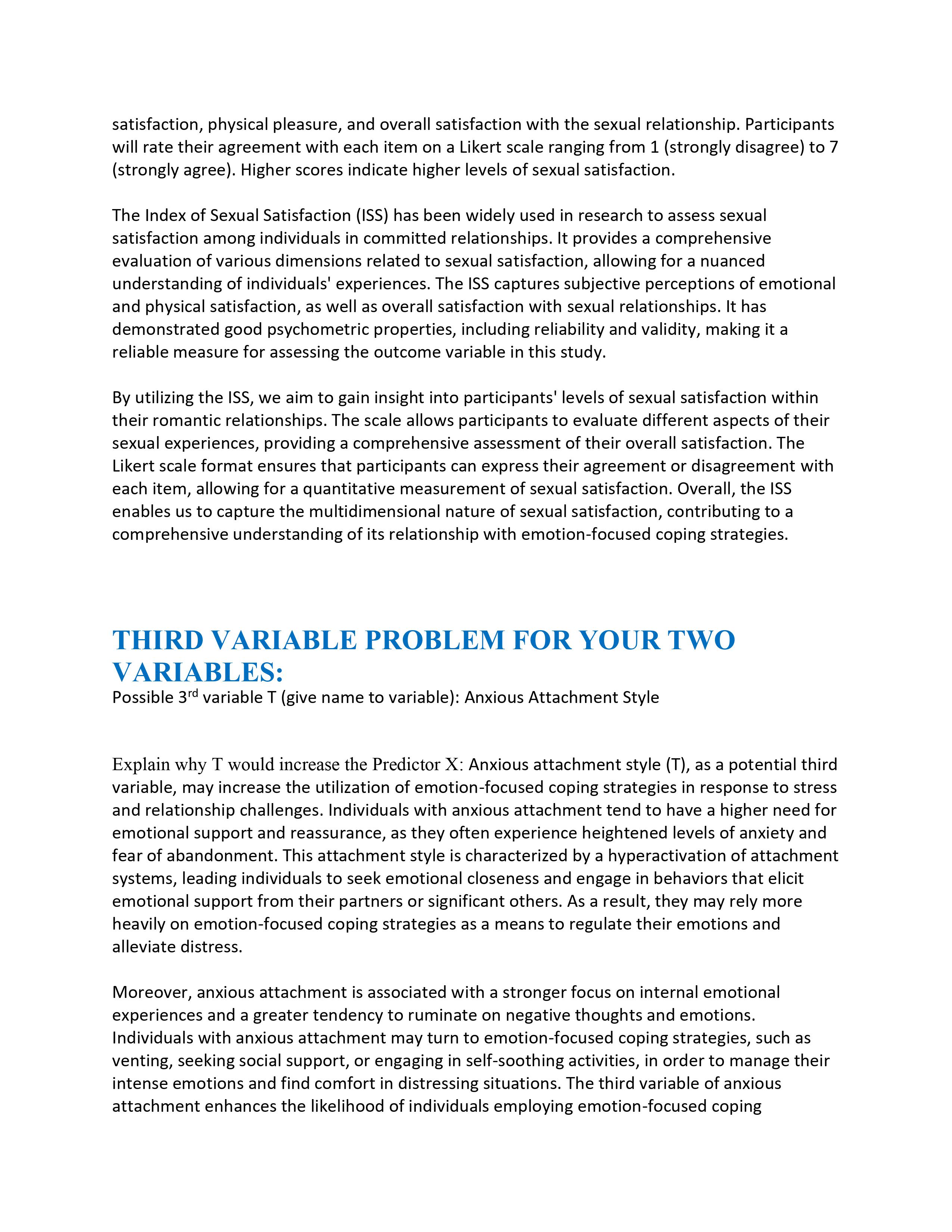
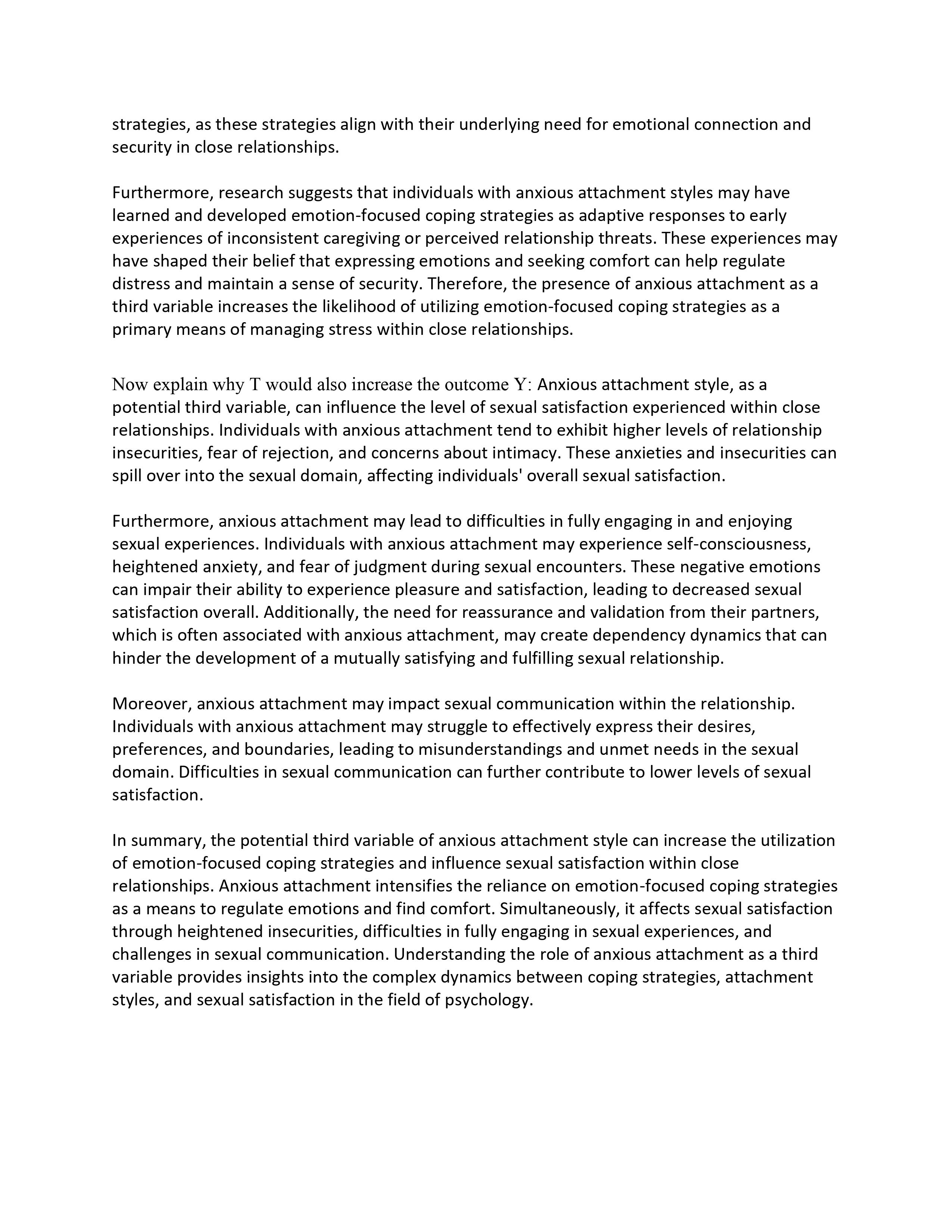
HYPOTHESIS A: | hypothesized that individuals with higher levels of EMOTION-FOCUSED COPING STRATEGIES (predictor) will report lower levels of SEXUAL SATISFACTION IN ROMANTIC RELATIONSHIPS (outcome variable). Predictor Variable X Predictor Variable Name X (e.g., happiness): A: Emotion-Focused Coping Strategies How it is measured: A: Emotion-focused coping strategies were assessed using the Brief COPE scale (Carver, 1997). This scale consists of various subscales measuring different coping strategies. Participants rate their frequency of engaging in specific coping behaviors on a Likert scale ranging from 1 (I haven't been doing this at all) to 4 (I've been doing this a lot). Higher scores indicate a greater tendency to utilize emotion-focused coping strategies. Emotion-focused coping strategies refer to efforts aimed at regulating and managing one's emotional responses to stressors. These strategies involve directing attention toward emotions, seeking social support, and engaging in activities that help alleviate distress. The Brief COPE scale provides a comprehensive assessment of various coping dimensions, including emotion- focused coping. It has demonstrated good reliability and validity in previous research, making it a suitable instrument for measuring the predictor variable in this study. Participants will be asked to complete the Brief COPE scale by indicating how frequently they engage in specific coping behaviors. Example items include "I've been getting emotional support from others'l and "I've been turning to work or other activities to take my mind off things." By assessing the frequency of these behaviors, we can capture individuals' tendencies to employ emotion-focused coping strategies in response to stressors within their close relationships. Outcome Variable Y Outcome Variable Name Y: (e.g., number of calories eaten per day) A: Sexual Satisfaction in Romantic Relationships How it is measured: A: Sexual satisfaction in romantic relationships will be measured using a validated selfreport scale, such as the Index of Sexual Satisfaction (ISS; Hudson, Harrison, & Crosscup, 1981). The ISS consists of items assessing different aspects of sexual satisfaction, including emotional satisfaction, physical pleasure, and overall satisfaction with the sexual relationship. Participants will rate their agreement with each item on a Likert scale ranging from 1 (strongly disagree) to 7 (strongly agree). Higher scores indicate higher levels of sexual satisfaction. The Index of Sexual Satisfaction (ISS) has been widely used in research to assess sexual satisfaction among individuals in committed relationships. It provides a comprehensive evaluation of various dimensions related to sexual satisfaction, allowing for a nuanced understanding of individuals' experiences. The ISS captures subjective perceptions of emotional and physical satisfaction, as well as overall satisfaction with sexual relationships. It has demonstrated good psychometric properties, including reliability and validity, making it a reliable measure for assessing the outcome variable in this study. By utilizing the ISS, we aim to gain insight into participants' levels of sexual satisfaction within their romantic relationships. The scale allows participants to evaluate different aspects of their sexual experiences, providing a comprehensive assessment of their overall satisfaction. The Li kert scale format ensures that participants can express their agreement or disagreement with each item, allowing for a quantitative measurement of sexual satisfaction. Overall, the ISS enables us to capture the multidimensional nature of sexual satisfaction, contributing to a comprehensive understanding of its relationship with emotion-focused coping strategies. THIRD VARIABLE PROBLEM FOR YOUR TWO VARIABLES: Possible 3rd variable T (give name to variable): Anxious Attachment Style Explain Why T would increase the Predictor X: Anxious attachment style (T), as a potential third variable, may increase the utilization of emotion-focused coping strategies in response to stress and relationship challenges. Individuals with anxious attachment tend to have a higher need for emotional support and reassurance, as they often experience heightened levels of anxiety and fear of abandonment. This attachment style is characterized by a hyperactivation of attachment systems, leading individuals to seek emotional closeness and engage in behaviors that elicit emotional support from their partners or significant others. As a result, they may rely more heavily on emotion-focused coping strategies as a means to regulate their emotions and alleviate distress. Moreover, anxious attachment is associated with a stronger focus on internal emotional experiences and a greater tendency to ruminate on negative thoughts and emotions. Individuals with anxious attachment may turn to emotion-focused coping strategies, such as venting, seeking social support, or engaging in selfsoothing activities, in order to manage their intense emotions and find comfort in distressing situations. The third variable of anxious attachment enhances the likelihood of individuals employing emotion-focused coping strategies, as these strategies align with their underlying need for emotional connection and security in close relationships. Furthermore, research suggests that individuals with anxious attachment styles may have learned and developed emotion-focused coping strategies as adaptive responses to early experiences of inconsistent caregiving or perceived relationship threats. These experiences may have shaped their beliefthat expressing emotions and seeking comfort can help regulate distress and maintain a sense of security. Therefore, the presence of anxious attachment as a third variable increases the likelihood of utilizing emotionfocused coping strategies as a primary means of managing stress within close relationships. Now explain why T would also increase the outcome Y: Anxious attachment style, as a potential third variable, can influence the level of sexual satisfaction experienced within close relationships. Individuals with anxious attachment tend to exhibit higher levels of relationship insecurities, fear of rejection, and concerns about intimacy. These anxieties and insecurities can spill over into the sexual domain, affecting individuals' overall sexual satisfaction. Furthermore, anxious attachment may lead to difficulties in fully engaging in and enjoying sexual experiences. Individuals with anxious attachment may experience self-consciousness, heightened anxiety, and fear ofjudgment during sexual encounters. These negative emotions can impair their ability to experience pleasure and satisfaction, leading to decreased sexual satisfaction overall. Additionally, the need for reassurance and validation from their partners, which is often associated with anxious attachment, may create dependency dynamics that can hinder the development of a mutually satisfying and fulfilling sexual relationship. Moreover, anxious attachment may impact sexual communication within the relationship. Individuals with anxious attachment may struggle to effectively express their desires, preferences, and boundaries, leading to misunderstandings and unmet needs in the sexual domain. Difficulties in sexual communication can further contribute to lower levels of sexual satisfaction. In summary, the potential third variable of anxious attachment style can increase the utilization of emotionfocused coping strategies and influence sexual satisfaction within close relationships. Anxious attachment intensifies the reliance on emotion-focused coping strategies as a means to regulate emotions and find comfort. Simultaneously, it affects sexual satisfaction through heightened insecurities, difficulties in fully engaging in sexual experiences, and challenges in sexual communication. Understanding the role of anxious attachment as a third variable provides insights into the complex dynamics between coping strategies, attachment styles, and sexual satisfaction in the field of psychology
Step by Step Solution
There are 3 Steps involved in it
1 Expert Approved Answer
Step: 1 Unlock
Question Has Been Solved by an Expert!
Get step-by-step solutions from verified subject matter experts
Step: 2 Unlock
Step: 3 Unlock
Students Have Also Explored These Related Accounting Questions!









 Study Help