







Question: Classify a number as Perfect, Deficient or Abundant. Validate user input. This classification has meaning ONLY for POSITIVE integers. You do NOT have to validate
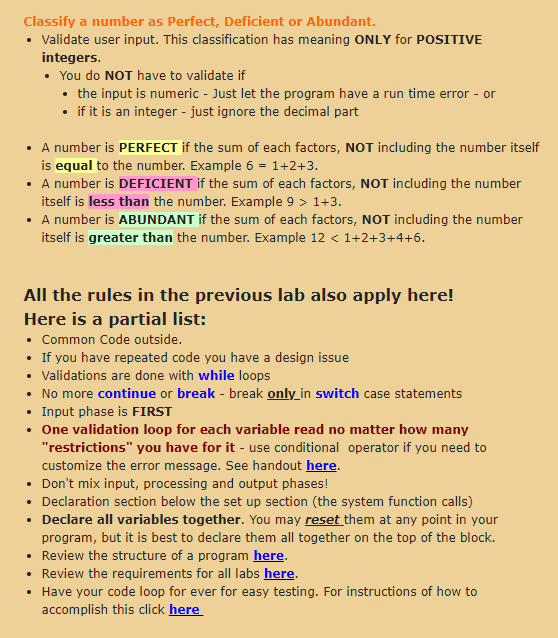
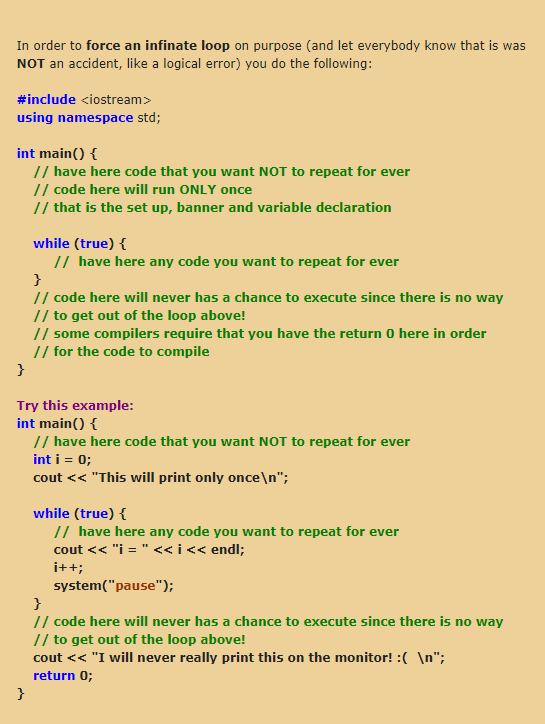
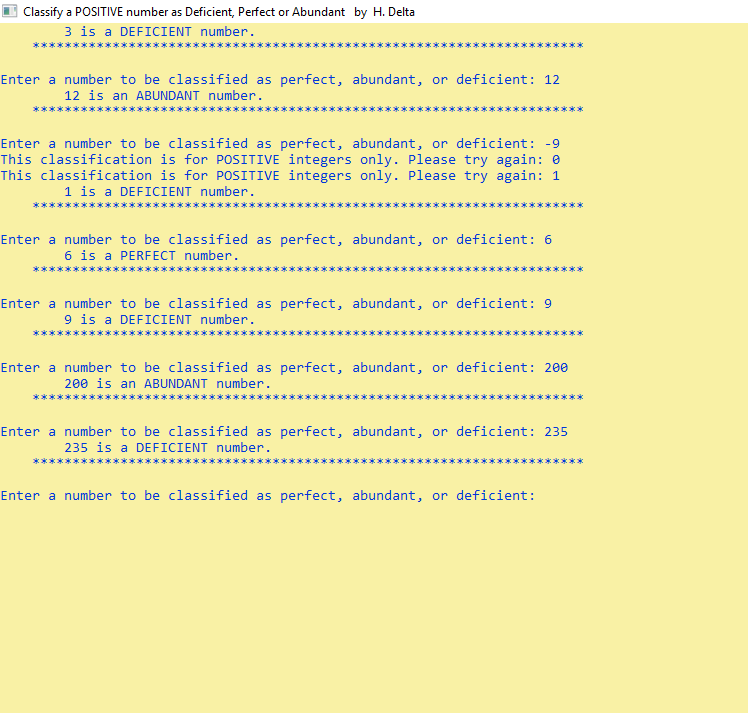
Classify a number as Perfect, Deficient or Abundant. Validate user input. This classification has meaning ONLY for POSITIVE integers. You do NOT have to validate if the input is numeric - Just let the program have a run time error - or if it is an integer - just ignore the decimal part A number is PERFECT if the sum of each factors, NOT including the number itself is equal to the number. Example 6 = 1+2+3. A number is DEFICIENT if the sum of each factors, NOT including the number itself is less than the number. Example 9 > 1+3. A number is ABUNDANT if the sum of each factors, NOT including the number itself is greater than the number. Example 12 using namespace std; int main() { 1/ have here code that you want NOT to repeat for ever // code here will run ONLY once // that is the set up, banner and variable declaration while (true) { 1/ have here any code you want to repeat for ever // code here will never has a chance to execute since there is no way // to get out of the loop above! 7/ some compilers require that you have the return o here in order // for the code to compile Try this example: int main() { // have here code that you want NOT to repeat for ever int i = 0; cout
Step by Step Solution
There are 3 Steps involved in it

Get step-by-step solutions from verified subject matter experts
 Study Help