







Question: COBOL/File Structures Circle T if the statement is true or F if the statement is false. A transaction file is used to indicate which records
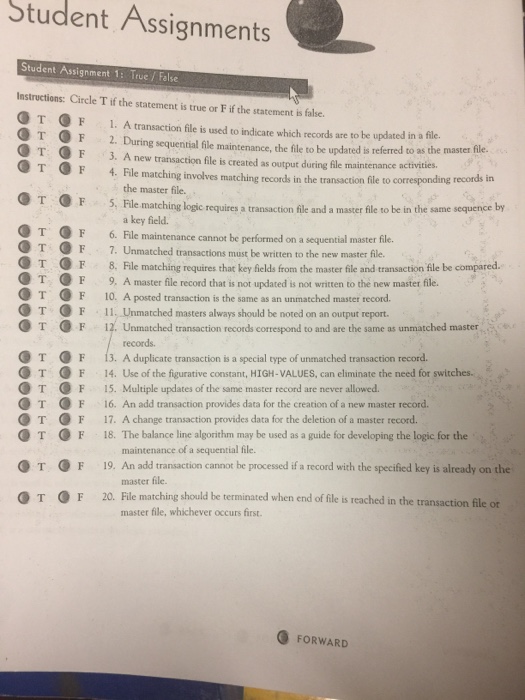
Circle T if the statement is true or F if the statement is false. A transaction file is used to indicate which records are to be updated in a file. During sequential file maintenance, the file to be updated is referred to as the master file. A new transaction file is created as output during file maintenance activities. File matching involves matching records in the transaction file to corresponding records in the master file. File matching logic require a transaction file and a master file to be in the same sequence by a key field. File maintenance cannot be performed on a sequential master file. Unmatched transactions must be written to the new master file. File matching requires that key fields from the master file and transaction file be compared. A master file record that is not updated is not written to the new master file. A posted transaction is the same as an unmatched master record. Unmatched masters always should be noted on an output report. Unmatched transaction records correspond to and are the same as unmatched master records. A duplicate transaction is a special type of unmatched transaction record. Use of the figurative constant, HIGH-VALUES, can eliminate the need for switches. Multiple update of the same master record are never allowed. An add transaction provide, data for the creation of a new master record. A change transaction provide, data for the deletion of a master record. The balance line algorithm may he used as a guide for developing the logic for the maintenance of a sequential file. An add transaction cannot be processed if a record with the specified key is already on the master file. File matching should be terminated when end of file is reached in the transaction file, or master file, whichever occurs first
Step by Step Solution
There are 3 Steps involved in it

Get step-by-step solutions from verified subject matter experts
 Study Help