







Question: # code fragment 1 starts on the next line class Egg: def init_(self, shm): self.ukr= shm my_egg = new Egg(30) # code fragment 2 starts
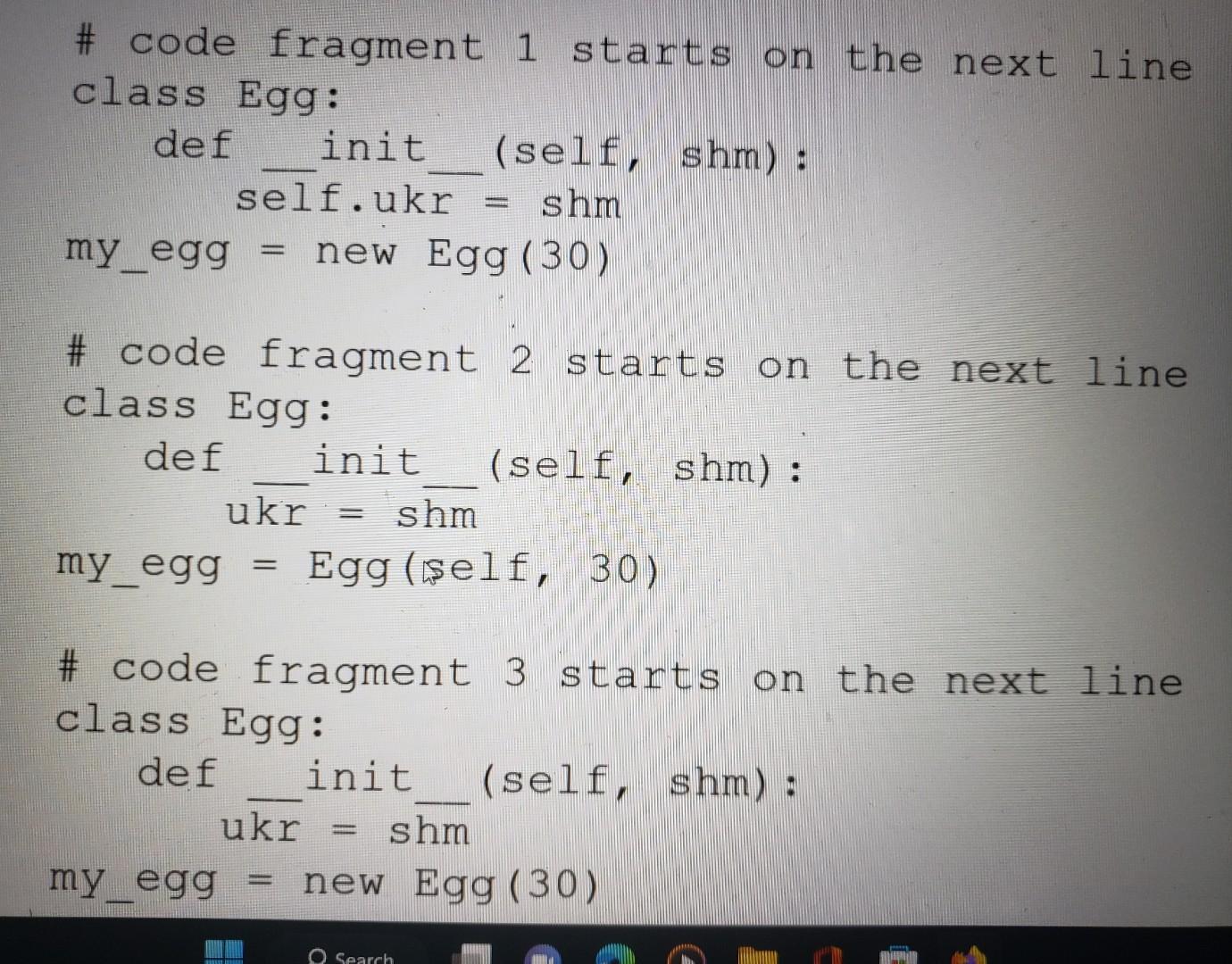
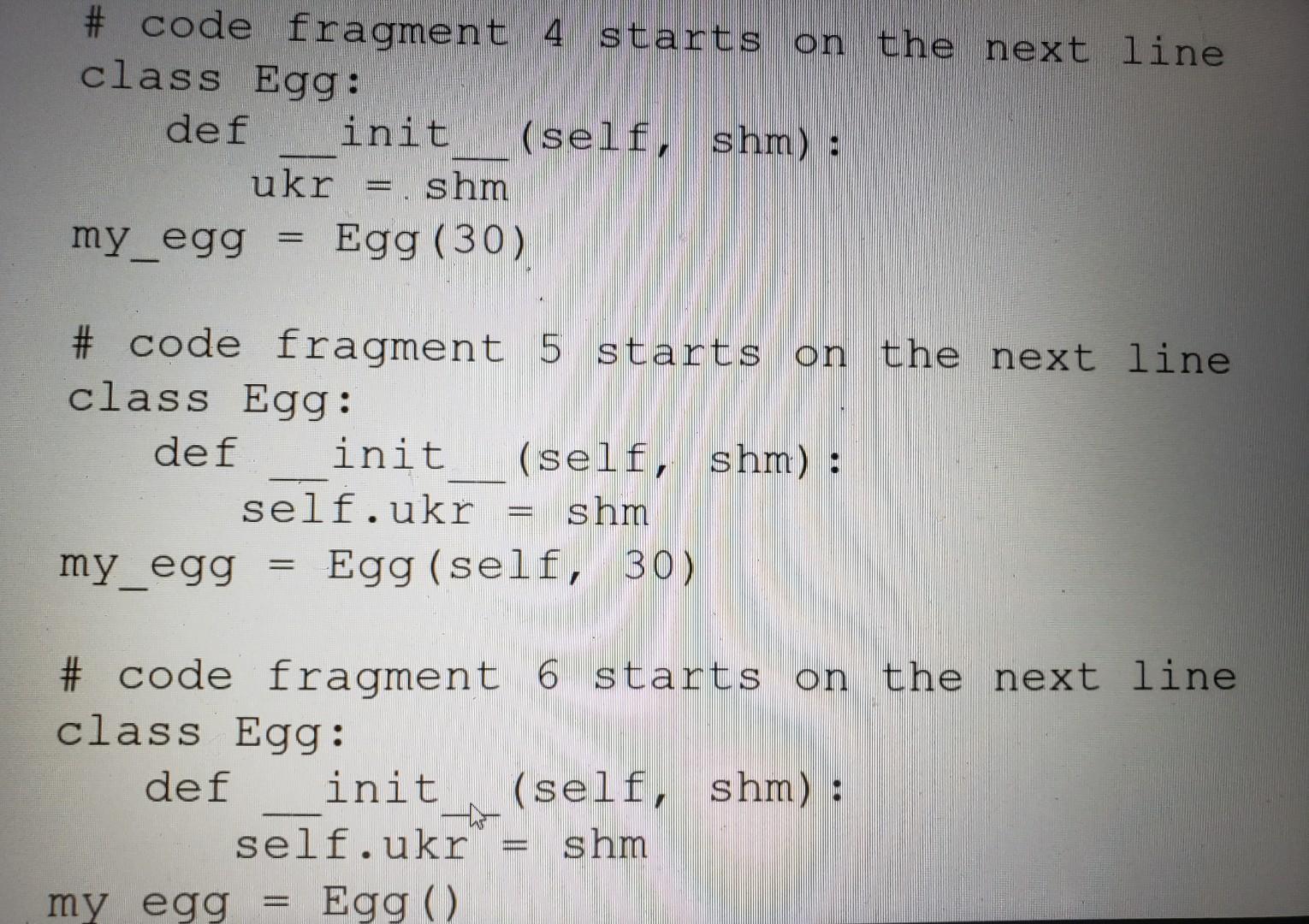
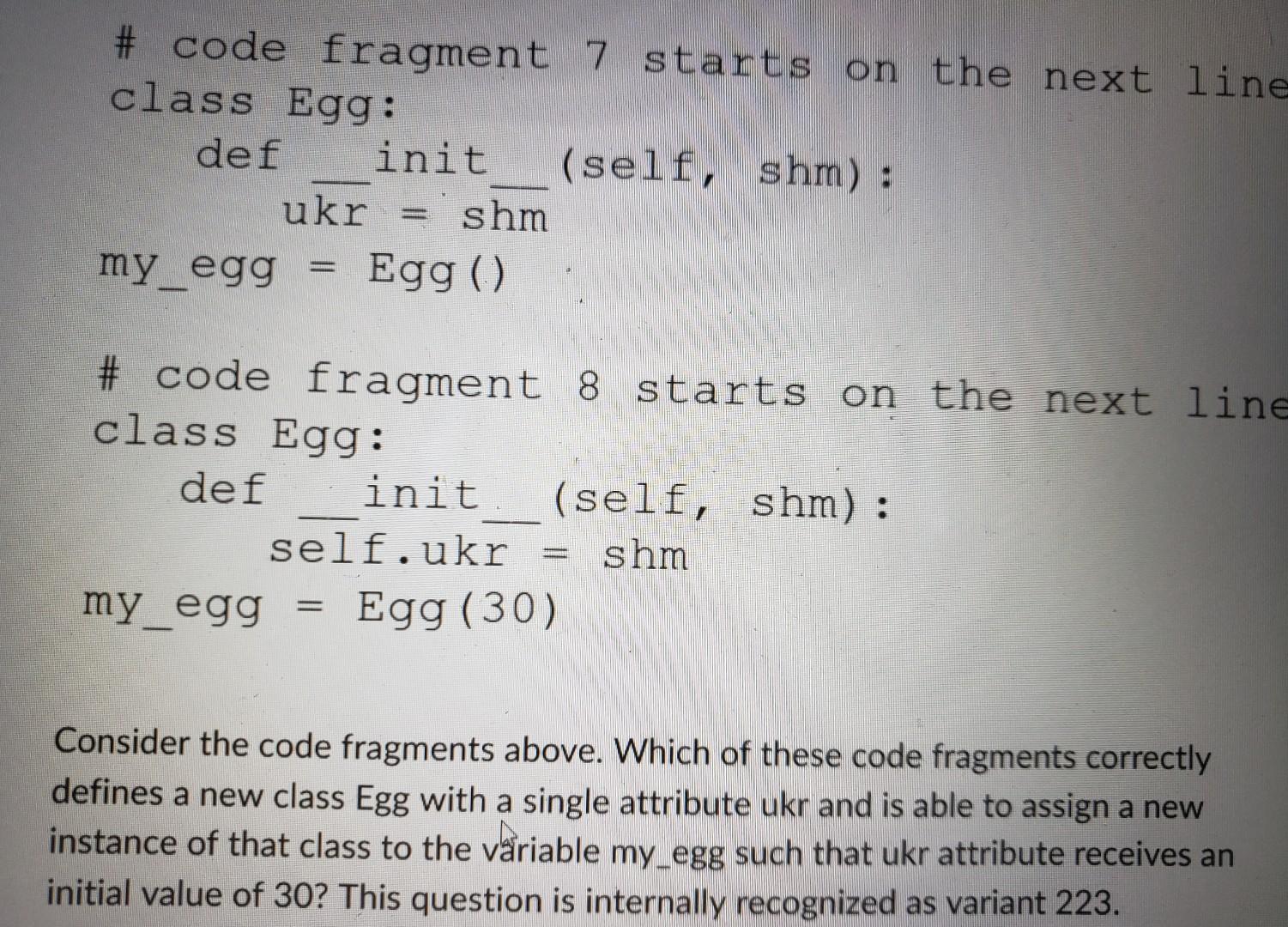
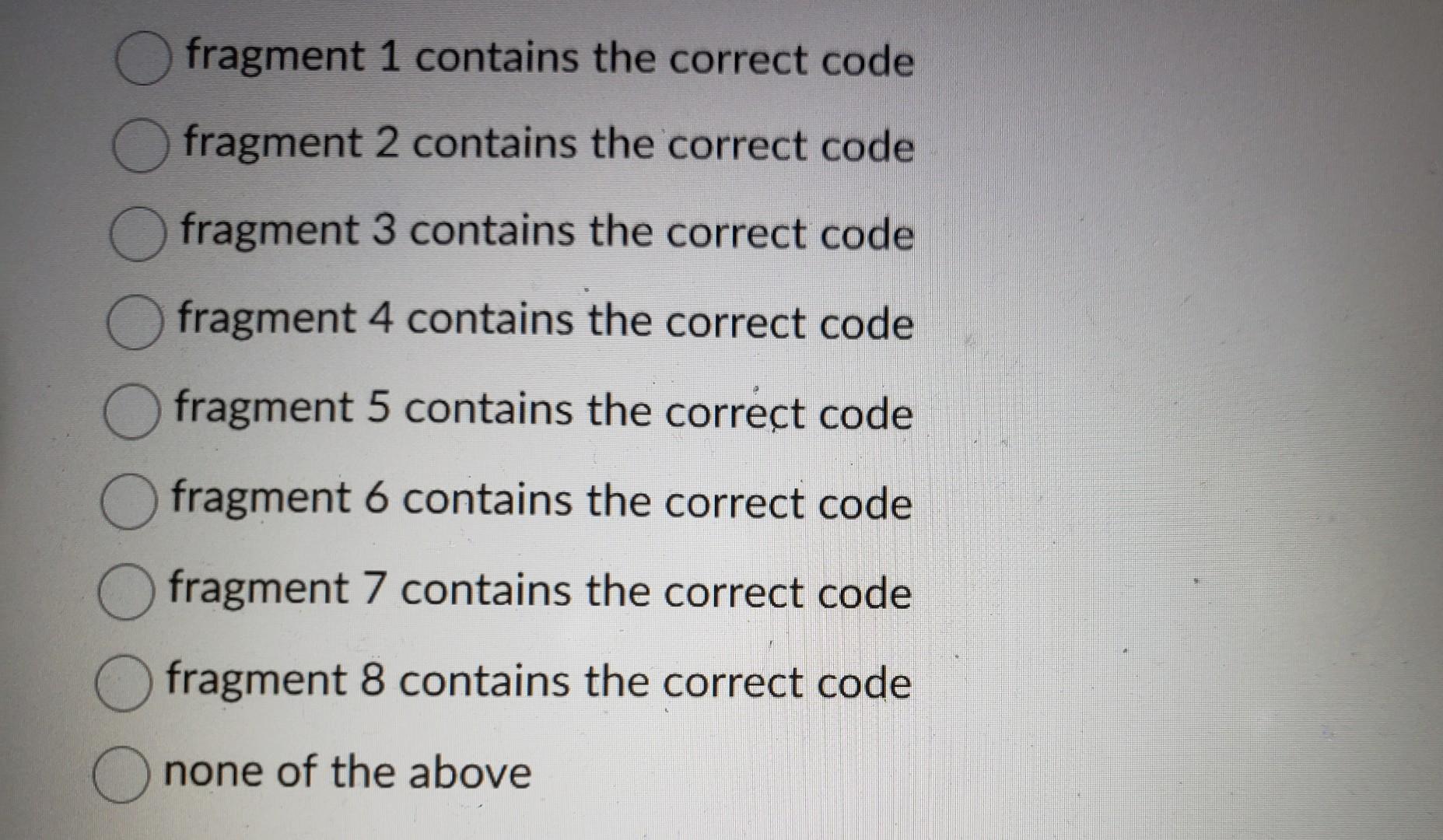
\# code fragment 1 starts on the next line class Egg: def init_(self, shm): self.ukr= shm my_egg = new Egg(30) \# code fragment 2 starts on the next line class Egg: def init_(self, shm): my_egg = Egg(self, 30) \# code fragment 3 starts on the next line class Egg: def init_(self, shm): ukr = shm my_egg = new Egg(30) \# code fragment 4 starts on the next line class Egg: def init (self, shm): my_egg = Egg(30) \# code fragment 5 starts on the next line class Egg: def init (self, shm): my egg self.ukr= shm \# code fragment 6 starts on the next line class Egg: def init (self, shm): self.ukr = shm my eqg = Egg() \# code fragment 7 starts on the next line class Egg: def init (self, shm) : my_egg = Egg() \# code fragment 8 starts on the next line class Egg: def init_(self, shm): self.ukr= shm my_egg = Egg(30) Consider the code fragments above. Which of these code fragments correctly defines a new class Egg with a single attribute ukr and is able to assign a new instance of that class to the vriable my_egg such that ukr attribute receives an initial value of 30 ? This question is internally recognized as variant 223. fragment 1 contains the correct code fragment 2 contains the correct code fragment 3 contains the correct code fragment 4 contains the correct code fragment 5 contains the correct code fragment 6 contains the correct code fragment 7 contains the correct code fragment 8 contains the correct code none of the above
Step by Step Solution
There are 3 Steps involved in it

Get step-by-step solutions from verified subject matter experts
 Study Help