







Question: Code: #include #include #include struct Node { int iValue; float fValue ; struct Node *next; }; int main() { struct Node *head = (struct Node*)
Code:
#include
#include
#include
struct Node {
int iValue;
float fValue ;
struct Node *next;
};
int main() {
struct Node *head = (struct Node*) malloc(sizeof(struct Node));
head->iValue = 5;
head->fValue = 3.14;
// Insert extra code here
return 0;
}
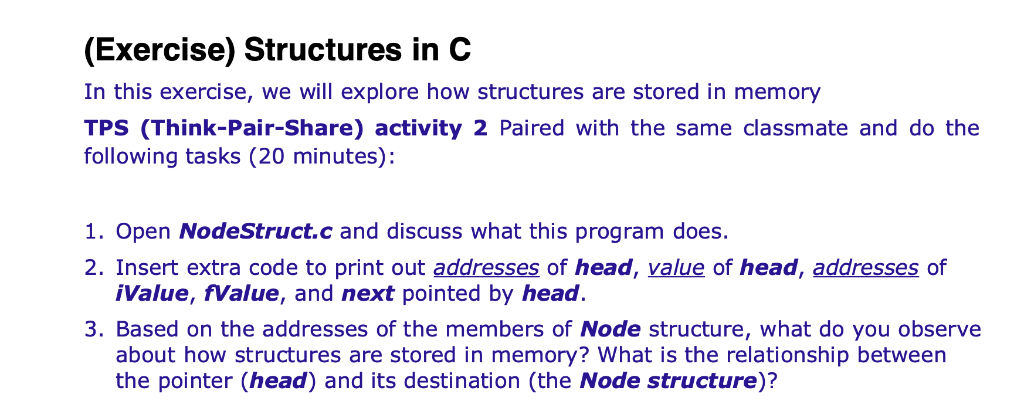
(Exercise) Structures in C In this exercise, we will explore how structures are stored in memory TPS (Think-Pair-Share) activity 2 Paired with the same classmate and do the following tasks (20 minutes): 1. Open NodeStruct.c and discuss what this program does. 2. Insert extra code to print out addresses of head, value of head, addresses of iValue, fValue, and next pointed by head. 3. Based on the addresses of the members of Node structure, what do you observe about how structures are stored in memory? What is the relationship between the pointer (head) and its destination (the Node structure)
Step by Step Solution
There are 3 Steps involved in it

Get step-by-step solutions from verified subject matter experts
 Study Help