





Question: Commas, Conjunctions, and Semicolons Comma Rule 1. Use a comma before the conjunction (for, and, nor, but, or, yet, S0) | that joins two independent
Commas, Conjunctions, and Semicolons Comma Rule
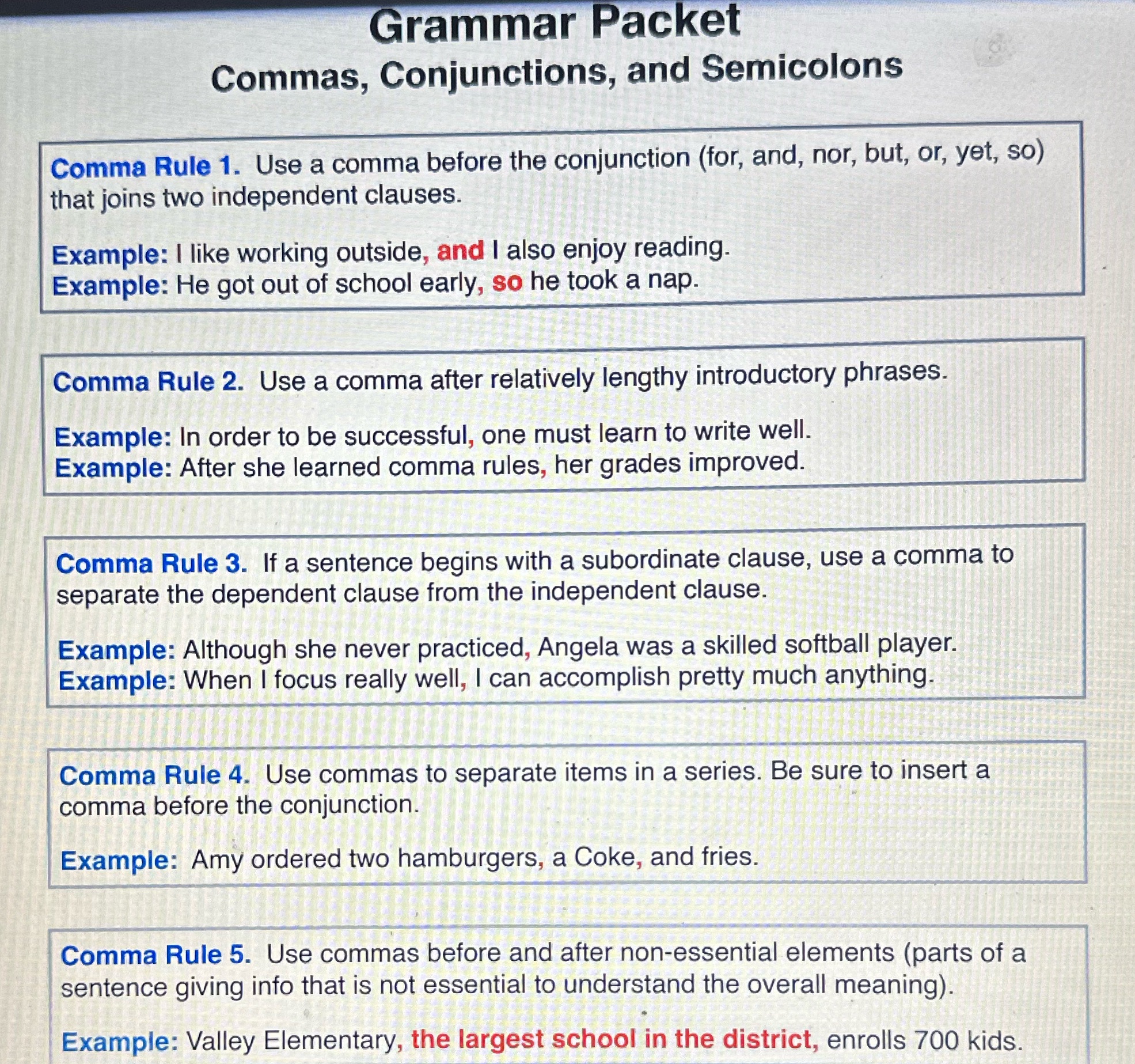
Commas, Conjunctions, and Semicolons Comma Rule 1. Use a comma before the conjunction (for, and, nor, but, or, yet, S0) | that joins two independent clauses. | Example: | like working outside, and | also enjoy reading. | Example: He got out of school early, so he tookanap. Comma Rule 2. Use a comma after relatively lengthy introductory phrases. Example: In order to be successful, one must learn to write well. Example: After she learned comma rules, her grades improved. | Comma Rule 3. If a sentence begins with a subordinate clause, use a comma to separate the dependent clause from the independent clause. ' Example: Although she never practiced, Angela was a skilled softball player. Example: When | focus really well, | can accomplish pretty much anything. ' Comma Rule 4. Use commas to separate items in a series. Be sure to insert a comma before the conjunction. Example: Amy ordered two hamburgers, a Coke, and fries. E:omma Rule 5. Use commas before and after non-essential elements (paf{s df a i ' sentence giving info that is not essential to understand the overall meaning). Example: Valley Elementary, the largest school in the district, enrolls 700 kids

Step by Step Solution

There are 3 Steps involved in it

1 Expert Approved Answer
Step: 1 Unlock blur-text-image

Question Has Been Solved by an Expert!

Get step-by-step solutions from verified subject matter experts

Step: 2 Unlock
Step: 3 Unlock

Students Have Also Explored These Related Business Writing Questions!