Question: COMMUNICATION 1106 ASSIGNMENT #1 Assignment Directions: Using the questions below, write four paragraphs, ONE PARAGRAPH PER CASE STUDY. This means you must write four brief
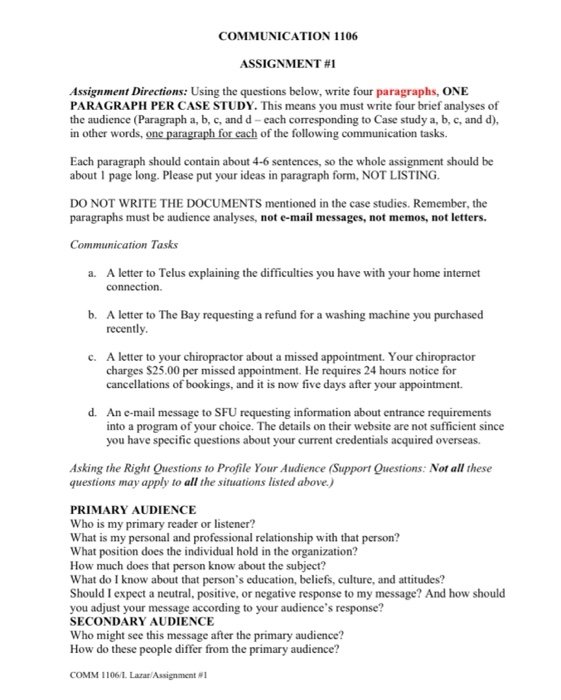
COMMUNICATION 1106 ASSIGNMENT #1 Assignment Directions: Using the questions below, write four paragraphs, ONE PARAGRAPH PER CASE STUDY. This means you must write four brief analyses of the audience (Paragraph a, b, c, and d-cach corresponding to Case study a, b, c, and d), in other words, one paragraph for each of the following communication tasks. Each paragraph should contain about 4-6 sentences, so the whole assignment should be about 1 page long. Please put your ideas in paragraph form, NOT LISTING. DO NOT WRITE THE DOCUMENTS mentioned in the case studies. Remember, the paragraphs must be audience analyses, not e-mail messages, not memos, not letters. Communication Tasks a. A letter to Telus explaining the difficulties you have with your home interet connection. b. A letter to The Bay requesting a refund for a washing machine you purchased recently. c. A letter to your chiropractor about a missed appointment. Your chiropractor charges $25.00 per missed appointment. He requires 24 hours notice for cancellations of bookings, and it is now five days after your appointment. d. An e-mail message to SFU requesting information about entrance requirements into a program of your choice. The details on their website are not sufficient since you have specific questions about your current credentials acquired overseas. Asking the Right Questions to Profile Your Audience (Support Questions: Not all these questions may apply to all the situations listed above.) PRIMARY AUDIENCE Who is my primary reader or listener? What is my personal and professional relationship with that person? What position does the individual hold in the organization? How much does that person know about the subject? What do I know about that person's education, beliefs, culture, and attitudes? Should I expect a neutral, positive, or negative response to my message? And how should you adjust your message according to your audience's response? SECONDARY AUDIENCE Who might see this message after the primary audience? How do these people differ from the primary audience? COMM 1106/1. Lazar/Assignment #1









 Study Help