







Question: COMPLETE THE FOLLOWING PROGRAM IN C: disk1, disk2, disk3 are all modified - disk.c files! disk.c: #include #include #include #include #include #include #define ITERATIONS 10
COMPLETE THE FOLLOWING PROGRAM IN C:
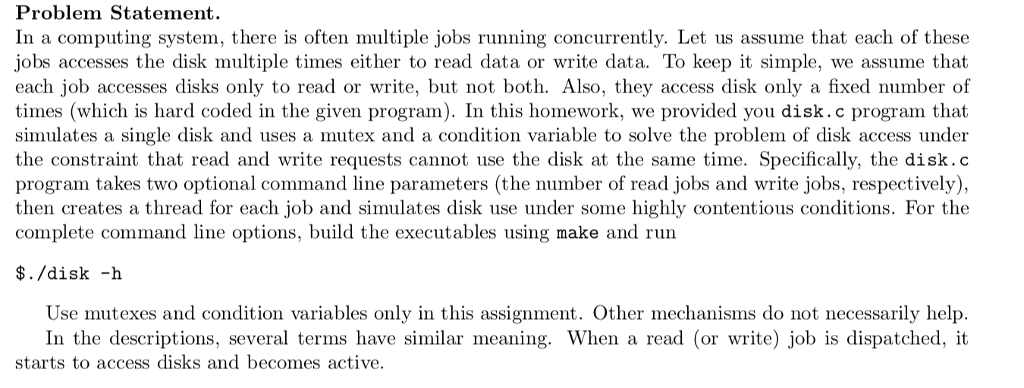
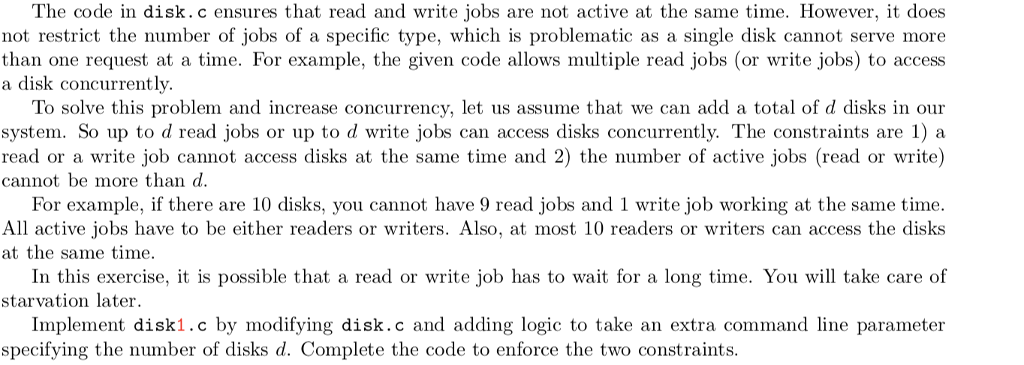

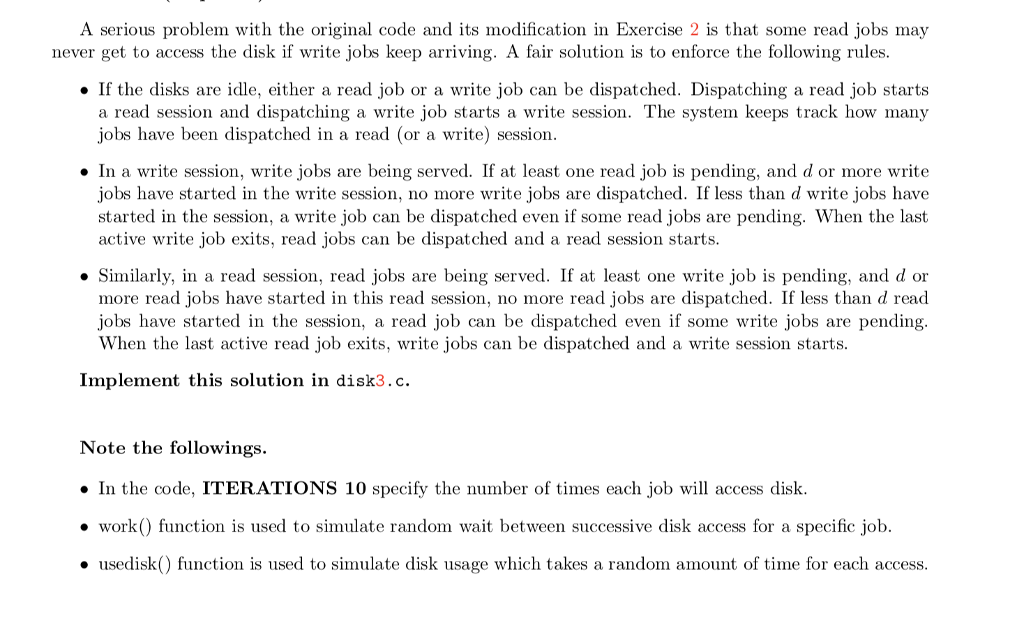
disk1, disk2, disk3 are all modified - disk.c files!
disk.c:
#include
#include
#include
#include
#include
#include
#define ITERATIONS 10
#define DEFAULT_NWRITEJOBS 10
#define DEFAULT_NREADJOBS 10
#define work() do {random_r(&buf, &random); usleep(random % 50000);} while (0)
#define usedisk() do {random_r(&buf, &random); usleep(random % 10000);} while (0)
typedef struct disk {
int numwritejobs; // number of writejobs in the disk
int numreadjobs; // number of readjobs in the disk
pthread_mutex_t mutex; // mutex to protect shared info
pthread_cond_t available; // condition variable
} disk_t;
typedef struct thread_data {
int id;
disk_t* shared_info;
} thr_data;
void * writejob(void * arg_orig)
{
thr_data *arg = arg_orig;
int i, id = arg->id;
disk_t* shared_info = arg->shared_info;
int32_t random;
struct random_data buf;
char state[64];
initstate_r(id, state, sizeof(state), &buf);
for(i=0; i work(); pthread_mutex_lock(&shared_info->mutex); while(shared_info->numreadjobs > 0) { // must wait printf("writejob #%2d waits ", id); pthread_cond_wait(&shared_info->available, &shared_info->mutex); } shared_info->numwritejobs++; printf("writejob #%2d enters ", id); pthread_mutex_unlock(&shared_info->mutex); usedisk(); pthread_mutex_lock(&shared_info->mutex); shared_info->numwritejobs--; if(shared_info->numwritejobs==0) pthread_cond_broadcast(&shared_info->available); printf("writejob #%2d exits ", id); pthread_mutex_unlock(&shared_info->mutex); } return NULL; } void* readjob(void * arg_orig) { thr_data *arg = arg_orig; int i, id = arg->id; disk_t* shared_info = arg->shared_info; int32_t random; struct random_data buf; char state[64]; initstate_r(id, state, sizeof(state), &buf); for(i=0; i work(); pthread_mutex_lock(&shared_info->mutex); while(shared_info->numwritejobs > 0) { // must wait printf("readjob #%2d waits ", id); pthread_cond_wait(&shared_info->available, &shared_info->mutex); } shared_info->numreadjobs++; printf("readjob #%2d enters ", id); pthread_mutex_unlock(&shared_info->mutex); usedisk(); pthread_mutex_lock(&shared_info->mutex); shared_info->numreadjobs--; if(shared_info->numreadjobs==0) pthread_cond_broadcast(&shared_info->available); printf("readjob #%2d exits ", id); pthread_mutex_unlock(&shared_info->mutex); } return NULL; } int main(int argc, char *argv[]) { int i, n, nwritejobs = DEFAULT_NWRITEJOBS, nreadjobs = DEFAULT_NREADJOBS; for(i = 1; i if(strncmp(argv[i], "-w", strlen("-w")) == 0) { nwritejobs = atoi(argv[++i]); } else if(strncmp(argv[i], "-r", strlen("-r")) == 0) { nreadjobs = atoi(argv[++i]); } else { fprintf(stderr, "Usage: %s [-w N|-writejobs N] [-r N|-readjobs N] ", argv[0]); return 1; } } disk_t shared_info; shared_info.numwritejobs = shared_info.numreadjobs = 0; pthread_mutex_init(&shared_info.mutex, NULL); pthread_cond_init(&shared_info.available, NULL); n = nwritejobs + nreadjobs; // number of threads to create pthread_t tid[n]; thr_data data[n]; for(i = 0; i data[i] = (thr_data){i,&shared_info}; pthread_create(&tid[i], NULL, writejob, &data[i]); } for(i = nwritejobs; i data[i] = (thr_data){i-nwritejobs,&shared_info}; pthread_create(&tid[i], NULL, readjob, &data[i]); } for(i = 0; i pthread_join(tid[i], NULL); } return 0; }
Step by Step Solution
There are 3 Steps involved in it

Get step-by-step solutions from verified subject matter experts
 Study Help