







Question: Comprehensive Problem 3 Part 1: Selected transactions completed by Kornett Company during its first fiscal year ended December 31, 2015, were as follows: 1. Journalize
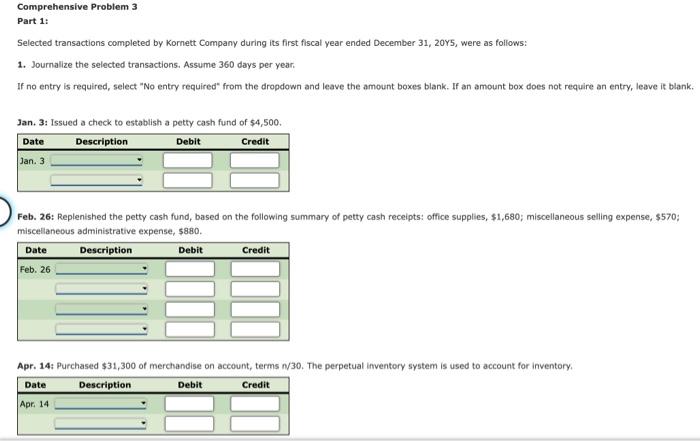
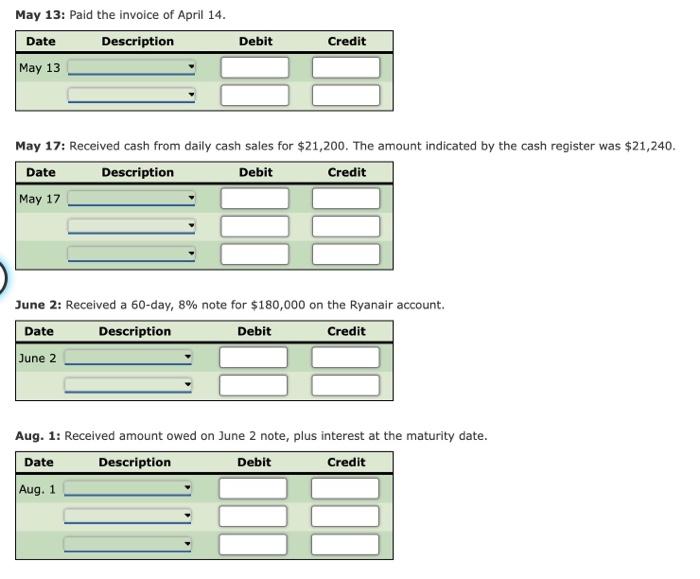
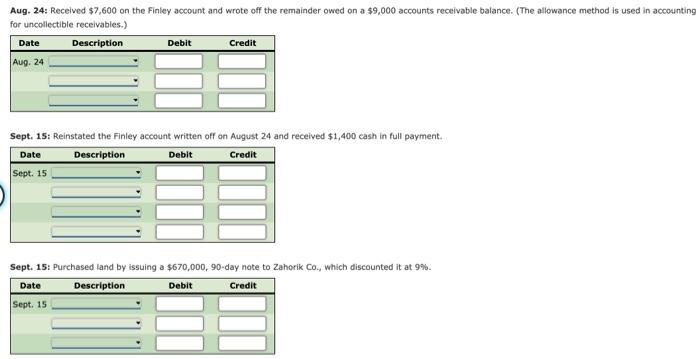
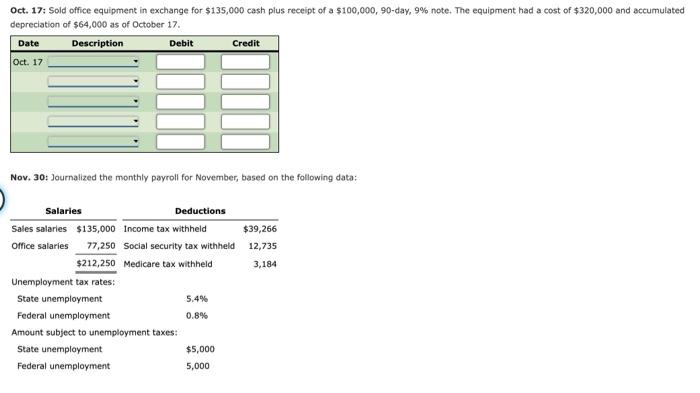
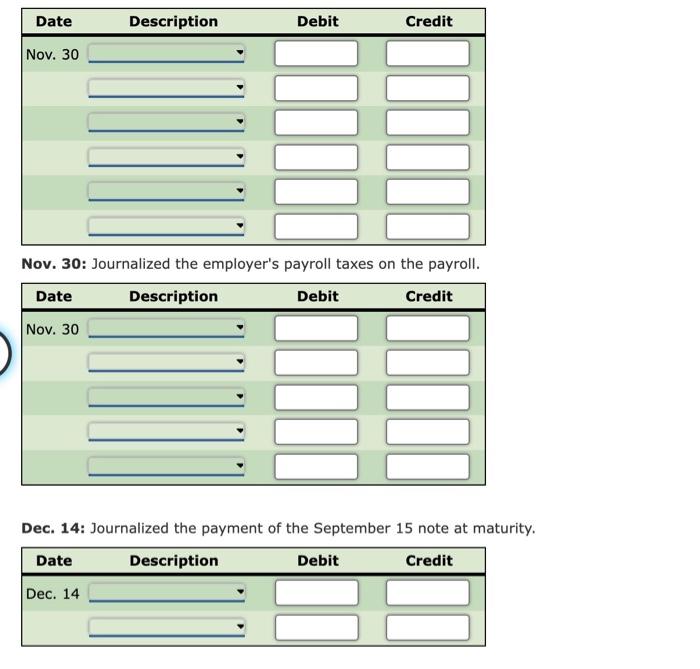
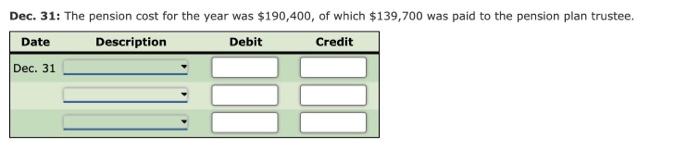
Comprehensive Problem 3 Part 1: Selected transactions completed by Kornett Company during its first fiscal year ended December 31, 2015, were as follows: 1. Journalize the selected transactions. Assume 360 days per year. If no entry is required, select "No entry required" from the dropdown and leave the amount boxes blank. If an amount box does not require an entry, leave it blank. Jan. 3: Issued a check to establish a petty cash fund of $4,500. Date Jan. 3 Description Debit Credit Feb. 26: Replenished the petty cash fund, based on the following summary of petty cash receipts: office supplies, $1,680; miscellaneous selling expense, $570; miscellaneous administrative expense, $880. Date Feb. 26 Description Debit Credit Apr. 14: Purchased $31,300 of merchandise on account, terms n/30. The perpetual inventory system is used to account for inventory. Date Apr. 14 Description: Debit Credit May 13: Paid the invoice of April 14. Date May 13 Description Debit Credit May 17: Received cash from daily cash sales for $21,200. The amount indicated by the cash register was $21,240. Date Description Debit Credit May 17 June 2: Received a 60-day, 8% note for $180,000 on the Ryanair account. Date June 2 Description Debit Credit Aug. 1: Received amount owed on June 2 note, plus interest at the maturity date. Date Aug. 1 Description Debit Credit Aug. 24: Received $7,600 on the Finley account and wrote off the remainder owed on a $9,000 accounts receivable balance. (The allowance method is used in accounting for uncollectible receivables.) Date Aug. 24 Description Debit = Credit Sept. 15: Reinstated the Finley account written off on August 24 and received $1,400 cash in full payment. Date Sept. 15 Description Debit Credit Sept. 15: Purchased land by issuing a $670,000, 90-day note to Zahorik Co., which discounted it at 9%. Date Sept. 15 Description Debit Credit Oct. 17: Sold office equipment in exchange for $135,000 cash plus receipt of a $100,000, 90-day, 9% note. The equipment had a cost of $320,000 and accumulated depreciation of $64,000 as of October 17. Date Oct. 17 Description Debit Credit Nov. 30: Journalized the monthly payroll for November, based on the following data: Salaries Deductions Sales salaries $135,000 Income tax withheld $39,266 Office salaries 77,250 Social security tax withheld 12,735 $212,250 Medicare tax withheld 3,184 Unemployment tax rates: State unemployment 5.4% Federal unemployment 0.8% Amount subject to unemployment taxes: State unemployment $5,000 Federal unemployment 5,000 Date Nov. 30 Description Debit Credit Nov. 30: Journalized the employer's payroll taxes on the payroll. Date Nov. 30 Description Debit Credit Dec. 14: Journalized the payment of the September 15 note at maturity. Date Dec. 14 Description Debit Credit Dec. 31: The pension cost for the year was $190,400, of which $139,700 was paid to the pension plan trustee. Date Dec. 31 Description Debit Credit
Step by Step Solution
There are 3 Steps involved in it

Get step-by-step solutions from verified subject matter experts
 Study Help