







Question: Conduct a comprehensive report on the attached case. The case must include the following: Introduction - that describes the situation under investigation (i.e., the specifics
Conduct a comprehensive report on the attached case. The case must include the following:
- Introduction - that describes the situation under investigation (i.e., the specifics of the organization and not the main issue being faced).
- Problem (issue) Statement - highlight the main issue(s) that must be addressed.
- Environmental scan - This should include external and internal factors impacting operations.
- Analysis (data) - this should be the 'meat' of your submission that addresses the issue using logic/dataumerical analysis to support your assessment.
- Recommendations - this section should flow directly from your analysis, where you provide your best, implementable solution for the problem at hand, given the way you analyzed the situation. Also, you should discuss the potential implications of your decisions, as every decision has both positiveegative components.
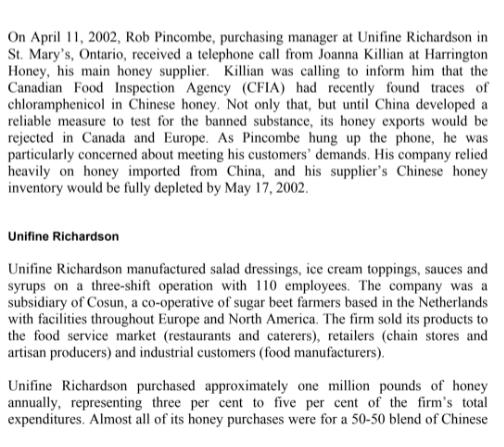
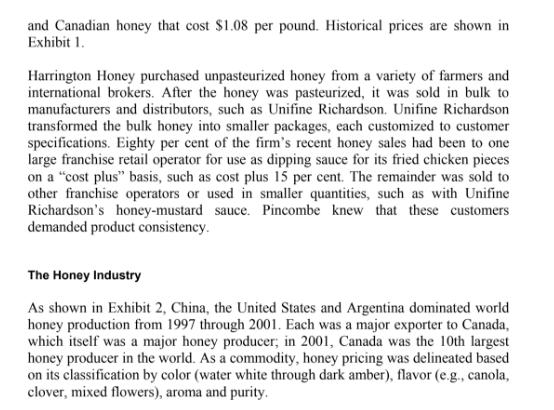
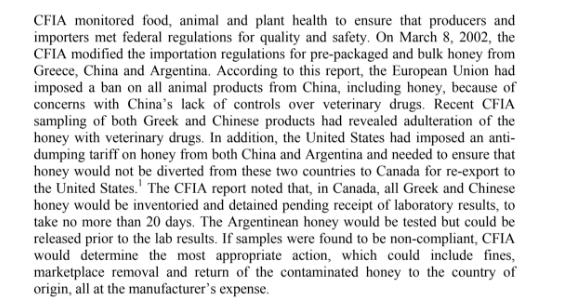
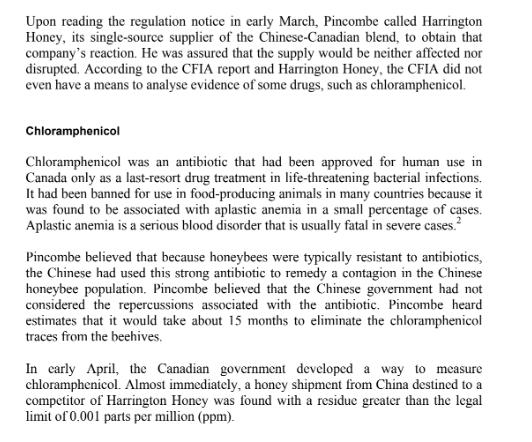
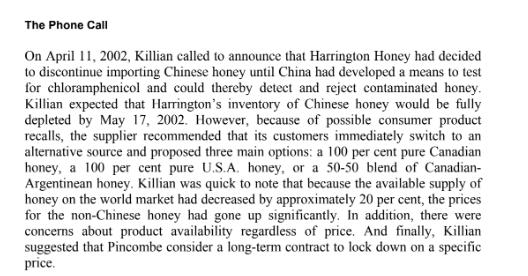
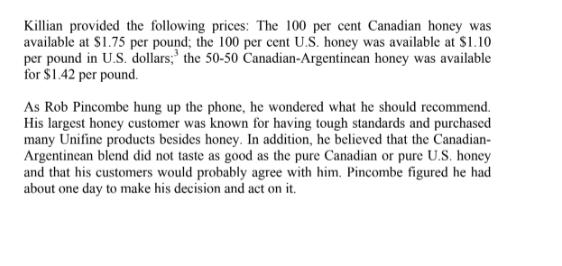
On April 11, 2002, Rob Pincombe, purchasing manager at Unifine Richardson in St. Mary's, Ontario, received a telephone call from Joanna Killian at Harrington Honey, his main honey supplier. Killian was calling to inform him that the Canadian Food Inspection Agency (CFIA) had recently found traces of chloramphenicol in Chinese honey. Not only that, but until China developed a reliable measure to test for the banned substance, its honey exports would be rejected in Canada and Europe. As Pincombe hung up the phone, he was particularly concerned about meeting his customers' demands. His company relied heavily on honey imported from China, and his supplier's Chinese honey inventory would be fully depleted by May 17, 2002. Unifine Richardson Unifine Richardson manufactured salad dressings, ice cream toppings, sauces and syrups on a three-shift operation with 110 employees. The company was a subsidiary of Cosun, a co-operative of sugar beet farmers based in the Netherlands with facilities throughout Europe and North America. The firm sold its products to the food service market (restaurants and caterers), retailers (chain stores and artisan producers) and industrial customers (food manufacturers). Unifine Richardson purchased approximately one million pounds of honey annually, representing three per cent to five per cent of the firm's total expenditures. Almost all of its honey purchases were for a 50-50 blend of Chinese
Step by Step Solution
3.41 Rating (154 Votes )
There are 3 Steps involved in it
Introduction Unifine Richardson a subsidiary of Cosun operates in St Marys Ontario manufacturing salad dressings ice cream toppings sauces and syrups ... View full answer

Get step-by-step solutions from verified subject matter experts
 Study Help