







Question: Consider a computer system with a single-core processor. There are two processes to run in the system: P_1 and P_2. Process P_1 has a life
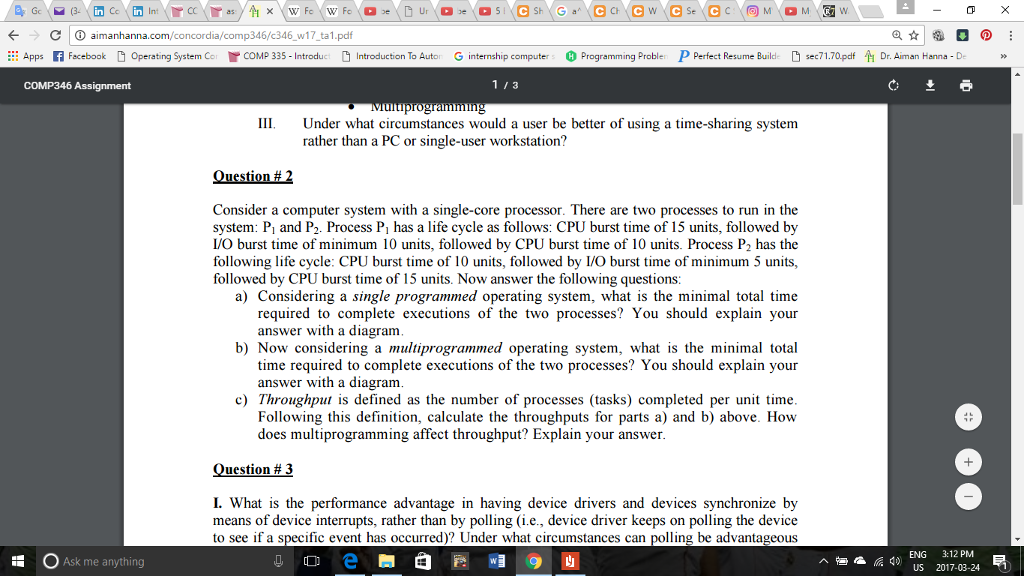
Consider a computer system with a single-core processor. There are two processes to run in the system: P_1 and P_2. Process P_1 has a life cycle as follows: CPU burst time of 15 units, followed by I/O burst time of minimum 10 units, followed by CPU burst time of 10 units. Process P_2 has the following life cycle: CPU burst time of 10 units, followed by I/O burst time of minimum 5 units, followed by CPU burst time of 15 units. Now answer the following questions: a) Considering a single programmed operating system, what is the minimal total time required to complete executions of the two processes? You should explain your answer with a diagram b) Now considering a multiprogrammed operating system, what is the minimal total time required to complete executions of the two processes? You should explain your answer with a diagram. c) Throughput is defined as the number of processes (tasks) completed per unit time Following this definition, calculate the throughputs for parts a) and b) above. How does multiprogramming affect throughput? Explain your answer. I. What is the performance advantage in having device drivers and devices synchronize by means of device interrupts, rather than by polling (i e., device driver keeps on polling the device to see if a specific event has occurred)? Under what circumstances can polling be advantageous
Step by Step Solution
There are 3 Steps involved in it

Get step-by-step solutions from verified subject matter experts
 Study Help