







Question: Consider a Heckscher-Ohlin (H-O) model in which the two countries are the United States (USA) and China (CHN); the two factors of production are skilled
Consider a Heckscher-Ohlin (H-O) model in which the two countries are the United States (USA) and China (CHN); the two factors of production are skilled labor or "human capital" (H) and ordinary labor (L), which receive wagesWHandWL; the two goods are jet airplanes (A) and electronic devices (E). You may assume that the USA is skilled-labor (H) abundant.
- Draw the relative demand (RD) for skilled labor curves for the two goods (Hint: put relative factor suppliesH/Lon the horizontal axis, and the relative wageWH/WLon the vertical axis). Which one is further to the right, RD for airplanes (A) or electronics (E)?
- On a separate diagram of this type for each country, show the economy-wide average relative demand for skilled labor and indicate which way it shifts in each country as a result of trade (and briefly explain why it shifts that way). What is the predicted impact on the relative wageWH/WLin the USA? in China?
- Which groups (L and H workers in each country) do you expect to gain and which ones to lose as a result of free trade, according to this model? To support your answer:
- Analyze what happens to absolute wages in terms of both goods (WH/PE, WH/PA, WL/PE, and WL/PA) using the relevant marginal productivities of skilled and unskilled labor (MPH and MPL for E and A). State which theorem you are applying here.
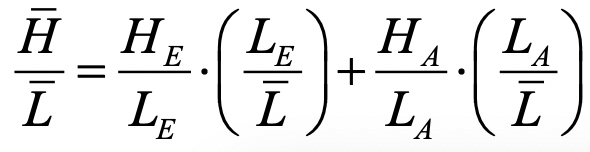
- Also show the direction of change in the ratios in the following equation, which equates the relative supply of the factors to the relative demand:
Step by Step Solution
There are 3 Steps involved in it
1 Expert Approved Answer
Step: 1 Unlock

Question Has Been Solved by an Expert!
Get step-by-step solutions from verified subject matter experts
Step: 2 Unlock
Step: 3 Unlock
 Study Help