





Question: Consider the decision problem shown in Figure 5.26. This basic decision tree often is called a cost- to-loss ratio problem and is characterized as a
Consider the decision problem shown in FigureConsider the decision problem shown in Figure

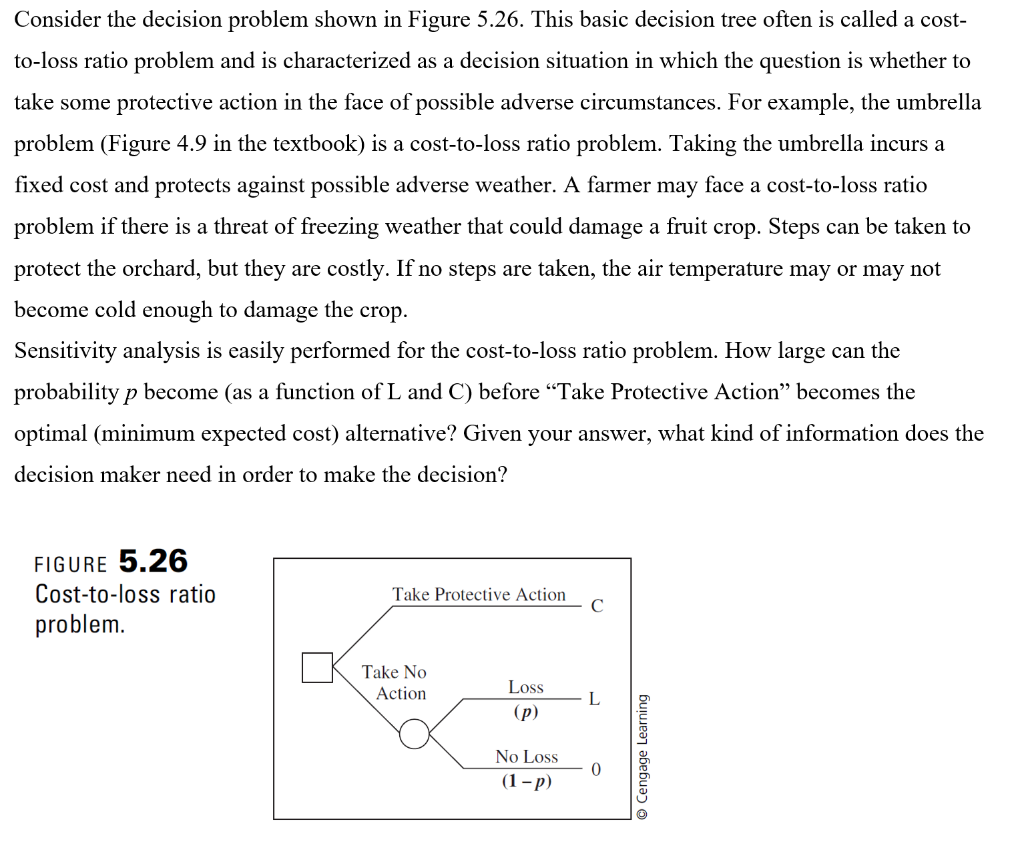
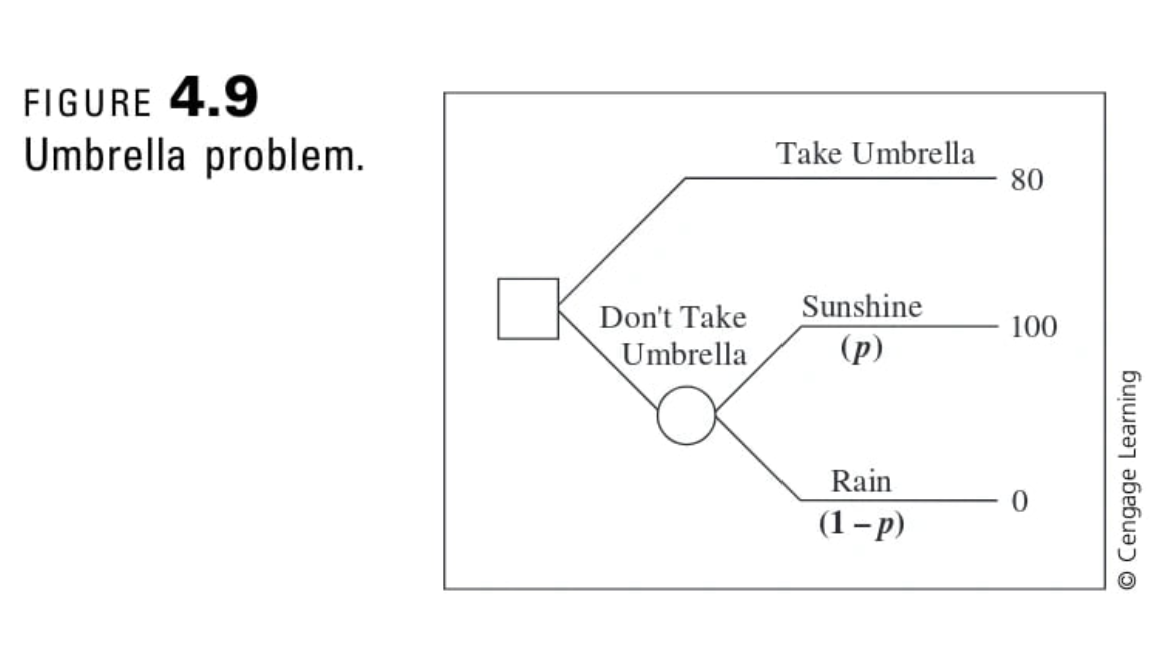
Consider the decision problem shown in Figure 5.26. This basic decision tree often is called a cost- to-loss ratio problem and is characterized as a decision situation in which the question is whether to take some protective action in the face of possible adverse circumstances. For example, the umbrella problem (Figure 4.9 in the textbook) is a cost-to-loss ratio problem. Taking the umbrella incurs a fixed cost and protects against possible adverse weather. A farmer may face a cost-to-loss ratio problem if there is a threat of freezing weather that could damage a fruit crop. Steps can be taken to protect the orchard, but they are costly. If no steps are taken, the air temperature may or may not become cold enough to damage the crop. Sensitivity analysis is easily performed for the cost-to-loss ratio problem. How large can the probability p become (as a function of L and C) before Take Protective Action becomes the optimal (minimum expected cost) alternative? Given your answer, what kind of information does the decision maker need in order to make the decision? FIGURE 5.26 Cost-to-loss ratio problem. Take Protective Action Take No Action Loss (p) L No Loss (1-P) Cengage Learning FIGURE 4.9 Umbrella problem. Take Umbrella 80 Don't Take Umbrella Sunshine (p) 100 Rain (1-P) Cengage Learning 0

Step by Step Solution

There are 3 Steps involved in it

1 Expert Approved Answer
Step: 1 Unlock blur-text-image

Question Has Been Solved by an Expert!

Get step-by-step solutions from verified subject matter experts

Step: 2 Unlock
Step: 3 Unlock

Students Have Also Explored These Related General Management Questions!