







Question: Consider the following class definition: After the following client code executes: Widget w1= new Widget (5); Widget w2=w1; w2. set(1); what is the value of
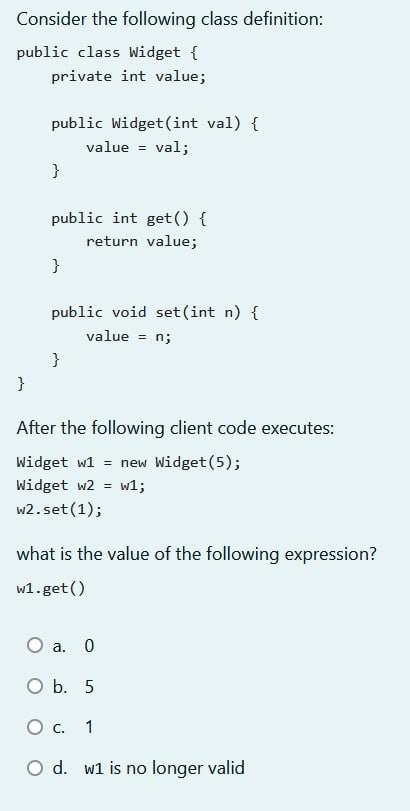
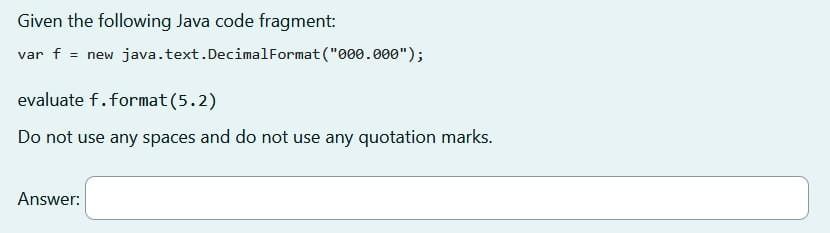
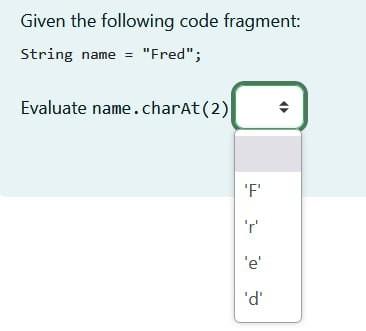
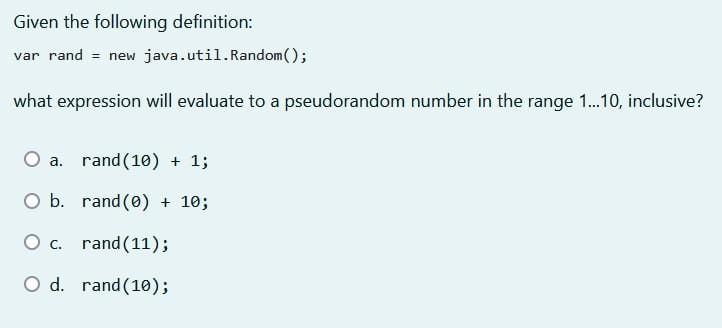
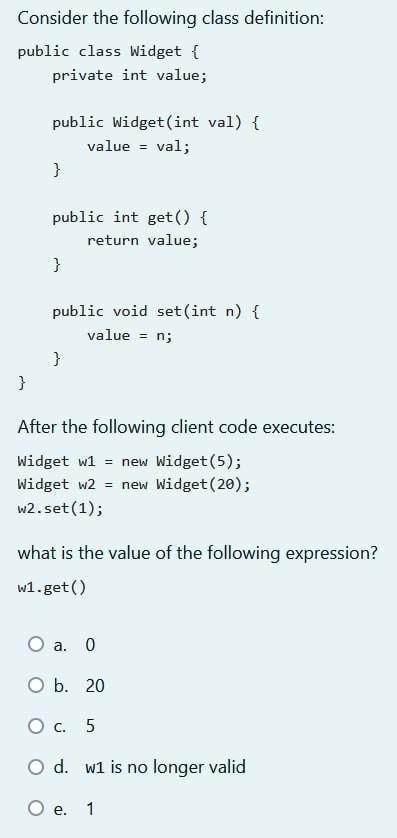
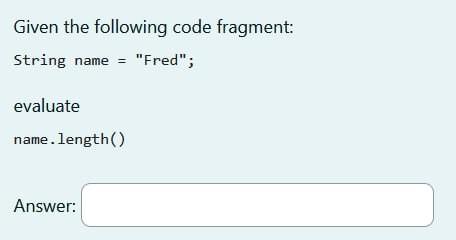

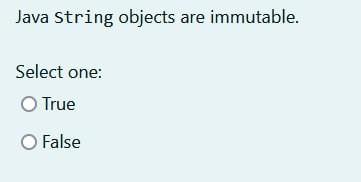
Consider the following class definition: After the following client code executes: Widget w1= new Widget (5); Widget w2=w1; w2. set(1); what is the value of the following expression? w1get() a. 0 b. 5 c. 1 d. w1 is no longer valid Given the following Java code fragment: var f= new java.text.DecimalFormat("000.000"); evaluate f. format (5.2) Do not use any spaces and do not use any quotation marks. Ans' Given the following code fragment: String name = "Fred"; Evaluate name. charAt(2) ' F ' 'e' 'd' Given the following definition: var rand = new java. util. Random( ) what expression will evaluate to a pseudorandom number in the range 1..10, inclusive? a. rand(10)+1 b. rand(0)+10; c. rand(11); d. rand (10); Consider the following class definition: After the following client code executes: Widget w1= new Widget(5); Widget w2= new Widget (20); w2. set(1); what is the value of the following expression? w1.get() a. 0 b. 20 c. 5 d. w1 is no longer valid e. 1 Given the following code fragment: String name = "Fred"; evaluate name.length() Answer: Complete the following Java statement that assigns to the int variable num the decimal equivalent of the given binary string. Move the code pieces in place to build statement. num=.,; Not all pieces will be used. Java String objects are immutable. Select one: True False
Step by Step Solution
There are 3 Steps involved in it

Get step-by-step solutions from verified subject matter experts
 Study Help