







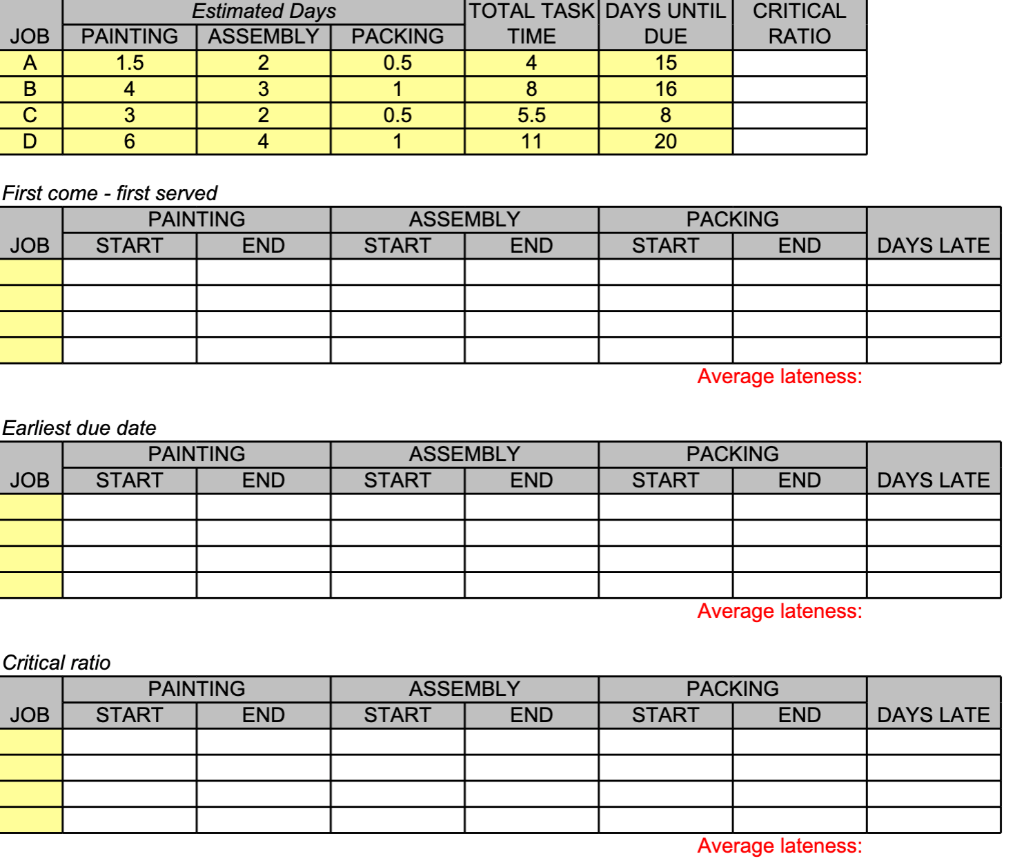
Question: Consider the job information. Each job must proceed sequentially through the different work areas, and each area can work on only one job at a
Consider the job information. Each job must proceed sequentially through the different work areas, and each area can work on only one job at a time. Sequence the jobs according to the (1) first-come, first-served rule, (2) earliest due date, and (3) critical ratio. Calculate average lateness under each rule. Which rule performs best? Are any of the results completely satisfactory? What are the implications?
Step by Step Solution
There are 3 Steps involved in it
1 Expert Approved Answer
Step: 1 Unlock

Question Has Been Solved by an Expert!
Get step-by-step solutions from verified subject matter experts
Step: 2 Unlock
Step: 3 Unlock
 Study Help