







Question: Consider the network below that runs a link-state routing protocol that computes shortest paths as a sum of link weights. The number on each link
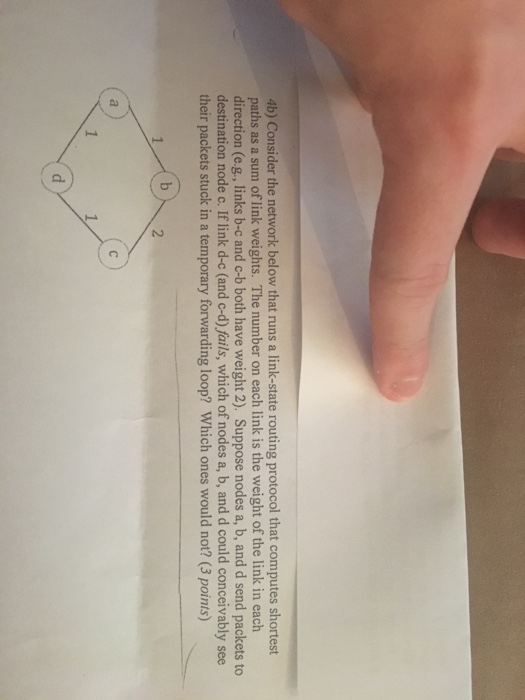
Consider the network below that runs a link-state routing protocol that computes shortest paths as a sum of link weights. The number on each link is the weight of the link in each direction (e.g., links b-c and c-b both have weight 2). Suppose nodes a, b, and d send packets to destination node c. If link d-c (and c-d) fails, which of nodes a, b, and d could conceivably see their packets stuck in a temporary forwarding loop? Which ones would not
Step by Step Solution
There are 3 Steps involved in it
1 Expert Approved Answer
Step: 1 Unlock

Question Has Been Solved by an Expert!
Get step-by-step solutions from verified subject matter experts
Step: 2 Unlock
Step: 3 Unlock
 Study Help