







Question: consistent) a. Define decision variables with a measurement unit (e.g. patiets, kg, or km ) b. Provide an objective function and constraints and clearly show
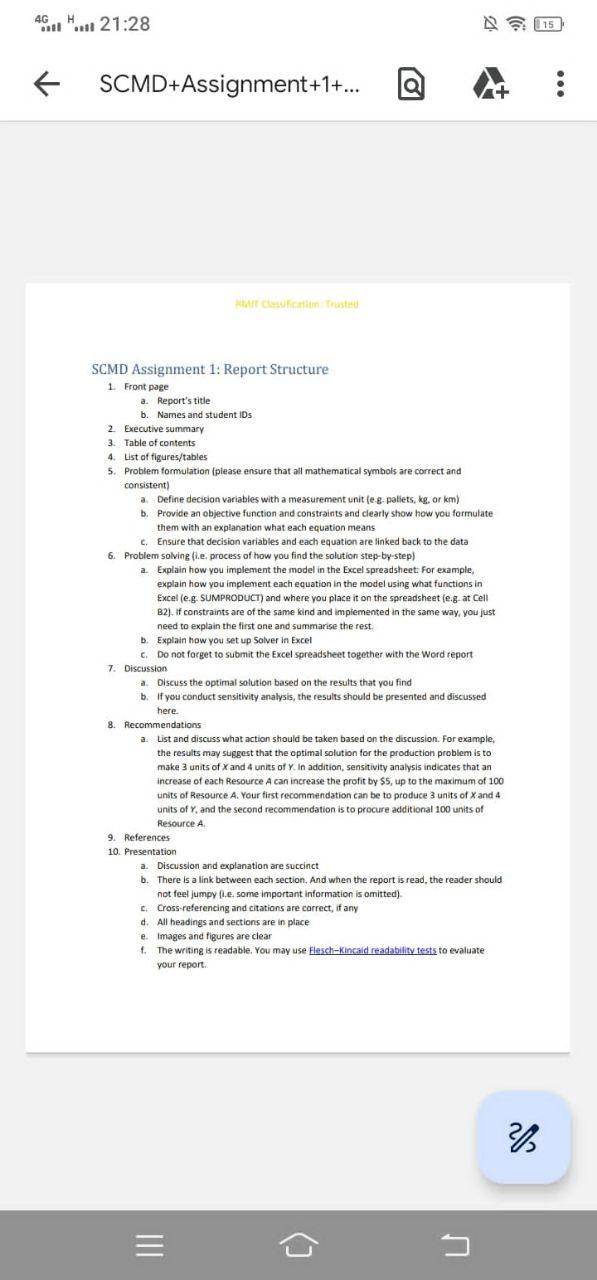
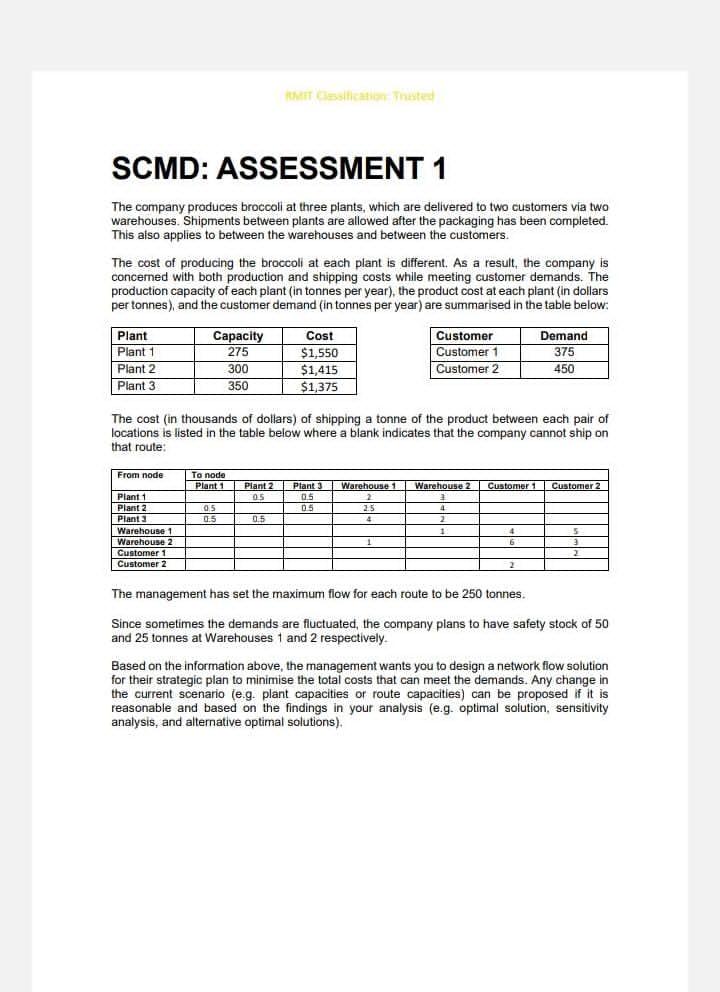
consistent) a. Define decision variables with a measurement unit (e.g. patiets, kg, or km ) b. Provide an objective function and constraints and clearly show how you formulate them with an explanation what each equation means c. Ensure that decision variables and each equation are linked back to the data 6. Problem solving (i.e. process of how you find the solution step-by-step) a. Explain how you implement the model in the Excel spreadsheet: For example, explain how you implement each equation in the model using what functions in Excel (e.g- SUMPRODUCT) and where you place it on the spreadsheet (e.g-at Cell B2). if constraints are of the same kind and implemented in the same way, you just need to explain the first one and summarise the rest. b. Explain how you set up Solver in Excel c. Do not forget to submit the Excel spreadsheet together with the Word report 7. Discussion a. Discuss the optimal solution based on the results that you find b. If you conduct sensitivity analysis, the results should be presented and discussed here. 8. Recommendations a. List and discuss what action should be taken based on the discussion. For example, the results may suggest that the optimal solution for the production problem is to make 3 units of X and 4 units of Y. in addition, sensitivity analysis indicates that an increase of each Resource A can increase the profit by $5, up to the maximum of 100 units of Resource A. Your first recommendation can be to produce 3 units of x and 4 units of Y, and the second recommendation is to procure additional 100 units of Resource A. 9. References 10. Presentation a. Discussion and explanation are succinct b. There is a link between each section. And when the report is read, the reader should not feel jumpy [i,e. some important information is omitted). c. Cross-referencing and citations are correct, if any d. All headings and sections are in place e. Images and figures are clear 1. The writing is readable. You may use Elesch-Kincaid readability tests to evaluate your report. The company produces broccoli at three plants, which are delivered to two customers via two warehouses. Shipments between plants are allowed after the packaging has been completed. This also applies to between the warehouses and between the customers. The cost of producing the broccoli at each plant is different. As a result, the company is concemed with both production and shipping costs whill meeting customer demands. The production capacity of each plant (in tonnes per year), the product cost at each plant (in dollars per tonnes), and the customer demand (in tonnes per year) are summarised in the table below: The cost (in thousands of dollars) of shipping a tonne of the product between each pair of locations is listed in the table below where a blank indicates that the company cannot ship on that route: The management has set the maximum flow for each route to be 250 tonnes. Since sometimes the demands are fluctuated, the company plans to have safety stock of 50 and 25 tonnes at Warehouses 1 and 2 respectively. Based on the information above, the management wants you to design a network flow solution for their strategic plan to minimise the total costs that can meet the demands. Any change in the current scenario (e.g. plant capacities or route capacities) can be proposed if it is reasonable and based on the findings in your analysis (e.g. optimal solution, sensitivity analysis, and alternative optimal solutions)
Step by Step Solution
There are 3 Steps involved in it

Get step-by-step solutions from verified subject matter experts
 Study Help