







Question: Construct a table parallel to Table 22-1, listing events that would lead to a decrease in aggregate demand. (Your table should provide different examples rather
Construct a table parallel to Table 22-1, listing events that would lead to a decrease in aggregate demand. (Your table should provide different examples rather than simply changing the direction of the factors mentioned in Table 22-1.)
Reference Table 22-1
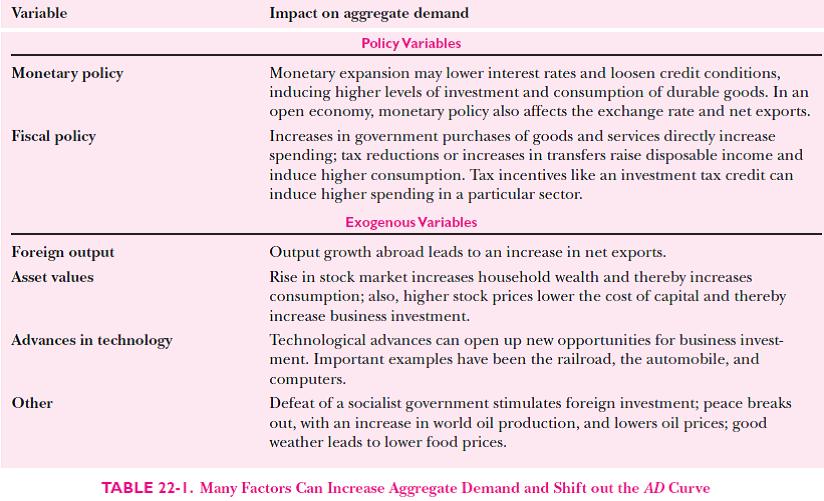
Variable Impact on aggregate demand Policy Variables Monetary policy Monetary expansion may lower interest rates and loosen credit conditions, inducing higher levels of investment and consumption of durable goods. In an open economy, monetary policy also affects the exchange rate and net exports. Fiscal policy Increases in government purchases of goods and services directly increase spending; tax reductions or increases in transfers raise disposable income and induce higher consumption. Tax incentives like an investment tax credit can induce higher spending in a particular sector. Exogenous Variables Foreign output Output growth abroad leads to an increase in net exports. Asset values Rise in stock market increases household wealth and thereby increases consumption; also, higher stock prices lower the cost of capital and thereby increase business investment. Advances in technology Technological advances can open up new opportunities for business invest- ment. Important examples have been the railroad, the automobile, and computers. Other Defeat of a socialist government stimulates foreign investment; peace breaks out, with an increase in world oil production, and lowers oil prices; good weather leads to lower food prices. TABLE 22-1. Many Factors Can Increase Aggregate Demand and Shift out the AD Curve
Step by Step Solution
3.41 Rating (151 Votes )
There are 3 Steps involved in it

Get step-by-step solutions from verified subject matter experts
Document Format (2 attachments)

635de39e73e84_179726.pdf
180 KBs PDF File

635de39e73e84_179726.docx
120 KBs Word File
 Study Help