







Question: Construct an experimental, discrete probability table by rolling three six-sided dice and calculating the total. Perform 200 trials and record the results. The rolling of
Construct an experimental, discrete probability table by rolling three six-sided dice and calculating the total. Perform 200 trials and record the results. The rolling of three six-sided dice can be simulated using a graphing calculator by "rolling" each of the dice in a separate list using:
Math --> Prob --> randInt(1, 6, 200)
Once all three lists are generated, add them to create the totals of the 200 trials.
- discrete random variable relative frequency histogram for this data. Clearly label the axes and scale.
- Calculate the mean and standard deviation for the roll totals:
?= ?=
Use these to define a normal probability distribution for the total on the roll of 3 dice.
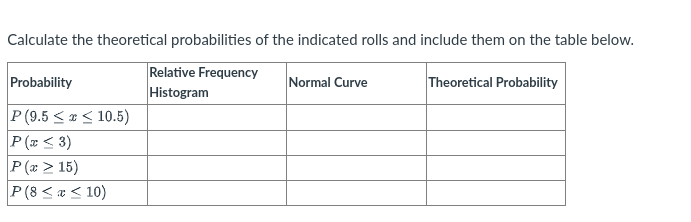
- Compare the probabilities of the experimental discrete probability distribution and the normal curve distribution for several cases listed on the table. Complete the table.
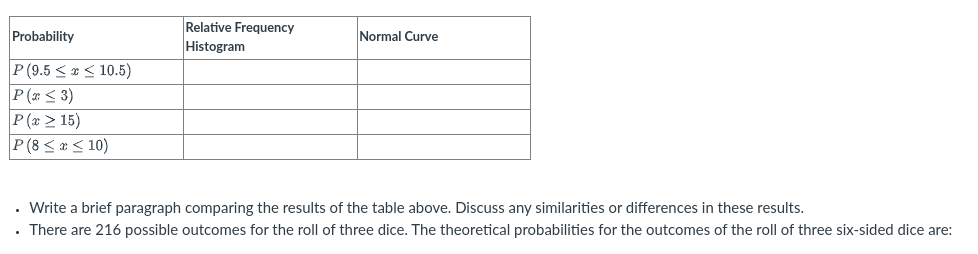
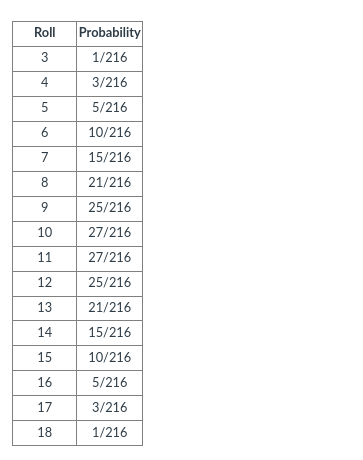
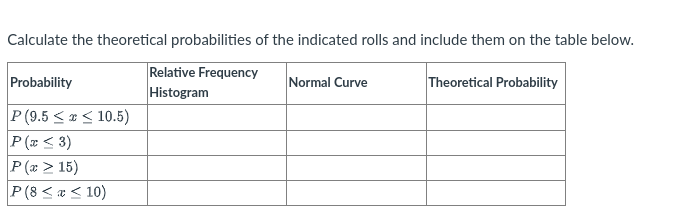
Relative Frequency Histogram Normal Curve . Write a brief paragraph comparing the results of the table above. Discuss any similarities or differences in these results. . There are 216 possible outcomes for the roll of three dice. The theoretical probabilities for the outcomes of the roll of three six-sided dice are: \fCalculate the theoretical probabilities of the indicated rolls and include them on the table below. Relative Frequency Probability Normal Curve Theoretical Probability Histogram P(9.5 15) P(8
Step by Step Solution
There are 3 Steps involved in it

Get step-by-step solutions from verified subject matter experts
 Study Help