







Question: COP3502C Computer Science 1 Sorting Algorithm Runtime Experiment In this lah, you will need to write a c program and manually create an excel
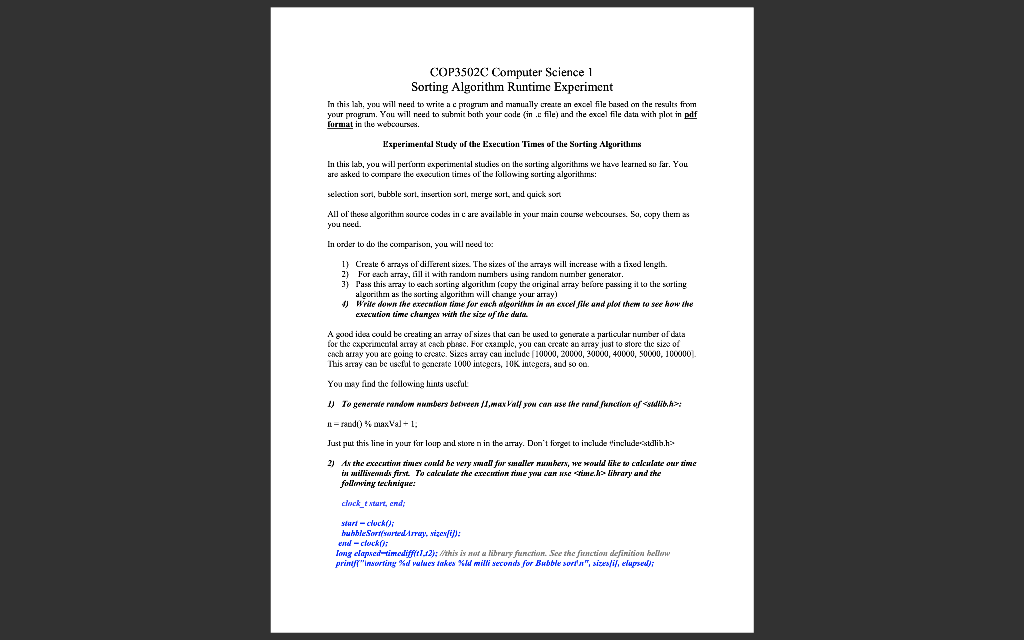
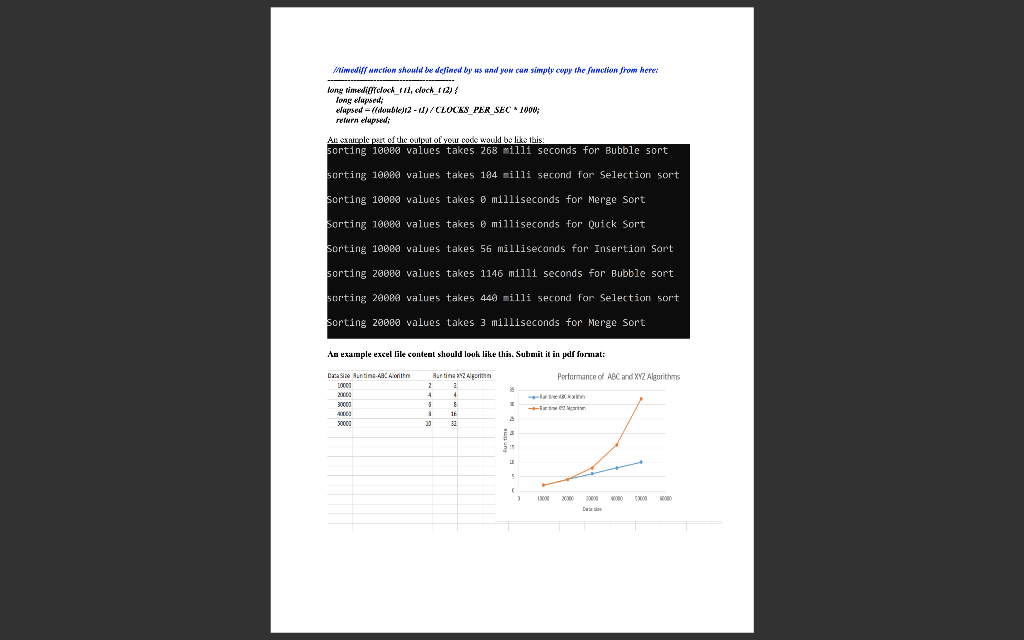
COP3502C Computer Science 1 Sorting Algorithm Runtime Experiment In this lah, you will need to write a c program and manually create an excel file based on the results from your program. You will need to submit bath your code (in .c file) and the excel file data with plot in pdf format in the webcouns. Experimental Study of the Execution Times of the Sorting Algorithms In this lab, you will perform experimental studies on the surting algorithms we have learned so far. You are asked to compare the execution times of the following surting algorithms: selection sort, bubble sort, insertion sort, merge sort, and quick sort All of these algorithm source codes in c are available in your main course webcourses. Sa, copy them as you need. In order to do the comparison, you will need to: 1) Create 6 arrays of different sizes. The sizes of the arrays will increase with a fixed length. 2) For each array, fill it with random numbers using random number generator. 3) Pass this array to each sorting algorithm (cupy the original array before passing it to the sorting algorithm as the surting algorithm will change your array) 4) Write down the execution time for each algorithm in an excel file and plot them to see how the execution time changes with the size of the data. A good idea could be creating an array of sizes that can be used to generate a particular number of data for the experimental array at cach phisc. For example, you can create an array just to store the size of each array you are going to orcato. Sizes array can include [10000, 20000, 30000, 40000, 50000, 100000). This array can be useful to generate 1000 integers, 10K integers, and so on. You may find the following hints useful 1) To generate random numbers between [1,maxVall you can use the rand function of : n=rand() % maxVal+ 1; Just put this line in your for loup and store n in the array. Don't forget to include #include //timediff unction should be defined by us and you can simply copy the function from here: long timedifficlock_111, clock_112) { long elapsed: elapsed -((double)12-11)/CLOCKS_PER_SEC * 1000; return elapsed; An example part of the output of your code would be like this: sorting 10000 values takes 268 milli seconds for Bubble sort sorting 10000 values takes 104 milli second for Selection sort Sorting 10000 values takes milliseconds for Merge Sort Sorting 10000 values takes milliseconds for Quick Sort Sorting 10000 values takes 56 milliseconds for Insertion Sort sorting 20000 values takes 1146 milli seconds for Bubble sort sorting 20000 values takes 440 milli second for Selection sort Sorting 20000 values takes 3 milliseconds for Merge Sort An example excel file content should look like this. Submit it in pdf format: Data Size Runtime-ABC Arithm ww LOCCO 20000 30000 40000 30000 Runtina XYZ Algorith 2 4 & 2 4 6 3 20 16 32 * X 51 20 5 ( 3 Performance of ABC and XYZ Algorithms Xen Fart02 Martin 13000 30000 80000 D 40000 53000 0000
Step by Step Solution
3.49 Rating (156 Votes )
There are 3 Steps involved in it

Get step-by-step solutions from verified subject matter experts
 Study Help