







Question: Core Principle As HR professionals, we are responsible for adding value to the organizations we serve and contributing to the ethical success of those organizations.
Core Principle As HR professionals, we are responsible for adding value to the organizations we serve and contributing to the ethical success of those organizations. We accept professional responsibility for our individual decisions and actions. We are also advocates for the profession by engaging in activities that enhance its credibility and value. Intent To build respect, credibility and strategic importance for the HR profession within our organizations, the business community, and the communities in which we work. To assist the organizations we serve in achieving their objectives and goals. To inform and educate current and future practitioners, the organizations we serve, and the general public about principles and practices that help the profession. To positively influence workplace and recruitment practices. To encourage professional decision making and responsibility. To encourage social responsibility. Guidelines 1. Adhere to the highest standards of ethical and professional behavior. 2. Measure the effectiveness of HR in contributing to or achieving organizational goals. 3. Comply with the law. 4. Work consistent with the values of the profession. 5. Strive to achieve the highest levels of service, performance, and social responsibility. 6. Advocate for the appropriate use and appreciation of human beings as employees. 7. Advocate openly and within the established forums for debate in order to influence decision making and results. PROFESSIONAL DEVELOPMENT Core Principle As professionals we must strive to meet the highest standards of competence and commit to strengthen our competencies on a continuous basis. Intent To expand our knowledge of human resource management to further our understanding of how our organizations function. To advance our understanding of how organizations work ("the business of the business"). Guidelines 1. Pursue formal academic opportunities. 2. Commit to continuous learning, skills development, and application of new knowledge related to both human resource management and the organizations we serve. 3. Contribute to the body of knowledge, the evolution of the profession, and the growth of individuals through teaching, research, and dissemination of knowledge. 4. Pursue certification such as CCP, CEBS, PHR, SPHR, etc., where available, or comparable measures of competencies and knowledge. 58 | Part 1 The Context of Strategic Human Resource Management Copyright 2013 Cengage Learning. All Rights Reserved. May not be copied, scanned, or duplicated, in whole or in part. Due to electronic rights, some third party content may be suppressed from the eBook and/or eChapter(s). Editorial review has deemed that any suppressed content does not materially affect the overall learning experience. Cengage Learning reserves the right to remove additional content at any time if subsequent rights restrictions require it. ETHICAL LEADERSHIP Core Principle HR professionals are expected to exhibit individual leadership as a role model for maintaining the highest standards of ethical conduct. Intent To set the standard and be an example for others. To earn individual respect and increase our credibility with those we serve. Guidelines 1. Be ethical; act ethically in every professional interaction. 2. Question pending individual and group actions when necessary to ensure that decisions are ethical and are implemented in an ethical manner. 3. Seek expert guidance if ever in doubt about the ethical propriety of a situation. 4. Through teaching and mentoring, champion the development of others as ethical leaders in the profession and in organizations. FAIRNESS AND JUSTICE Core Principle As human resource professionals, we are ethically responsible for promoting and fostering fairness and justice for all employees and their organizations. Intent To create and sustain an environment that encourages all individuals and the organization to reach their fullest potential in a positive and productive manner. Guidelines 1. Respect the uniqueness and intrinsic worth of every individual. 2. Treat people with dignity, respect, and compassion to foster a trusting work environment free of harassment, intimidation, and unlawful discrimination. 3. Ensure that everyone has the opportunity to develop their skills and new competencies. 4. Assure an environment of inclusiveness and a commitment to diversity in the organizations we serve. 5. Develop, administer, and advocate policies and procedures that foster fair, consistent, and equitable treatment for all. 6. Regardless of personal interests, support decisions made by our organizations that are both ethical and legal. 7. Act in a responsible manner and practice sound management in the country(ies) in which the organizations we serve operate. CONFLICTS OF INTEREST Core Principle As HR professionals, we must maintain a high level of trust with our stakeholders. We must protect the interests of our stakeholders as well as our professional integrity and should not engage in activities that create actual, apparent, or potential conflicts of interest. Intent To avoid activities that are in conflict or may appear to be in conflict with any of the provisions of this Code of Ethical and Professional Standards in Human Resource Management or with one's responsibilities and duties as a member of the human resource profession and/or as an employee of any organization. Guidelines 1. Adhere to and advocate the use of published policies on conflicts of interest within your organization. 2. Refrain from using your position for personal, material, or financial gain or the appearance of such. 3. Refrain from giving or seeking preferential treatment in the human resource processes. Chapter 2 Social Responsibility and Human Resource Management | 59 Copyright 2013 Cengage Learning. All Rights Reserved. May not be copied, scanned, or duplicated, in whole or in part. Due to electronic rights, some third party content may be suppressed from the eBook and/or eChapter(s). Editorial review has deemed that any suppressed content does not materially affect the overall learning experience. Cengage Learning reserves the right to remove additional content at any time if subsequent rights restrictions require it. honestyat a minimum; (3) presentations of relevant laws related to the organization's business and operations; (4) decision making models that present questions employees can ask themselves when faced with ethical dilemmas (such as the possible repercussions of the decision); (5) in-house resources for questions related to ethics or for reporting perceived violations; and (6) role-playing scenarios that present possible ethical dilemmas an employee in an organization might face or a re-enactment of situations that have already taken place.48 The establishment of a code of ethics and ethics training program are critical components of an organization's ethics program, but unless there is ongoing communication concerning oversight of ethics initiatives, continued attention to and compliance with ethics becomes less likely. In response to this, an increasing number of organizations are creating the position of ethics officer. This role is sometimes contained within the HR function, with compliance responsibility ultimately resting with the head of HR. However, most organizations prefer to have an ethics officer who has an accounting and/or legal background, given the proliferation of regulations related to financial reporting and compliance.49 Particularly since the passage of Sarbanes-Oxley, HR members usually do not have the specialized knowledge and technical skills to understand the intricacies of financial compliance. Regardless of whether HR oversees the organization's ethics program, HR and its staff face their own ethical dilemmas on a regular basis in the conduct of their own work. Ensuring that immigrant workers have proper documentation; classifying employees appropriately under the Fair Labor Standards Act; ensuring that hiring, performance management, and compensation systems are free from bias; and investigating charges of discrimination and harassment are just a few of the areas in which HR functions as the organization's ethical "compass." An HR officer frequently finds him or herself in a situation in which he or she is at odds with his or her own ethical standards and/or the ethical standards of the profession and the expectations or demands of senior managers or owners of the business.50 Reading 2.2, "The Ethics of Human Resource Management," explores many of the ethical dilemmas that HR professionals face on a continuous basis in carrying out their job responsibilities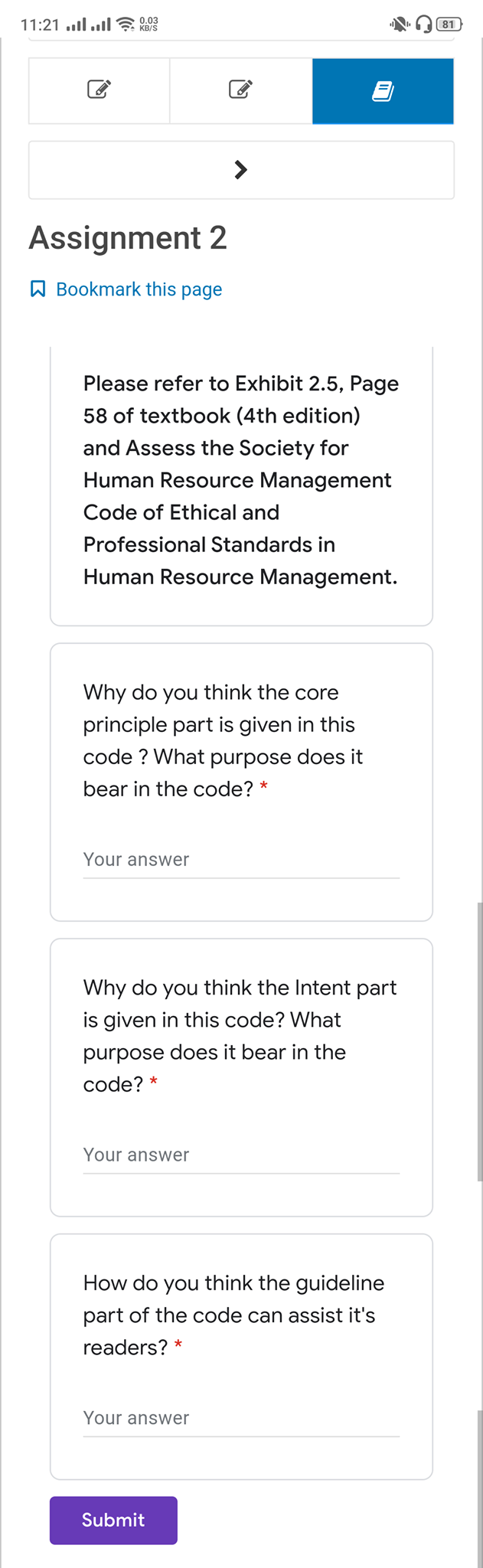
Step by Step Solution
There are 3 Steps involved in it

Get step-by-step solutions from verified subject matter experts
 Study Help