







Question: Could you please solve this question using GAMS? Posted is a solution to a similar question but with slightly different numbers the questions is just
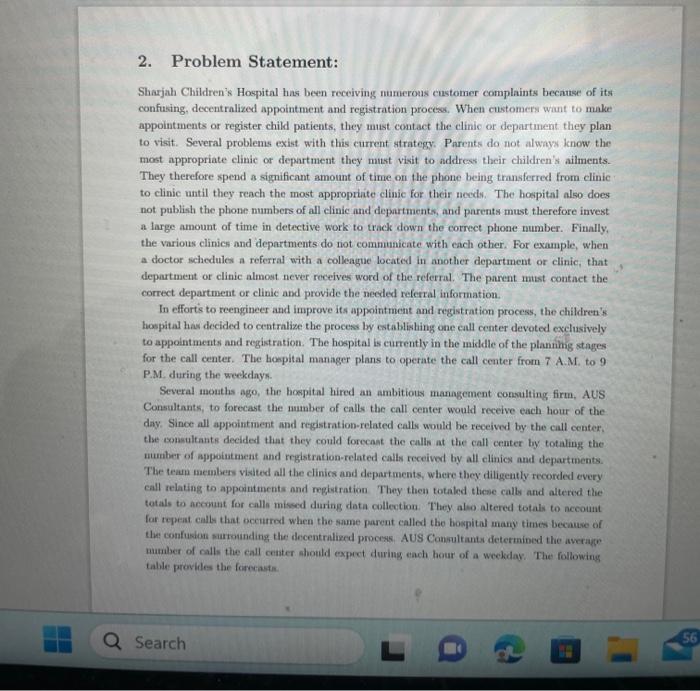
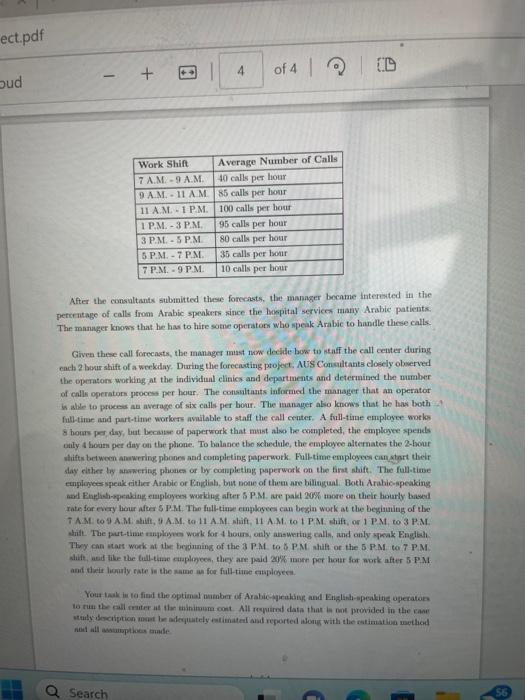
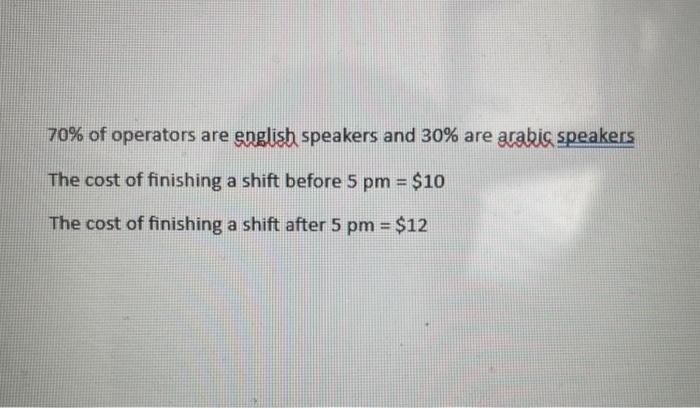
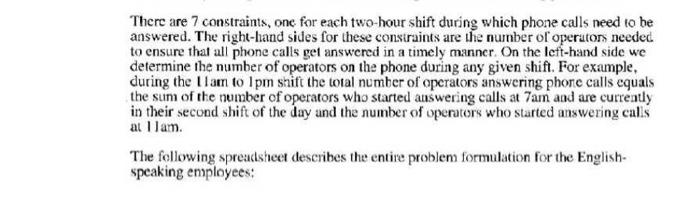
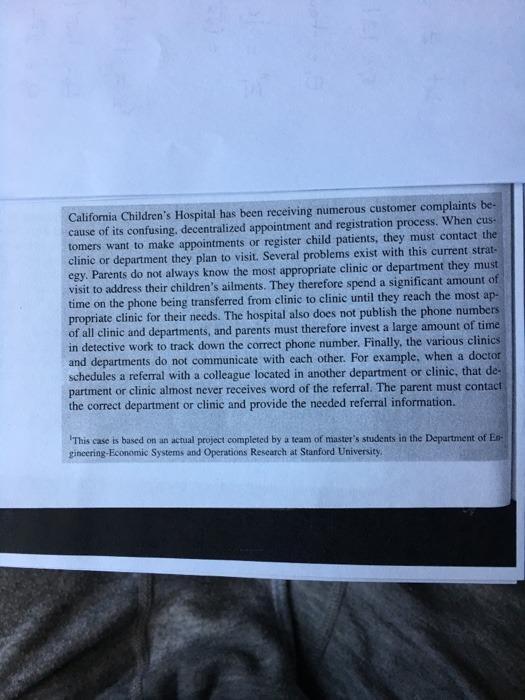
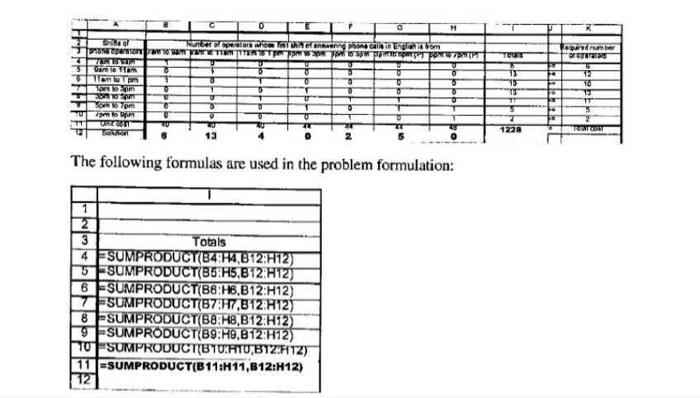
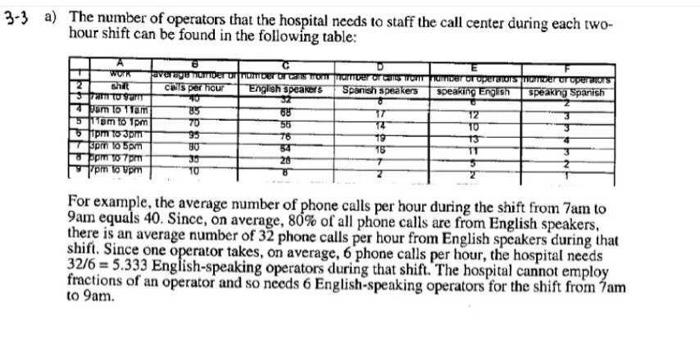
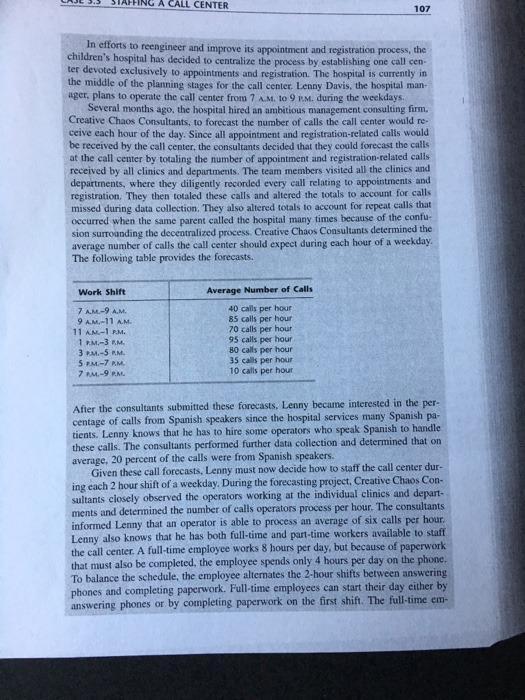
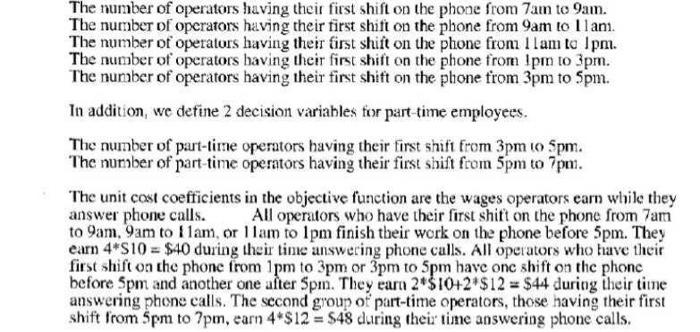
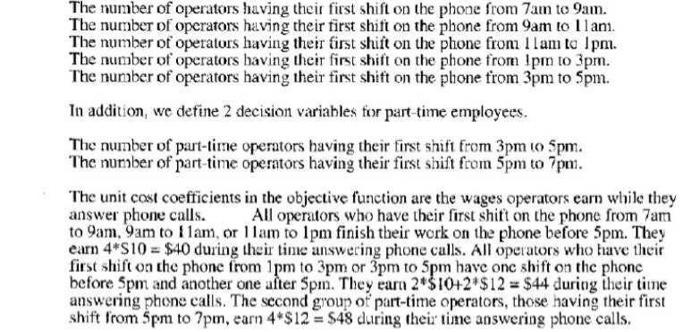
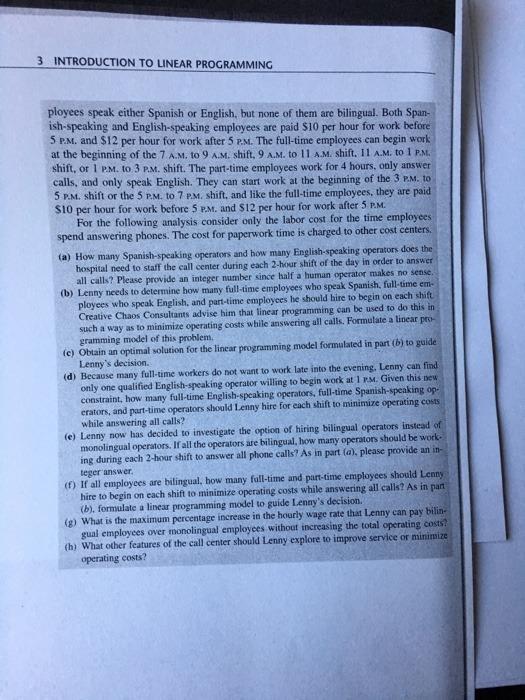
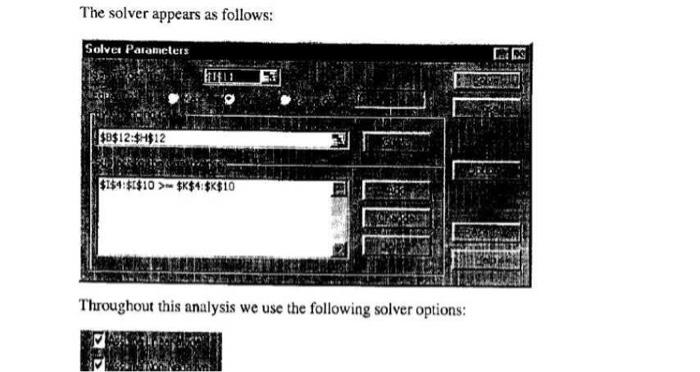
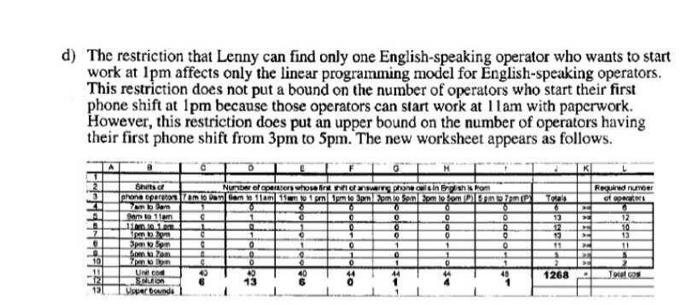
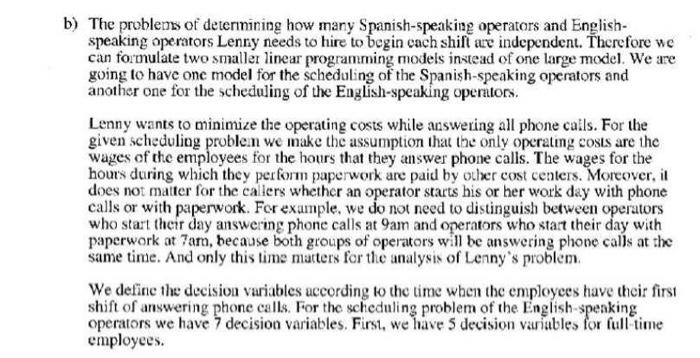
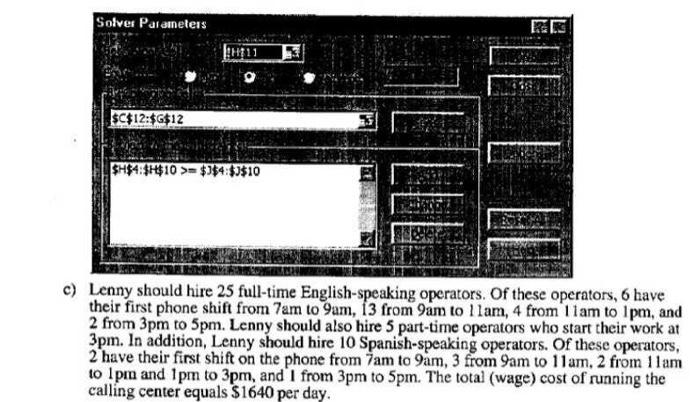
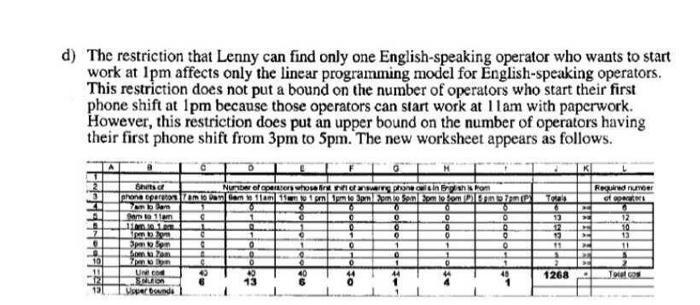
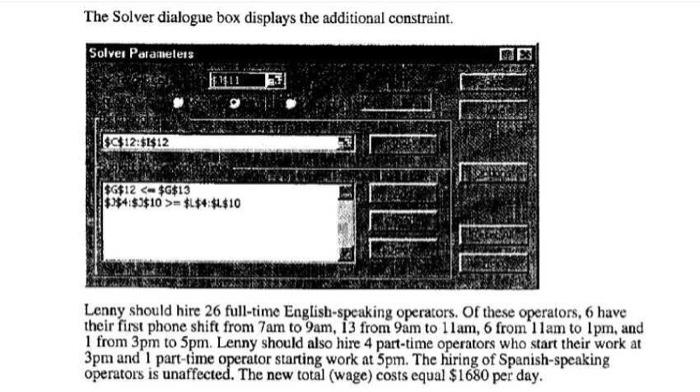
Sharjah Children's Hospital has been receiving numerous customer complaints because of its confusing, decentralized appointment and registration process. When customers wint to make appointments or register child patients, they must contact the clinic or department they plan to visit. Several problems exist with this current strategy. Parents do not always know the most appropriate clinic of department they must visit to address their children's ailments. They therefore spend a significant amount of time on the phone being transferred from clinic to clinic until they reach the most appropriate clinic for their needs. The hospital also does not publish the phone numbers of all clinic and departments, and parents must therefore invest a large amount of time in detective work to track down the correct phone number. Finally, the various clinics and departments do not communicate with each other. For example, when a doctor schedules a referral with a colkeague located in another department or clinic, that department or clinic almost never receives word of the referral. The parent must contact the correct department or clinic and provide the needed referral information. In efforts to reengineer and improve its appointment and registration process, the children's hospital has decided to centralize the process by establishing one call center devoted exclusively to appointments and registration. The hospital is currently in the middle of the planning stages for the call center. The bospital manager plans to operate the call center from 7 A.M. to 9 P.M. during the weekdays. Several months ago, the hoepital hired an ambitious management consulting firm, AUS Consultants, to forecast the number of calls the call center would receive each hour of the day. Since all appointment and registration-related calls would he received by the call center. the consultants decided that they could forecast the calls at the call center by totaling the uumber of appointment and registration-related calls received by all clinics and departments. The team members visited all the clinics and departments, where they diligently recorded every call relating to appointments and regetration. They then totaled these calls and altered the totals to account for calls missed during data collection. They also altered totals to account far repeat calls that occurred when the same parent called the bospital many times because of the confusion surrounding the decentralized process. AUS Consultants determined the averager number of calls the call center ahould expect during each hour of a weekday. The following table provides the forceasts. After the consultants submitted these forecasts, the manager became interixted in the percentage of calls from Arabic spenkers since the hospital services many Arabic patients: The manager knows that he has to hite some operatoes who npeak Arabic to bandle these calls. Given these call forecasts, the manager must now declle bon to neaff the call center during each 2 bour shift of a werkilay. During the forecasting pto fect. AUS Consultants closely obverved the operaton working at the individual clinics and departments and determined the number of calls operatorn process per hour. The consultants informed the manager that an operator is alde to proees an average of six calls per bour. The manager also knows that be has both fill-time and part-time workers avilable to stafl the call center. A full-time emplose wotks 8 bours pos day, luat becasse of paperwork that mast alko be eompleted, the employee spends ouily 4 houm per day ou the phone. To balance tbo schedule, the employeo alternates the 2 -hour shifts bet ween anwering phones and complet ling paperwork. Full-time employecs cathatart their slay elthes ty answering phesies of by coupleting paperwork on the fint shift. The full-time engloyessspenk rither Arabic or Engliah, but bone of them are bilingual. Beth Arahic-spesking aad Paptiah-epeaking, employess working after 5 P.M. are pakl 20% taore on their hourly based rate for every hour after S PM. The full-time emplogece can begin work at the beginuing of the They can itart work at the begiming of the 3PM to 5PML ahit of the 5 PMI to 7PM. shif, aed tike the full-time cuaplonees, they are paid 20% uase per hour for aork after 5 . P.M. Your tiak in to find the optimal naenber of Arabie-pjeaking and Englinh-ppeaking operator to rua tbe call crater it thr minisume cont. All reyuirnd data that in oot provided in the cane neat all awiumphioes arale 70% of operators are english speakers and 30% are arabic speakers The cost of finishing a shift before 5pm=$10 The cost of finishing a shift after 5pm=$12 There are 7 constraints, one for each two-hour shift during which phone calls need to be answered. The right-hand sides for these constraints are the number ol operutors needed. to ensure that all phone calls get answered in a timely manner. On the left-hand side we determine the number of operators on the phone during any given shift. For example, during the 1 lam to 1 pm shift the total number of operators answering phore calls equals the sum of the number of operators who started auswering calls at 7am and are curreatly in their second shift of the day and the number of operators who started answering calss at I Jam. The following spreadsheet describes the entire problem formulation for the Englishspeaking employees: Califomia Children's Hospital has been receiving numerous customer complaints because of its confusing, decentralized appointment and registration process. When customers want to make appointments or register child patients, they must contact the clinic or department they plan to visit. Several problems exist with this current strategy. Parents do not always know the most appropriate clinic or department they must visit to address their children's ailments. They therefore spend a significant amount of time on the phone being transferred from clinic to clinic until they reach the most appropriate clinic for their needs. The hospital also does not publish the phone numbers of all clinic and departments, and parents must therefore invest a large amount of time in detective work to track down the correct phone number. Finally, the various clinics and departments do not communicate with each other. For example, when a doctor schedules a referral with a colleague located in another department or clinic, that department or clinic almost never receives word of the referral. The parent must contact the correct department or clinic and provide the needed referral information. This case is based on an acrual project completed by a team of master's students in the Department of Eg:gineering-Eoonomic Systems and Operations Research at Stanford University: The following formulas are used in the problem formulation: a) The number of operators that the hospital necds to staff the call center during each twohour shift can be found in the following table: For example, the average number of phone calls per hour during the shift from 7 am to 9 am equals 40 . Since, on average, 80% of all phone calls are from English speakers, there is an average number of 32 phone calls per hour from English speakers during that shifi. Since one operator takes, on average, 6 phone calls per hour, the hospital needs 32/6=5.333 English-speaking operators during that shift. The hospital cannot employ fractions of an operator and so needs 6 English-speaking operators for the shift from 7 am to 9am. In efforts to reengineer and improve its appointment and registration process, the children's hospital has decided to centralize the process by establishing one call center devoted exclusively to appointments and registration. The hospital is currently in the middle of the planting stages for the call center. Lenay Davis, the bospital manager. plans to operate the call center from 7A, to 9rM. during the weekdays. Several months ago, the hospital hired an ambitious nanagement consulting firm. Creative Chaos Consultants, to forecast the number of calls the call center woald receive each hour of the day. Since all appointment and registration-related calls would be received by the call center, the consultants decided that they could forecast the calls at the call center by totaling the number of appointment and registration-related calls received by all clinics and departments. The team members visited all the clinics and departments, where they diligently recorded every call relating to appointments and registration. They then totaled these calls and aliered the totals to account for calls missed during data collection. They also altered totals to account for repeat calls that occurred when the same parent called the hospital many times because of the confusion surroanding the decentralized process. Creative Chaos Coasultants determined the average number of calls the call center should expect during each hour of a weekday. The following table provides the forecasts. After the consultants submitted these forecasts, Lenny became interested in the percentage of calls from Spanish speakers since the hospital services many Spanish patients. Lenny knows that he has to hire some operators who speak Spanish to handle these calls. The consultants performed further data collection and determined that on average, 20 percent of the calls were from Spanish speakers. Given these call forecasts, Lenny must now decide how to staff the call center during each 2 hour shift of a weekday. During the forecasting project. Creative Chaos Consultants closely observed the operators working at the individual clinics and departments and determined the number of calls operators process per hour. The consultants informed Lenny that an operator is able to process an average of six calls per hour. Lenny also knows that he has both full-time and part-time workers available to staft the eall center. A full-time employee works 8 hours per day, but because of paperwork that must also be completed, the employee spends only 4 hours per day on the phone. To balance the schedule, the employee alternates the 2 -hour shifts between answering phones and completing paperwork. Full-time employees can start their day either by answering phones or by completing paperwork on the firs shift. The full-time em- The number of operators having their first shift on the phone from 7am to 9am. The number of opcrators having their first shift on the phone from 9 am to 11 an1. The number of opetators having their first shift on the phone from 1lam to 1pm. The number of operators baving their firs shift on the phone from 1pm to 3pm. The number of operators having their first shift on the phone from 3pm to 5pm. In addition, we define 2 decision variables for part-time employees. The number of part-lime operators having their first shift from 3pm to 5pm. The number of part-time operators having their first siift from 5pm to 7pm. The unit cost coefficients in the objective function are the wages operators earn while they answer phone calls. All operators who have their first shift on the phone from 7 am to 9am,9am to 11am, or 1lam to 1pm finish their work on the phone before 5pm. They earn 4$10=$40 during their time answecing phone calls. All operators who have their first shift on the phone from 1pm to 3pm or 3pm to 5pm have one shift on the phone before 5pm and another one after 5 pm. They earn 2$10+2$12=$44 during their time answering phone calls. The second group of part-time operators, those having their first shift from 5pm to 7pm, earn 4$12=$48 during their time answering phone calls. The number of operators having their first shift on the phone from 7am to 9am. The number of opcrators having their first shift on the phone from 9 am to 11 an1. The number of opetators having their first shift on the phone from 1lam to 1pm. The number of operators baving their firs shift on the phone from 1pm to 3pm. The number of operators having their first shift on the phone from 3pm to 5pm. In addition, we define 2 decision variables for part-time employees. The number of part-lime operators having their first shift from 3pm to 5pm. The number of part-time operators having their first siift from 5pm to 7pm. The unit cost coefficients in the objective function are the wages operators earn while they answer phone calls. All operators who have their first shift on the phone from 7 am to 9am,9am to 11am, or 1lam to 1pm finish their work on the phone before 5pm. They earn 4$10=$40 during their time answecing phone calls. All operators who have their first shift on the phone from 1pm to 3pm or 3pm to 5pm have one shift on the phone before 5pm and another one after 5 pm. They earn 2$10+2$12=$44 during their time answering phone calls. The second group of part-time operators, those having their first shift from 5pm to 7pm, earn 4$12=$48 during their time answering phone calls. ployees speak either Spanish or English, but none of them are bilingual. Both Spanish-speaking and English-speaking employees are paid $10 per hour for work before 5 PM. and $12 per hour for work after 5 PM. The full-time employees can begin work at the beginning of the 7 A.M. to 9 A.M. shift, 9 A.M. to 11 A.M. shift. 11 A.M. to 1 P.M. shift, or 1 PM. to 3 P.M. shift. The part-time employees work for 4 hours, only answer calls, and only speak English. They can start work at the beginning of the 3 P.M. to 5 P.M. shift or the 5 P.M. to 7 P.M, shift, and like the full-time employees, they are paid $10 per hour for work before 5 p.M. and $12 per hour for work after 5 P.M. For the following analysis consider only the labor cost for the time employees spend answering phones. The cost for paperwork time is charged to other cost centers. (a) How many Spanish-speaking operators and how many English-speaking operators does the hospital need to staff the call eenter during each 2 -hour shift of the day in order to answer all calls? Please provide an integer number since talf a human operator makes no sense (b) Lenny needs to determine how many full-time employees who speak Spanish, full-time employees who speak English, and part-time employees he should bire to begin on each shift Creative Chaos Consutrants advise him that linear programming can be used to do this in such a way as to minimize operating costs while answering all calls. Formulate a tinear programming model of this problem. (c) Obtain an optimal solution for the linear programming model formulated in part (b) to guide Lenny's decision. (d) Because many full-time workers do not want to work late into the evening, Leany can find only one qualified English-speaking operator willing to begin work at 1rM. Given this Dew constraint, how many full-time English-speaking operators, full-time Spanish-speaking operators, and part-time operators shoold Lenny hire for each shift to minimize operating costs while answering all calls? (e) Lenny now las decided to investigate the option of hiring bilingual operators instead of monolingual operators. If all the operators are bilingual, how masy operstors should be working during each 2 -hoar shift to answer all phone calls? As in part (a), please provide an integer answer. (f) If all employees are bilingual, how many foll-time and part-time employees should Lenny hire to begin on each shift to minimize operating costs while answering all calls? As in par (b), formulate a linear programming model to guide Lenay's decision. (g) What is the maximum percentage increase in the hourly wage rate that Lenny can pay bilin gual employees over monolingual enployees without increasing the total operating costs (h) What other features of the call center should Lenny explore to improve service or minimiz operating costs? The solver appears as follows: Throughout this analysis we use the following solver options: The restriction that Lenny can find only one English-speaking operator who wants to start work at 1pm affects only the linear programming model for English-speaking operators. This restriction does not put a bound on the number of operators who start their first phone shift at 1pm because those operators can start work at 11 am with paperwork. However, this restriction does put an upper bound on the number of operators having their first phone shift from 3 pm to 5pm. The new worksheet appears as follows. b) The problems of deternining how many Spanish-speakiag operators and Englishspeaking operators Lenny needs to hire to begin each shift are independent. Therefore we can formulate two smalles linear programming models insead of one large model. We are going to have one model for the scheduling of the Spanish-speaking operators and another one for the scheduling of the English-speaking operator. Lenny wants to minimize the operating costs while answering all phone calls. For the given scheduling problen we make the assumption that the only operating costs are the wages of the employees for the hours that they answer phone calls. The wages for the hours during which they perform paperwork are paid by other cost centers. Moreover, il does not malter for the callers whether an operator starts bis or her work day with phone calls or with paperwork. For example, we do not need to distinguish between operators who start their day answering phone calls at 9 am and operators who start their day with paperwork at 7 am, because both groups of operators will be answering phone calls at the same time. And only this time matters for the analysis of Lenny's problem. We define the decision variables according to the time when the employees have their first shift of answering phone calls. For the scheduling problem of the English-spenking operators we have 7 decision variables. First, we have 5 decision variables for full-time employees. c) Lenny should hire 25 full-time English-speaking operators. Of these operators, 6 have their first phone shift from 7am to 9am,13 from 9am to 11am,4 from 11am to 1pm, and 2 from 3pm to 5pm. Lenny should also hire 5 part-time operators who start their work at 3pm. In addition, Lenny should hire 10 Spanish-speaking operators. Of these operators, 2 have their first shift on the phone from 7am to 9am,3 from 9am to 11am,2 from 11am to 1pm and 1pm to 3pm, and 1 from 3pm to 5pm. The total (wage) cost of running the calling center equals $1640 per day. The restriction that Lenny can find only one English-speaking operator who wants to start work at 1pm affects only the linear programming model for English-speaking operators. This restriction does not put a bound on the number of operators who start their first phone shift at 1pm because those operators can start work at 11 am with paperwork. However, this restriction does put an upper bound on the number of operators having their first phone shift from 3 pm to 5pm. The new worksheet appears as follows. The Solver dialogue box displays the additional constraint. Lenny should hire 26 full-time English-speaking operators. Of these operators, 6 have their first phone shift from 7am to 9am,13 from 9am to 11am,6 from 11am to 1pm, and 1from3pm to 5pm. Lenny should also hire 4 part-time operators who start their work at 3pm and 1 part-time operator starting work at 5pm. The hiring of Spanish-speaking operators is unaffected. The new total (wage) costs equal $1680 per day
Step by Step Solution
There are 3 Steps involved in it

Get step-by-step solutions from verified subject matter experts
 Study Help