



Question: course: managemwnt skills for supervisor u can do two questions Exercise for Gaining Power Repairing Power Failures in Management Circuits Rosabeth Kanter (1979) argues that
course: managemwnt skills for supervisor
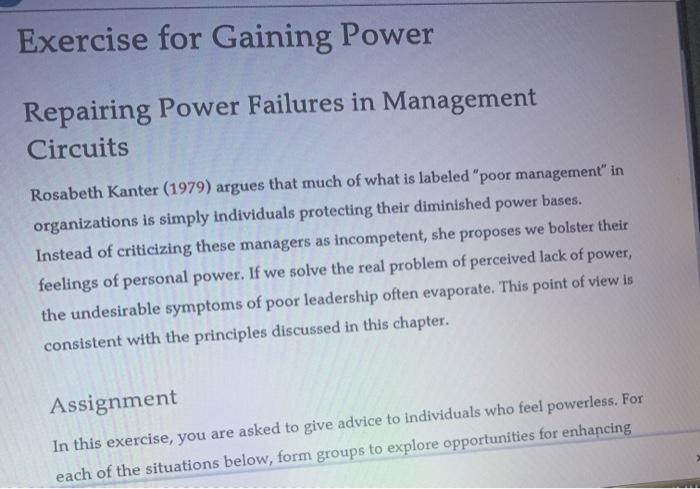
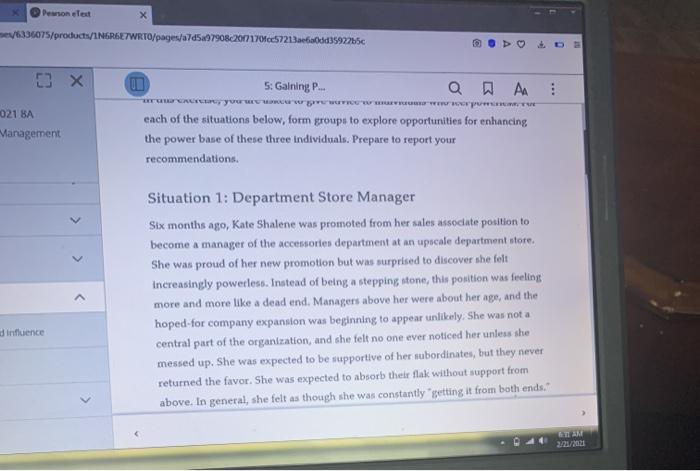
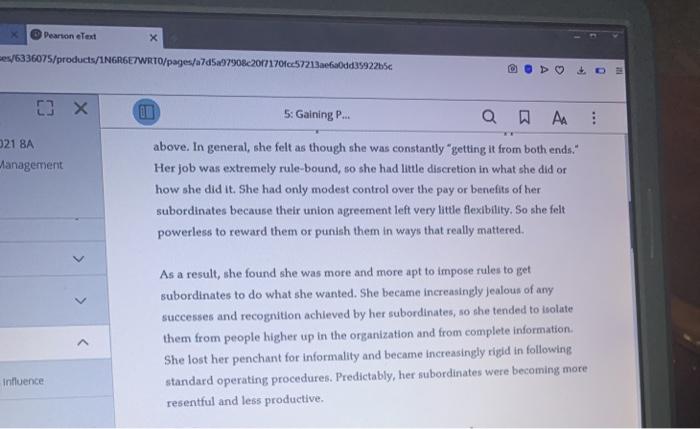
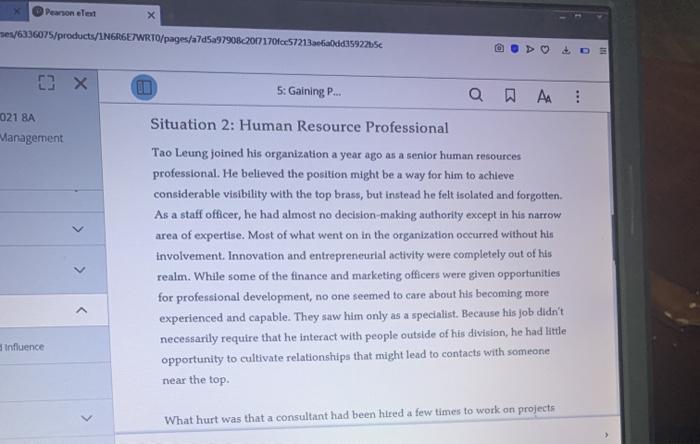
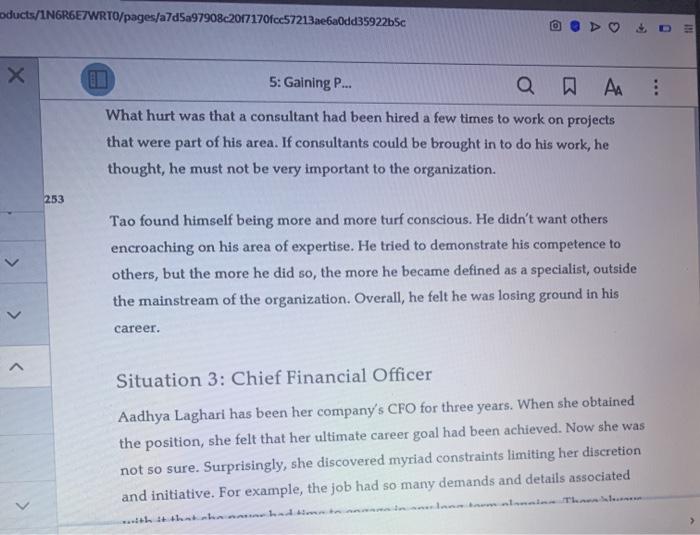
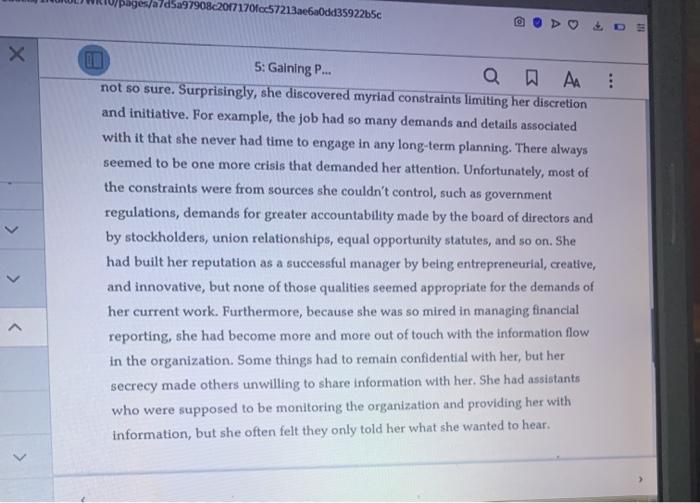
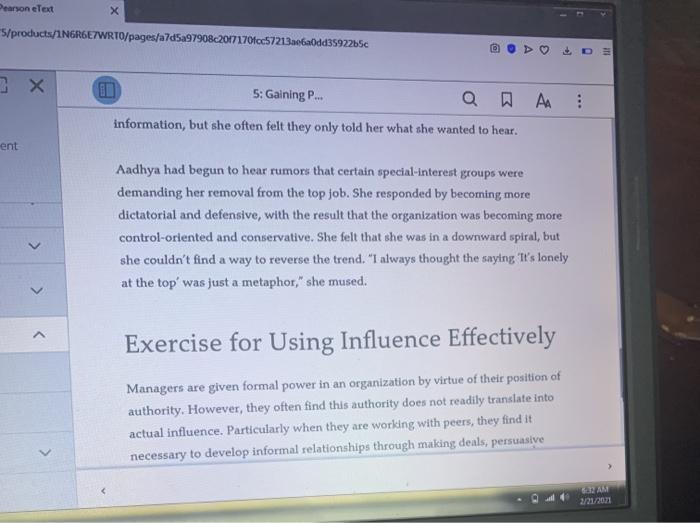
Exercise for Gaining Power Repairing Power Failures in Management Circuits Rosabeth Kanter (1979) argues that much of what is labeled "poor management" in organizations is simply individuals protecting their diminished power bases. Instead of criticizing these managers as incompetent, she proposes we bolster their feelings of personal power. If we solve the real problem of perceived lack of power, the undesirable symptoms of poor leadership often evaporate. This point of view is consistent with the principles discussed in this chapter. Assignment In this exercise, you are asked to give advice to individuals who feel powerless. For each of the situations below, form groups to explore opportunities for enhancing Personelest /6336075/products/1N6RBETWRTO/pages/a7d50790820117010572132630dd35922456 3 x S: Gaining P... A : WOCHEN 021 BA Management each of the situations below, form groups to explore opportunities for enhancing the power base of these three individuals. Prepare to report your recommendations. 5: Gaining P... Q D AA not so sure. Surprisingly, she discovered myriad constraints limiting her discretion and initiative. For example, the job had so many demands and details associated with it that she never had time to engage in any long-term planning. There always seemed to be one more crisis that demanded her attention. Unfortunately, most of the constraints were from sources she couldn't control, such as government regulations, demands for greater accountability made by the board of directors and by stockholders, union relationships, equal opportunity statutes, and so on. She had built her reputation as a successful manager by being entrepreneurial, creative, and innovative, but none of those qualities seemed appropriate for the demands of her current work. Furthermore, because she was so mired in managing financial reporting, she had become more and more out of touch with the information flow in the organization. Some things had to remain confidential with her, but her secrecy made others unwilling to share information with her. She had assistants who were supposed to be monitoring the organization and providing her with information, but she often felt they only told her what she wanted to hear. > Pearson eText X 5/products/1N6R6E7WRT0/pages/a7d5a97908c2017170cc57213a6a0dd35922650 10 5: Gaining P... Q QAA : information, but she often felt they only told her what she wanted to hear. ent Aadhya had begun to hear rumors that certain special-interest groups were demanding her removal from the top job. She responded by becoming more dictatorial and defensive, with the result that the organization was becoming more control-oriented and conservative. She felt that she was in a downward spiral, but she couldn't find a way to reverse the trend. "I always thought the saying 'It's lonely at the top' was just a metaphor," she mused. 5: Gaining P... Q D AA not so sure. Surprisingly, she discovered myriad constraints limiting her discretion and initiative. For example, the job had so many demands and details associated with it that she never had time to engage in any long-term planning. There always seemed to be one more crisis that demanded her attention. Unfortunately, most of the constraints were from sources she couldn't control, such as government regulations, demands for greater accountability made by the board of directors and by stockholders, union relationships, equal opportunity statutes, and so on. She had built her reputation as a successful manager by being entrepreneurial, creative, and innovative, but none of those qualities seemed appropriate for the demands of her current work. Furthermore, because she was so mired in managing financial reporting, she had become more and more out of touch with the information flow in the organization. Some things had to remain confidential with her, but her secrecy made others unwilling to share information with her. She had assistants who were supposed to be monitoring the organization and providing her with information, but she often felt they only told her what she wanted to hear. > Pearson eText X 5/products/1N6R6E7WRT0/pages/a7d5a97908c2017170cc57213a6a0dd35922650 10 5: Gaining P... Q QAA : information, but she often felt they only told her what she wanted to hear. ent Aadhya had begun to hear rumors that certain special-interest groups were demanding her removal from the top job. She responded by becoming more dictatorial and defensive, with the result that the organization was becoming more control-oriented and conservative. She felt that she was in a downward spiral, but she couldn't find a way to reverse the trend. "I always thought the saying 'It's lonely at the top' was just a metaphor," she mused. u can do two questions
Step by Step Solution
There are 3 Steps involved in it
1 Expert Approved Answer
Step: 1 Unlock

Question Has Been Solved by an Expert!
Get step-by-step solutions from verified subject matter experts
Step: 2 Unlock
Step: 3 Unlock