







Question: Course Name: Principles of Management Course Code: MGT101 In using punishment, managers should punish only undesirable behavior, give reprimands or disciplinary actions as soon as
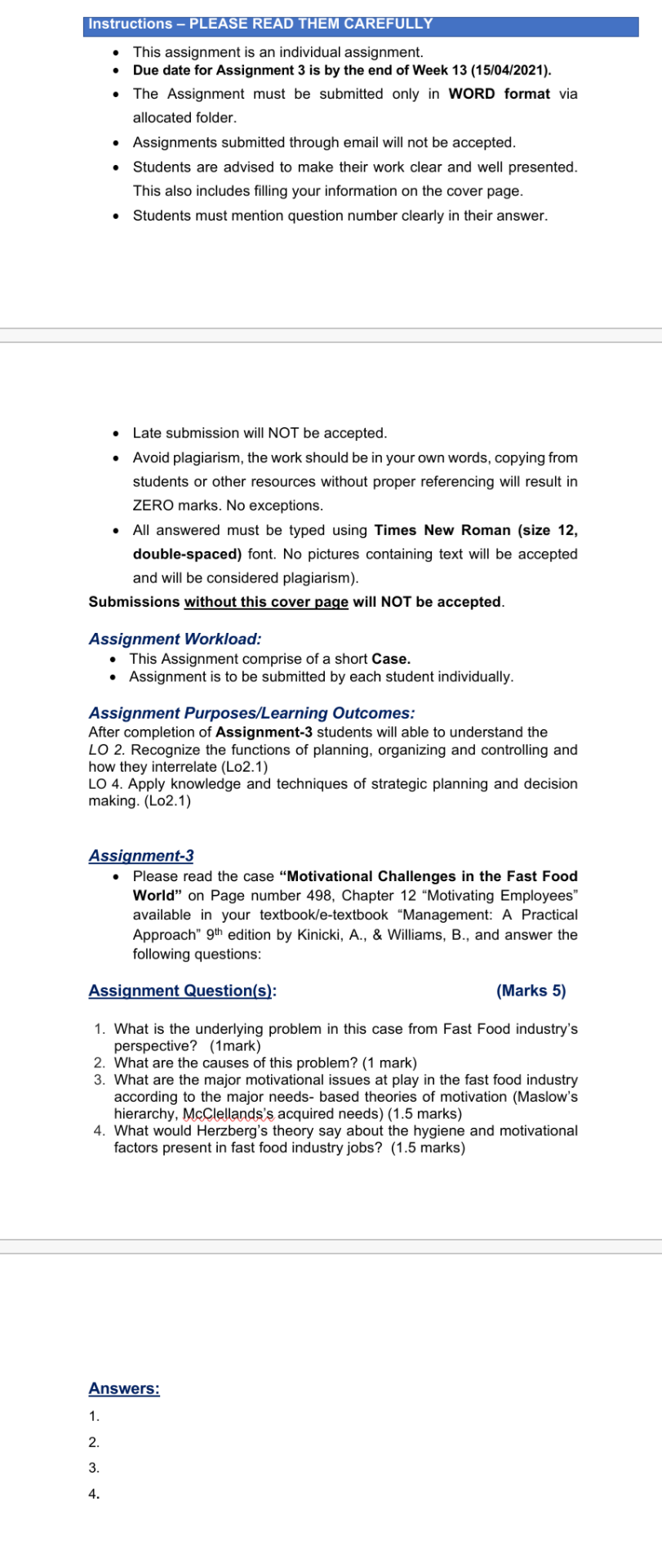
Course Name: Principles of Management Course Code: MGT101
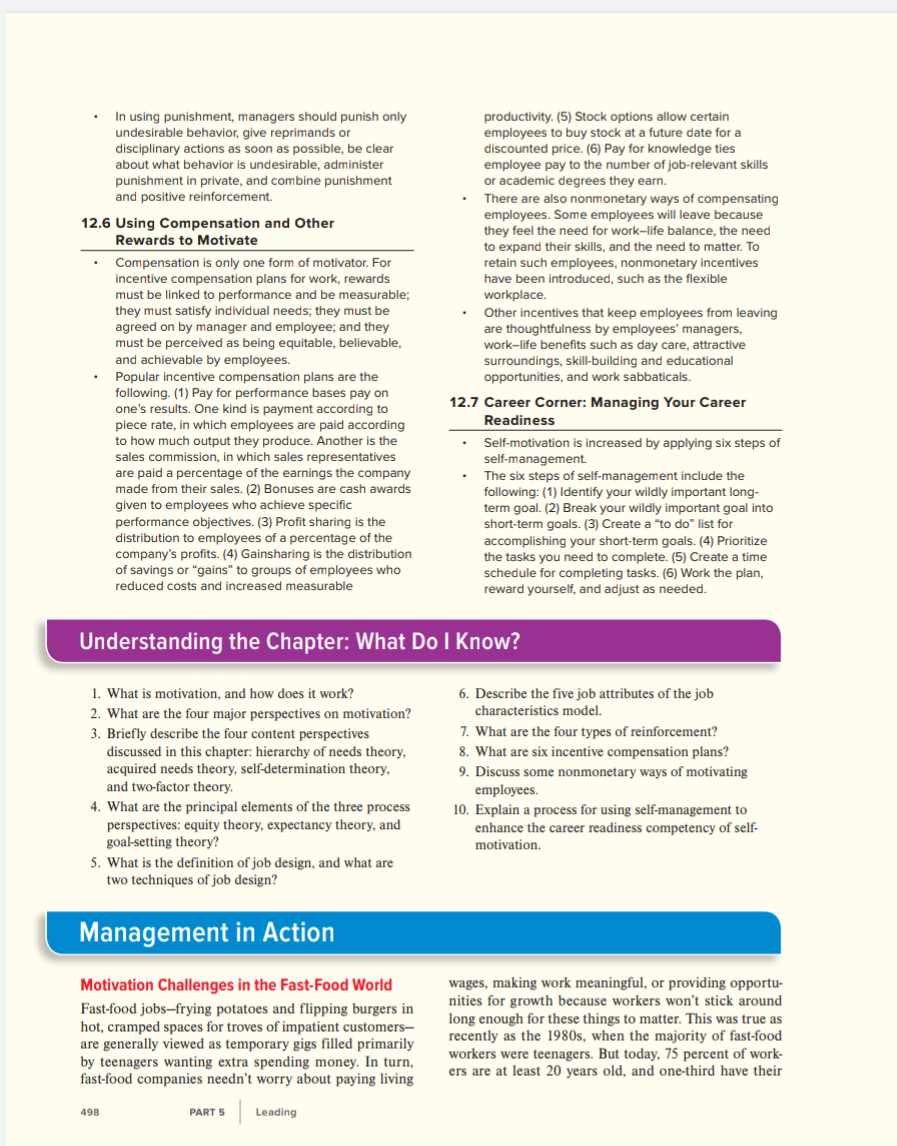
In using punishment, managers should punish only undesirable behavior, give reprimands or disciplinary actions as soon as possible, be clear about what behavior is undesirable, administer punishment in private, and combine punishment and positive reinforcement. 12.6 Using Compensation and Other Rewards to Motivate Compensation is only one form of motivator. For incentive compensation plans for work, rewards must be linked to performance and be measurable; they must satisfy individual needs; they must be agreed on by manager and employee; and they must be perceived as being equitable, believable, and achievable by employees. Popular incentive compensation plans are the following. (1) Pay for performance bases pay on one's results. One kind is payment according to piece rate, which employees are paid according to how much output they produce. Another is the sales commission, in which sales representatives are paid a percentage of the earnings the company made from their sales. (2) Bonuses are cash awards given to employees who achieve specific performance objectives. (3) Profit sharing is the distribution to employees of a percentage of the company's profits. (4) Gainsharing is the distribution of savings or "gains" to groups of employees who reduced costs and increased measurable productivity. (5) Stock options allow certain employees to buy stock at a future date for a discounted price. (6) Pay for knowledge ties employee pay to the number of job-relevant skills or academic degrees they earn. There are also nonmonetary ways of compensating employees. Some employees will leave because they feel the need for work-life balance, the need to expand their skills, and the need to matter. To retain such employees, nonmonetary incentives have been introduced, such as the flexible workplace. Other incentives that keep employees from leaving are thoughtfulness by employees' managers, work-life benefits such as day care, attractive surroundings, skill-building and educational opportunities, and work sabbaticals. 12.7 Career Corner: Managing Your Career Readiness Self-motivation is increased by applying six steps of self-management The six steps of self- management include the following: (1) Identify your wildly important long- term goal. (2) Break your wildly important goal into short-term goals. (3) Create a to do" list for accomplishing your short-term goals. (4) Prioritize the tasks you need to complete. (5) Create a time schedule for completing tasks. (6) Work the plan, reward yourself, and adjust as needed. Understanding the Chapter: What Do I Know? 1. What is motivation, and how does it work? 2. What are the four major perspectives on motivation? 3. Briefly describe the four content perspectives discussed in this chapter: hierarchy of needs theory, acquired needs theory, self-determination theory, and two-factor theory 4. What are the principal elements of the three process perspectives: equity theory, expectancy theory, and goal-setting theory? 5. What is the definition of job design, and what are two techniques of job design? 6. Describe the five job attributes of the job characteristics model. 7. What are the four types of reinforcement? 8. What are six incentive compensation plans? 9. Discuss some nonmonetary ways of motivating employees 10. Explain a process for using self-management to enhance the career readiness competency of self- motivation. Management in Action Motivation Challenges in the Fast-Food World Fast-food jobs-frying potatoes and flipping burgers in hot, cramped spaces for troves of impatient customers, are generally viewed as temporary gigs filled primarily by teenagers wanting extra spending money. In turn, fast-food companies needn't worry about paying living wages, making work meaningful, or providing opportu- nities for growth because workers won't stick around long enough for these things to matter. This was true as recently as the 1980s, when the majority of fast-food workers were teenagers. But today, 75 percent of work- ers are at least 20 years old, and one-third have their 498 PART 5 LeadingStep by Step Solution
There are 3 Steps involved in it
1 Expert Approved Answer
Step: 1 Unlock

Question Has Been Solved by an Expert!
Get step-by-step solutions from verified subject matter experts
Step: 2 Unlock
Step: 3 Unlock
 Study Help