







Question: create a program that tells the frequency of notes on the piano based on a tuning system called Equal Temperament. There are two rules for
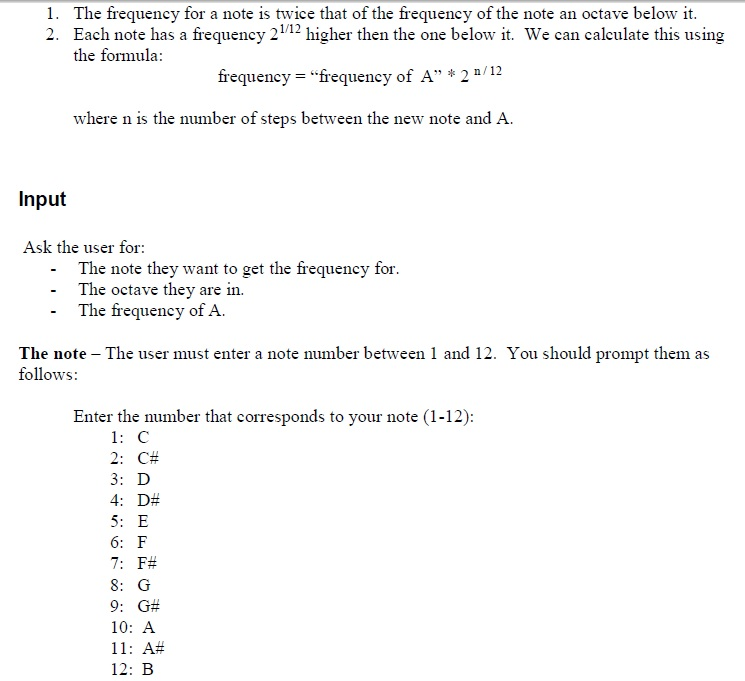
create a program that tells the frequency of notes on the piano based on a tuning system called Equal Temperament. There are two rules for Equal Temperament.
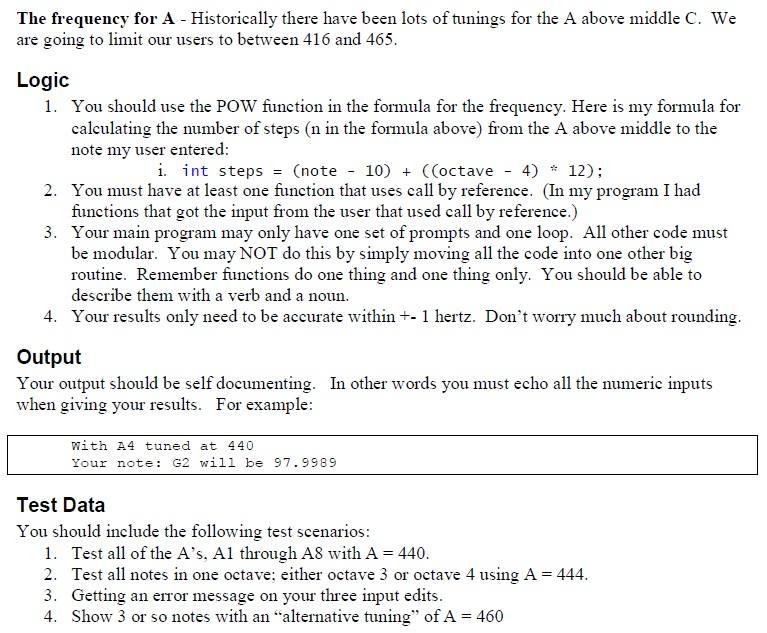
The octave There are 8 octaves on the piano. You will number these from low to high 1 to 8. The first 12 notes above the lowest C are octave 1, the second are octave 2 etc. You should edit that the user enters a number from one to 8 and provide enough prompts so that the user knows what they mean. 1 For example my prompt says: Enter the octave. Octave 1 starts with the lowest C on the piano Middle C is octave 4. The highest note on the piano is the C in Octave 8.
1. The frequency for a note is twice that of the frequency of the note an octave below it 2. Each note has a frequency 2112 higher then the one below it. We can calculate this using the formula frequency "firequency of A" 2 /12 where n is the number of steps between the new note and A Input Ask the user for The note they want to get the frequency for The octave they are in. The frequency of A. The note - The user must enter a note number between 1 and 12. You should prompt them as follows: Enter the number that corresponds to your note (1-12) 1: C 2: C# 3: D 4:D# 6: F 7: F# 8: G 9: G# 10: A 11: A# 12: B 1. The frequency for a note is twice that of the frequency of the note an octave below it 2. Each note has a frequency 2112 higher then the one below it. We can calculate this using the formula frequency "firequency of A" 2 /12 where n is the number of steps between the new note and A Input Ask the user for The note they want to get the frequency for The octave they are in. The frequency of A. The note - The user must enter a note number between 1 and 12. You should prompt them as follows: Enter the number that corresponds to your note (1-12) 1: C 2: C# 3: D 4:D# 6: F 7: F# 8: G 9: G# 10: A 11: A# 12: B
Step by Step Solution
There are 3 Steps involved in it

Get step-by-step solutions from verified subject matter experts
 Study Help