







Question: Create an elevator controller. Make the following assumptions. . There are ten floors, basement and floors 1-9. The elevator will default back to floor 1.
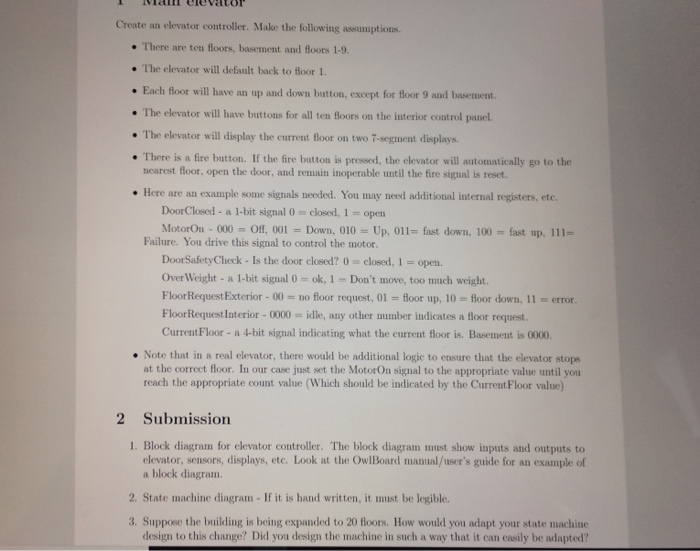
Create an elevator controller. Make the following assumptions. . There are ten floors, basement and floors 1-9. The elevator will default back to floor 1. Each floor will have an up and down button, except for floor 9 and basement. The elevator will have buttons for all ten floors on the interior control panel. . The elevator will display the current foor on two 7-segment displays. . There is a fire button. If the fire button is pressed, the elevator will automatically go to the ncarest floor, open the door, and remain inoperable until the fire signal is reset. Here are an example some signals needed. You may need additional internal registers, ete. DoorClosed - a 1-bit signal 0- closed, 1-open MotorOn000 Off, 001 = Down. 010 = Up, 011-fast down. 100-fast tip, l11- Failure. You drive this signal to control the motor. DoorSafetyCheck - Is the door closed? 0 closed, 1 open. OverWeight - a 1-bit signal 0- ok, 1-Don't move, too much weight. FloorRequest Exterior-0-no floor request, 01-1oor up, -floor down, 11-error. FloorRequest!nterior-0000 = idle, any other number indicates a floor request. Current Floor - a 4-bit signal indicating what the current floor is. Basement is 0000. . Note that in a real elevator, there would be additional logic to ensure that the elevator stops at the correct floor. In our case just set the MotorOn signal to the appropriate value until you reach the appropriate count value (Which should be indicated by the Current Floor value 2 Submission 1. Block diagram for elevator controller. The block diagram must show inputs and outputs to elevator, sensors, displays, etc. Look at the OwlBoard manual/user's guide for an example of a block diagram. 2. State machine diagram- If it is hand written, it must be legible. 3. Suppose the building is being expanded to 20 floors. How would you adapt your state machine design to this change? Did you design the machine in such a way that it can easily be adapted
Step by Step Solution
There are 3 Steps involved in it

Get step-by-step solutions from verified subject matter experts
 Study Help