



Question: Current Designs 24 a-b (Part Level Submission) The executive team at Current Designs has gathered to evaluate the company's operations for the last month. One
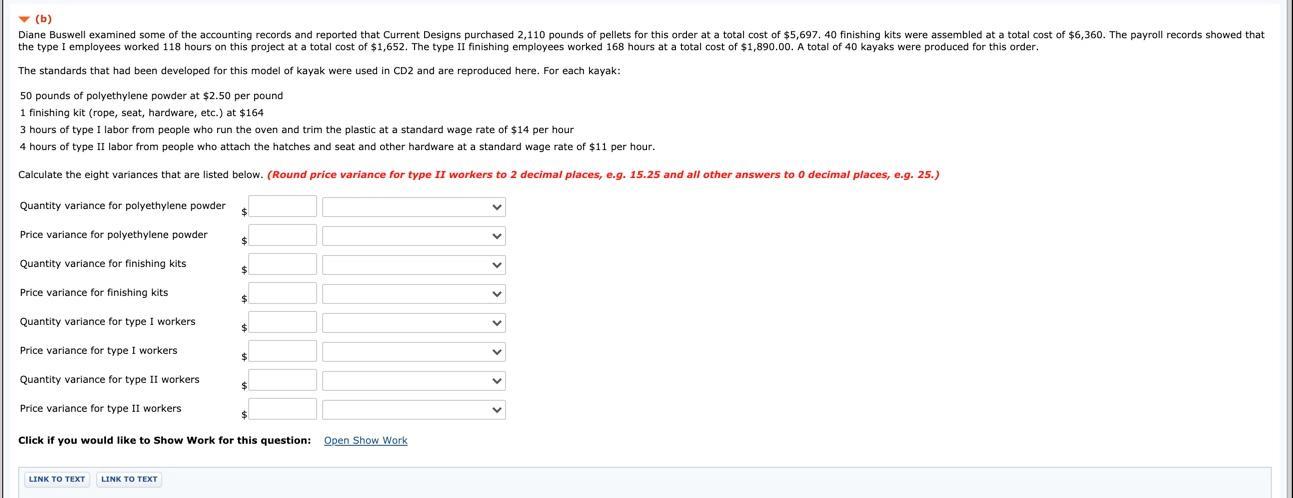
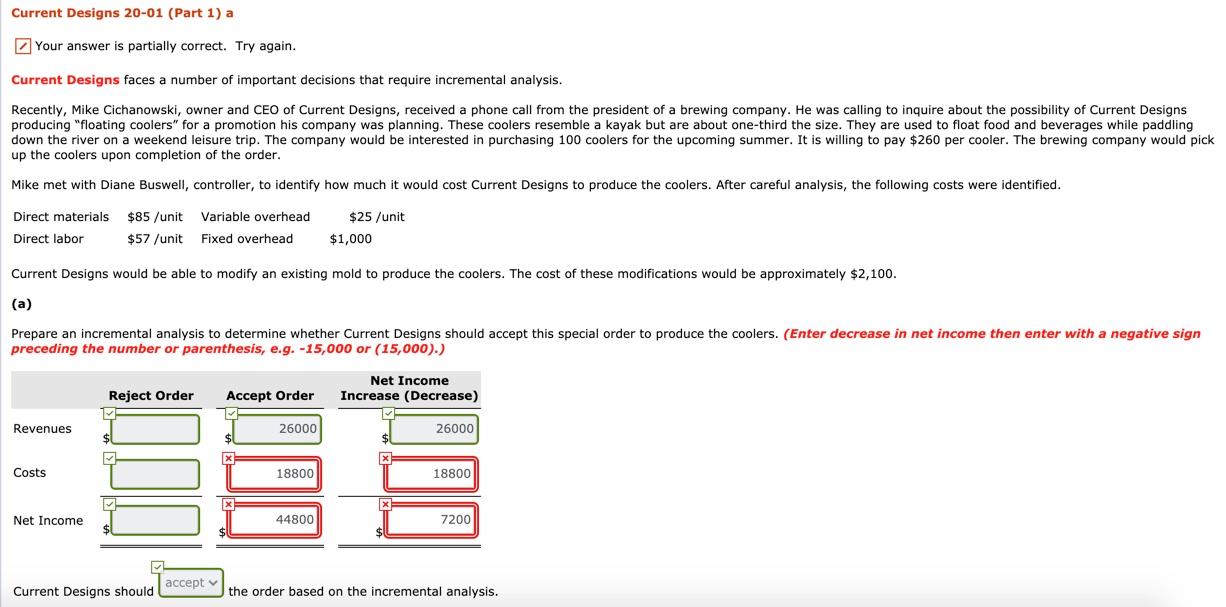
Current Designs 24 a-b (Part Level Submission) The executive team at Current Designs has gathered to evaluate the company's operations for the last month. One of the topics on the agenda is the special order from Huegel Hollow, which was presented in CD2. Recall that Current Designs had a special order to produce a batch of 40 kayaks for a client, and you were asked to determine the cost of the order and the cost per kayak. Mike Cichanowski asked the others if the special order caused any particular problems in the production process. Dave Thill, the production manager, made the following comments: "Since we wanted to complete this order quickly and make a good first impression on this new customer, we had some of our most experienced type I workers run the rotomold oven and do the trimming. They were very efficient and were able to complete that part of the manufacturing process even more quickly than the regular crew. However, the finishing on these kayaks required a different technique than what we usually use, so our type II workers took a little longer than usual for that part of the process." Deb Welch, who is in charge of the purchasing function, said, "We had to pay a little more for the polyethylene powder for this order because the customer wanted a color that we don't usually stock. We also ordered a little extra since we wanted to make sure that we had enough to allow us to calibrate the equipment. The calibration was a little tricky, and we used all of the powder that we had purchased. Since the number of kayaks in the order was fairly small, we were able to use some rope and other parts that were left over from last year's production in the finishing kits. We've seen a price increase for these components in the last year, so using the parts that we already had in inventory cut our costs for the finishing kits." (a) Your answer is correct. Based on the comments above, predict whether each of the following variances will be favorable or unfavorable. If you don't have enough information to make a prediction, use "Not Enough Information." 1. Quantity variance for polyethylene powder. 2. Price variance for polyethylene powder. 3. Quantity variance for finishing kits. 4. Price variance for finishing kits. 5. Quantity variance for type I workers. 6. Price variance for type I workers. 7. Quantity variance for type II workers. 8. Price variance for type II workers. Unfavorable Unfavorable Not Enough Information Favorable Favorable Not Enough Information Unfavorable Not Enough Information Click if you would like to Show Work for this question: Open Show Work LINK TO TEXT LINK TO TEXT (b) Diane Buswell examined some of the accounting records and reported that Current Designs purchased 2,110 pounds of pellets for this order at a total cost of $5,697. 40 finishing kits were assembled at a total cost of $6,360. The payroll records showed that the type I employees worked 118 hours on this project at a total cost of $1,652. The type II finishing employees worked 168 hours at a total cost of $1,890.00. A total of 40 kayaks were produced for this order. The standards that had been developed for this model of kayak were used in CD2 and are reproduced here. For each kayak: 50 pounds of polyethylene powder at $2.50 per pound 1 finishing kit (rope, seat, hardware, etc.) at $164 3 hours of type I labor from people who run the oven and trim the plastic at a standard wage rate of $14 per hour 4 hours of type II labor from people who attach the hatches and seat and other hardware at a standard wage rate of $11 per hour. Calculate the eight variances that are listed below. (Round price variance for type II workers to 2 decimal places, e.g. 15.25 and all other answers to 0 decimal places, e.g. 25.) Quantity variance for polyethylene powder Price variance for polyethylene powder Quantity variance for finishing kits Price variance for finishing kits $ $ Quantity variance for type I workers Price variance for type I workers Quantity variance for type II workers Price variance for type II workers Click if you would like to Show Work for this question: Open Show Work LINK TO TEXT LINK TO TEXT Current Designs 20-01 (Part 1) a Your answer is partially correct. Try again. Current Designs faces a number of important decisions that require incremental analysis. Recently, Mike Cichanowski, owner and CEO of Current Designs, received a phone call from the president of a brewing company. He was calling to inquire about the possibility of Current Designs producing "floating coolers" for a promotion his company was planning. These coolers resemble a kayak but are about one-third the size. They are used to float food and beverages while paddling down the river on a weekend leisure trip. The company would be interested in purchasing 100 coolers for the upcoming summer. It is willing to pay $260 per cooler. The brewing company would pick up the coolers upon completion of the order. Mike met with Diane Buswell, controller, to identify how much it would cost Current Designs to produce the coolers. After careful analysis, the following costs were identified. Direct materials $85/unit Direct labor Variable overhead $57/unit Fixed overhead $25 /unit $1,000 Current Designs would be able to modify an existing mold to produce the coolers. The cost of these modifications would be approximately $2,100. (a) Prepare an incremental analysis to determine whether Current Designs should accept this special order to produce the coolers. (Enter decrease in net income then enter with a negative sign preceding the number or parenthesis, e.g. -15,000 or (15,000).) Reject Order Accept Order Net Income Increase (Decrease) Revenues 26000 26000 Costs Net Income Current Designs should accept 18800 44800 18800 7200 the order based on the incremental analysis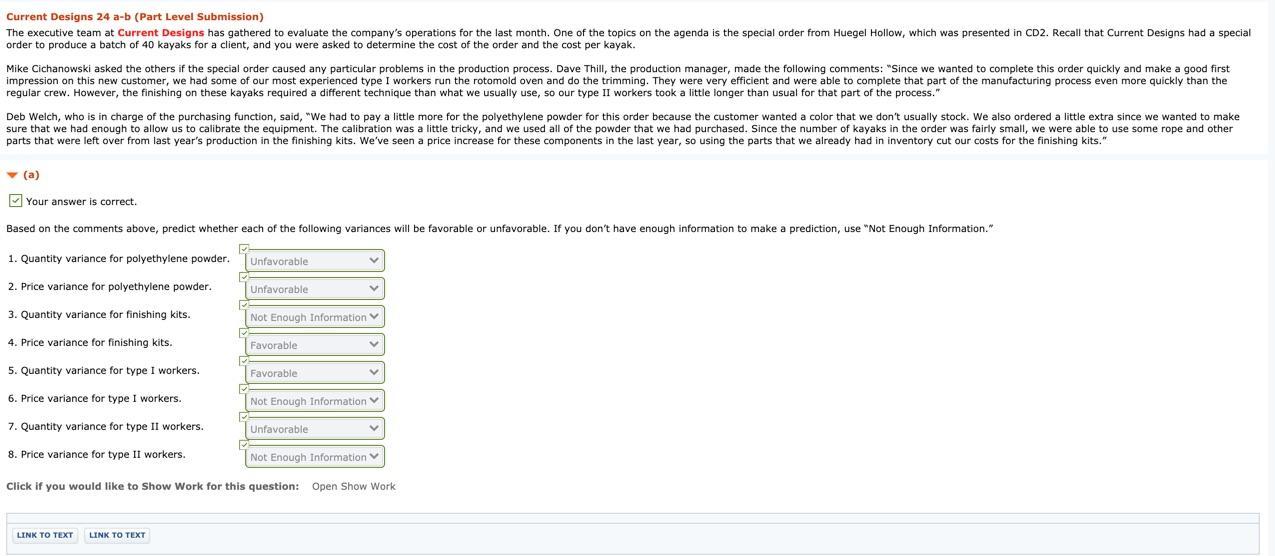
Step by Step Solution
There are 3 Steps involved in it

Get step-by-step solutions from verified subject matter experts