







Question: Data and Process Modeling Consider the following scenario: You work for a small retailer. The company has three locations in the Portland area. They sell
Data and Process Modeling
Consider the following scenario: You work for a small retailer. The company has three locations in the Portland area. They sell retro & collectible video game consoles and cartridges. You and your partner have been hired to manage the computers, networks, point-of-purchase systems, the website, and various other technologies for this company. Recently, sales have been dropping. The marketing manager conducted a customer survey and determined that their customers have been making more purchases online because it is more convenient (and sometimes cheaper). Your company doesnt currently sell any products online. You and your partner have been tasked with the project of selling stuff online. Assume you are going to build an e-commerce website to sell products online. (e-commerce website project). Now that weve thought about the project at a high level (project tasks/plan) and weve come up with a clearer idea of who will be using this system and what it needs to do, we can start creating some Data Flow Diagrams to demonstrate how data will move in, out, and through the system. You will need to obtain a free diagraming tool (Vizio, Draw.io, etc) for this assignment. Review Data Flow Diagrams and Guidelines for Drawing DFDs and answer the following questions:
Example of Data Flow Diagrams
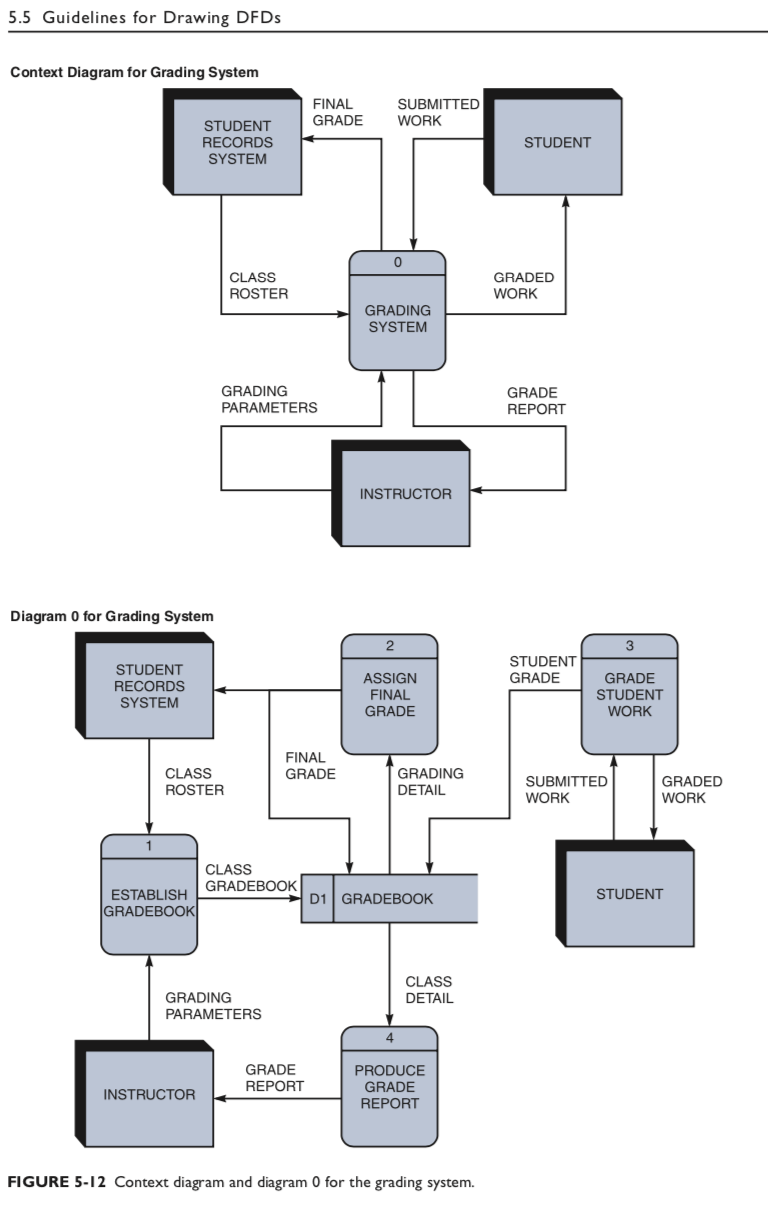
example of Guidelines for Drawing DFDs
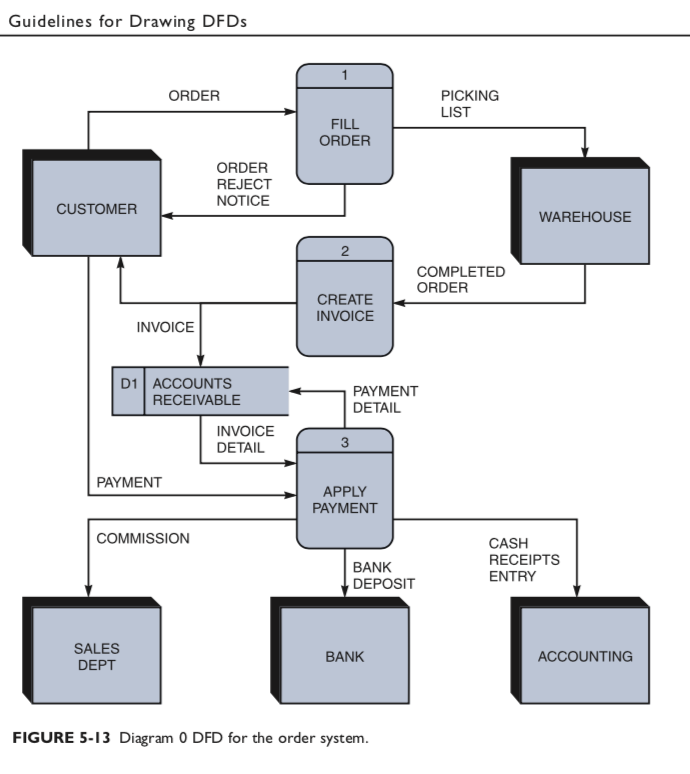
- Using a free design tool, create a Context Diagram for the e-commerce system based on the requirements you identified. Remember to consider the internal and external actors (people and other systems) that our system might interact with. Think about the types of data that are going to flow in and out of the system. This might be a good opportunity to revise your requirements if necessary.
- Now create a Diagram 0 DFD for this system. Make sure you zoom in from the context diagram and include all the major internal systems, process, data flows, and data stores.
- Now create one Lower-Level DFDs (based on processes you identified in your Diagram 0). Pay special attention to the leveling & balancing techniques outlined . These exploded process diagrams usually correspond to the process requirements you identified.
5.5 Guidelines for Drawing DFDs Context Diagram for Grading System FINAL GRADE SUBMITTED WORK STUDENT RECORDS SYSTEM STUDENT 0 CLASS ROSTER GRADED WORK GRADING SYSTEM GRADING PARAMETERS GRADE REPORT INSTRUCTOR Diagram 0 for Grading System 2 3 STUDENT GRADE STUDENT RECORDS SYSTEM ASSIGN FINAL GRADE GRADE STUDENT WORK CLASS ROSTER FINAL GRADE GRADING DETAIL SUBMITTED WORK GRADED WORK CLASS GRADEBOOK ESTABLISH GRADEBOOK D1 GRADEBOOK STUDENT CLASS DETAIL GRADING PARAMETERS 4 GRADE REPORT INSTRUCTOR PRODUCE GRADE REPORT FIGURE 5-12 Context diagram and diagram 0 for the grading system. Guidelines for Drawing DFDs 1 ORDER PICKING LIST FILL ORDER ORDER REJECT NOTICE CUSTOMER WAREHOUSE 2 COMPLETED ORDER CREATE INVOICE INVOICE PAYMENT DETAIL D1 ACCOUNTS RECEIVABLE INVOICE DETAIL PAYMENT 3 APPLY PAYMENT COMMISSION BANK DEPOSIT CASH RECEIPTS ENTRY SALES DEPT BANK ACCOUNTING FIGURE 5-13 Diagram 0 DFD for the order system
Step by Step Solution
There are 3 Steps involved in it

Get step-by-step solutions from verified subject matter experts
 Study Help