







Question: Data Collection and Questions Data CollectionTable 1: Trials Distance (cm) Time (5] Average Speed (ch5) 1 100.0 cm (first section) 2 100.0 cm (second section)
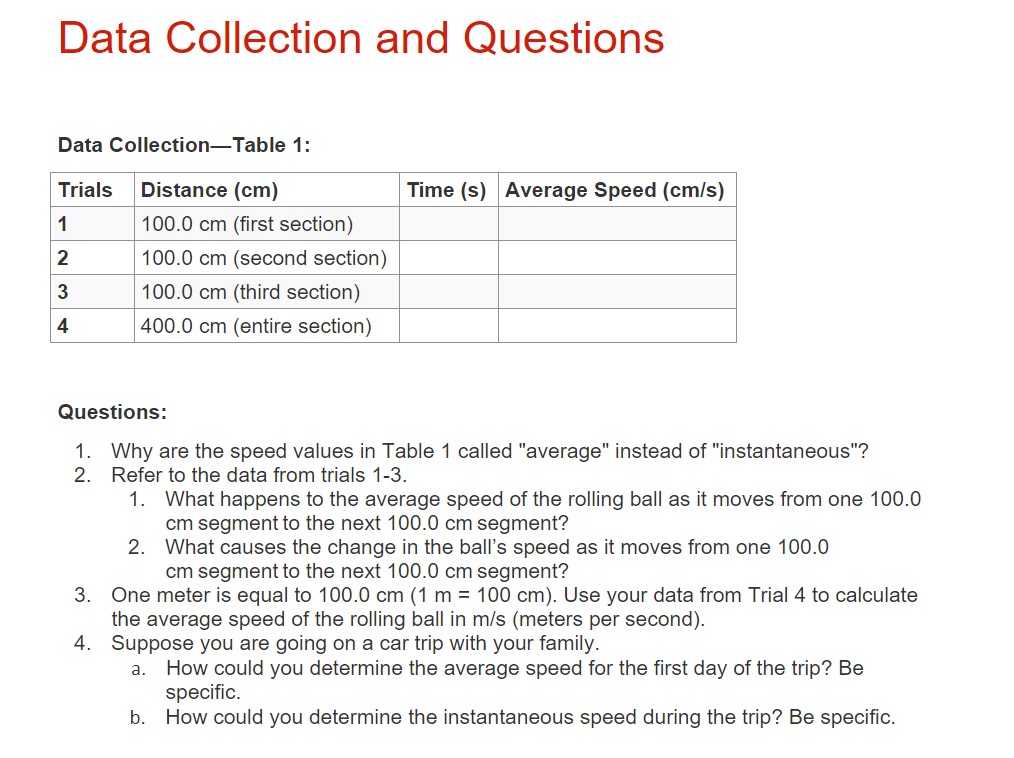
Data Collection and Questions Data CollectionTable 1: Trials Distance (cm) Time (5] Average Speed (ch5) 1 100.0 cm (first section) 2 100.0 cm (second section) 3 100.0 cm (third section) 4 400.0 cm (entire section) Questions: 1. Why are the speed values in Table 1 called "average" instead of "instantaneous"? 2. Refer to the data from trials 1-3. 1. What happens to the average speed of the rolling ball as it moves from one 100.0 cm segment to the next 100.0 cm segment? 2. What causes the change in the hall's speed as it moves from one 100.0 cm segment to the next 100.0 cm segment? 3. One meter is equal to 100.0 cm (1 m = 100 cm). Use your data from Trial 4 to calculate the average speed of the rolling ball in ms (meters per second). 4. Suppose you are going on a car trip with your family. a. How could you determine the average speed for the first day of the trip? Be specific. b. How could you determine the instantaneous speed during the trip? Be specic
Step by Step Solution
There are 3 Steps involved in it

Get step-by-step solutions from verified subject matter experts
 Study Help