







Question: Description The assignment requires that you analyse a data set, interpret, and draw conclusions from your analysis, and then convey your conclusions in a written
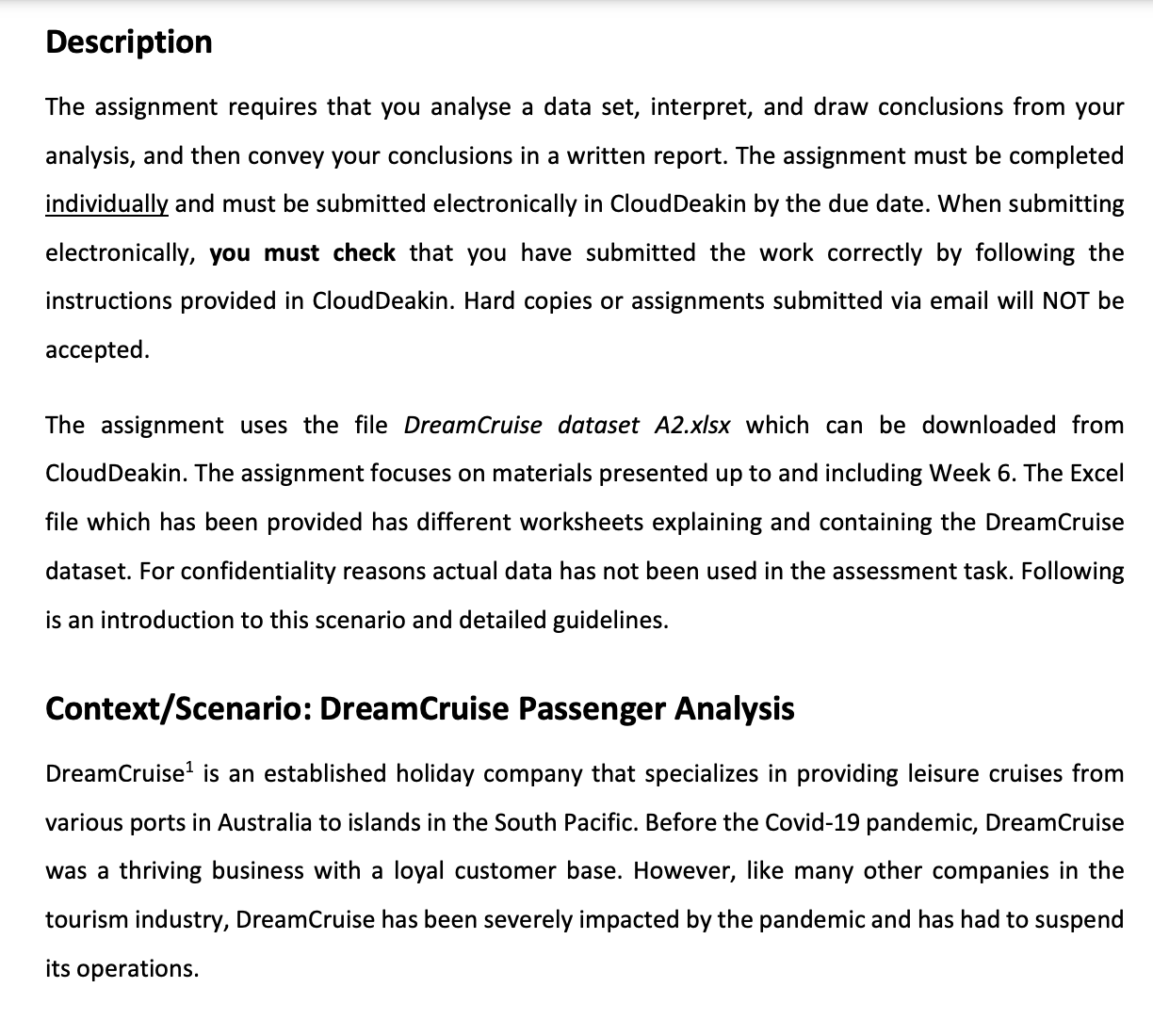
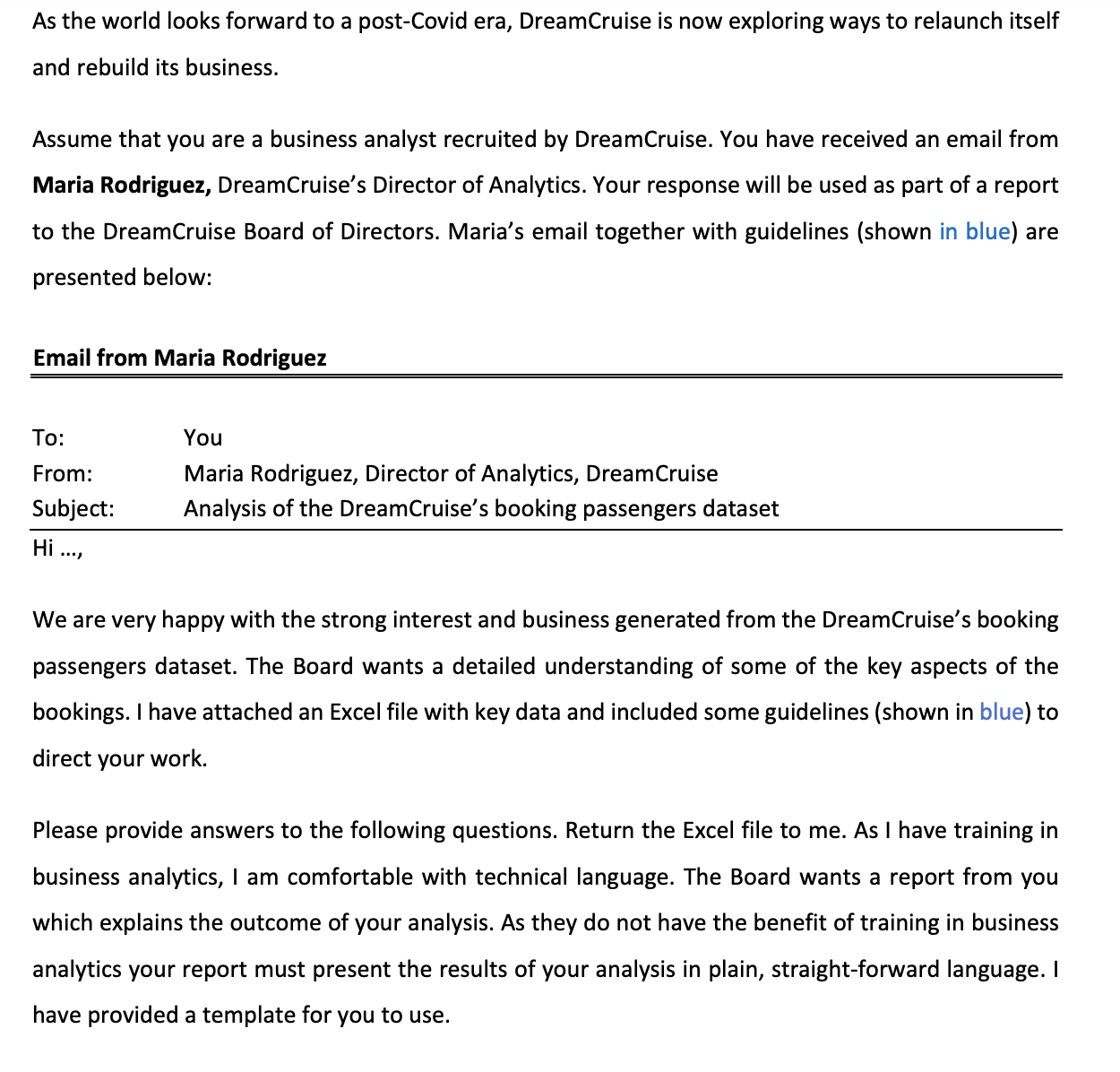
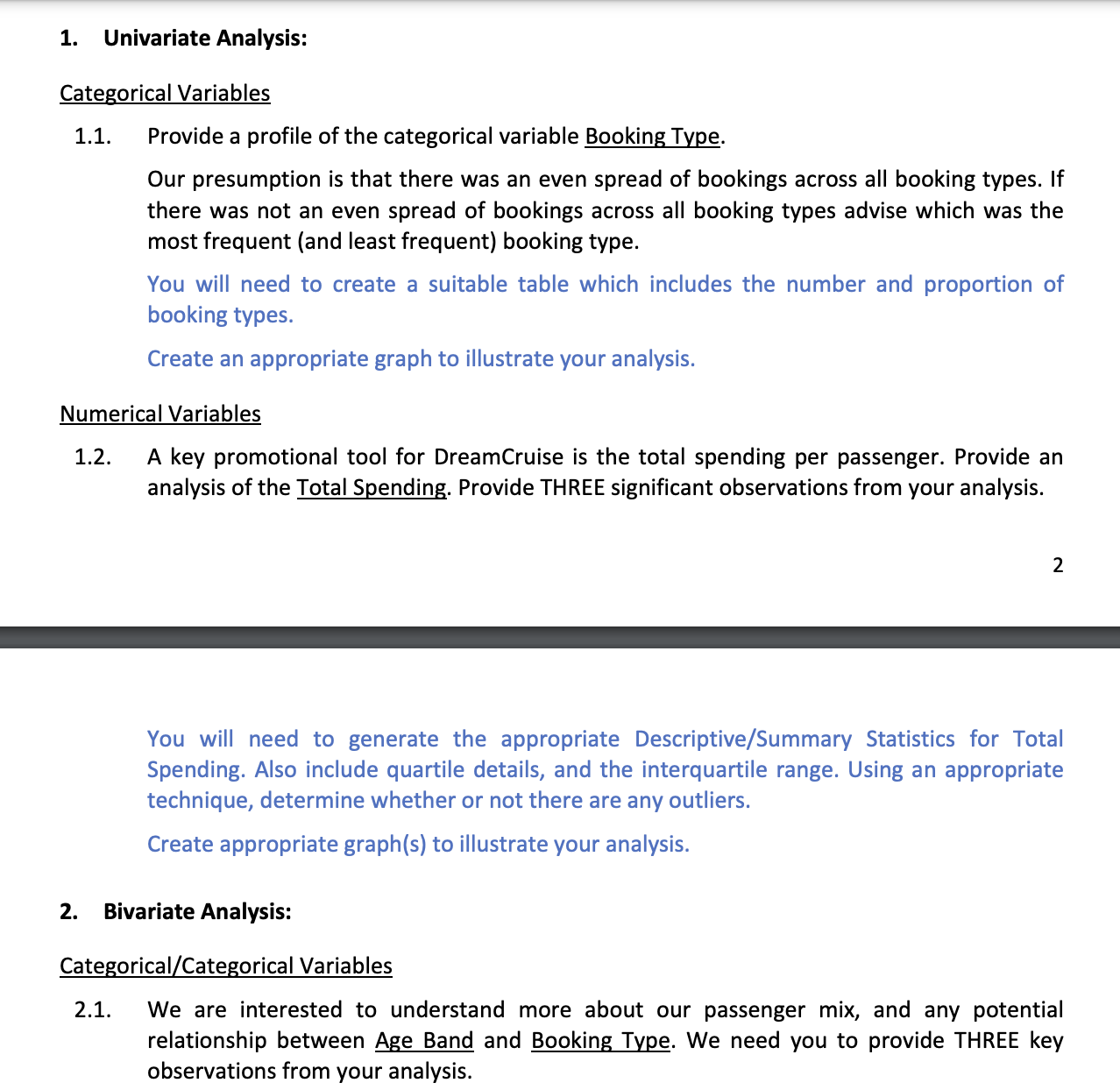
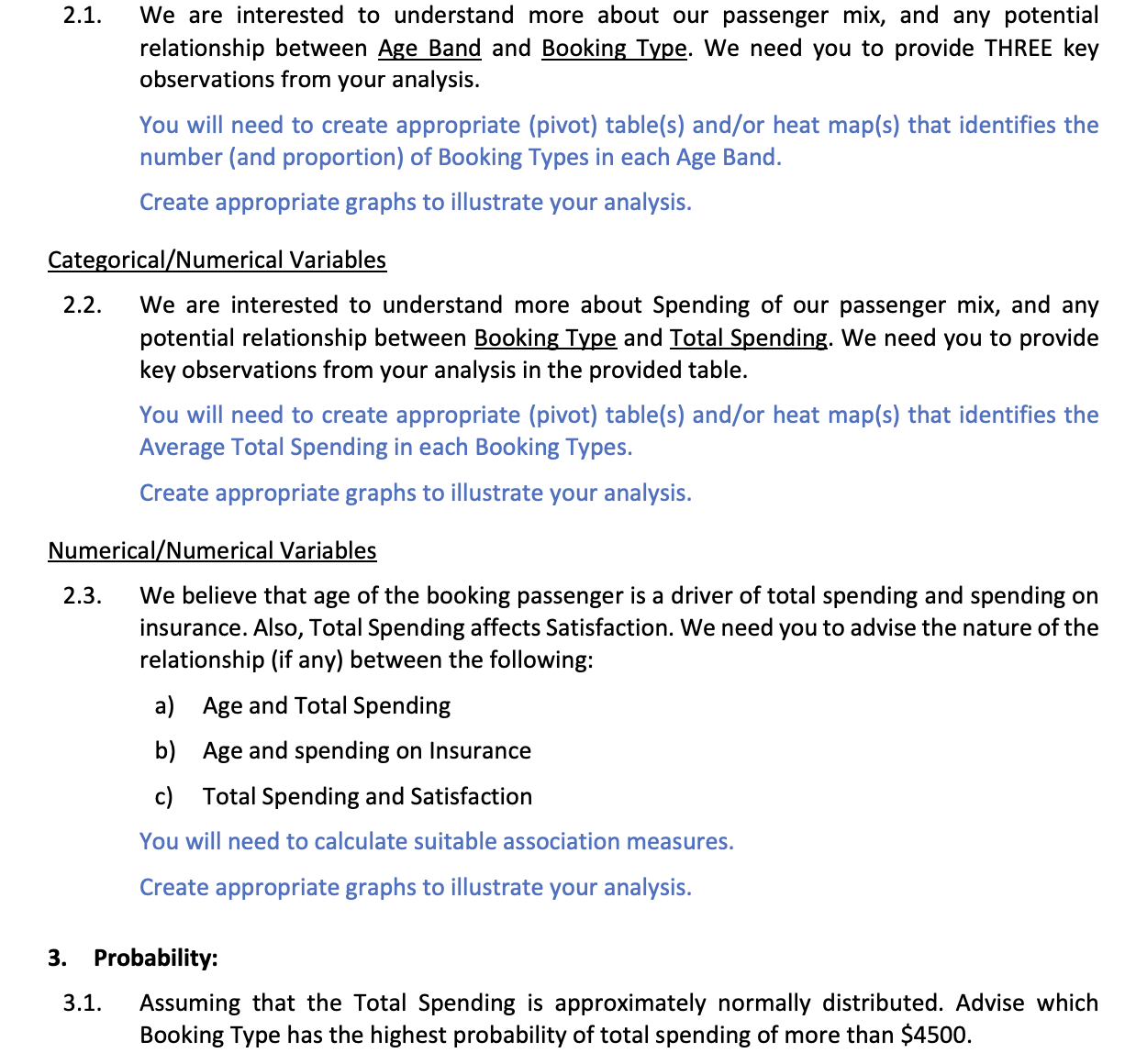
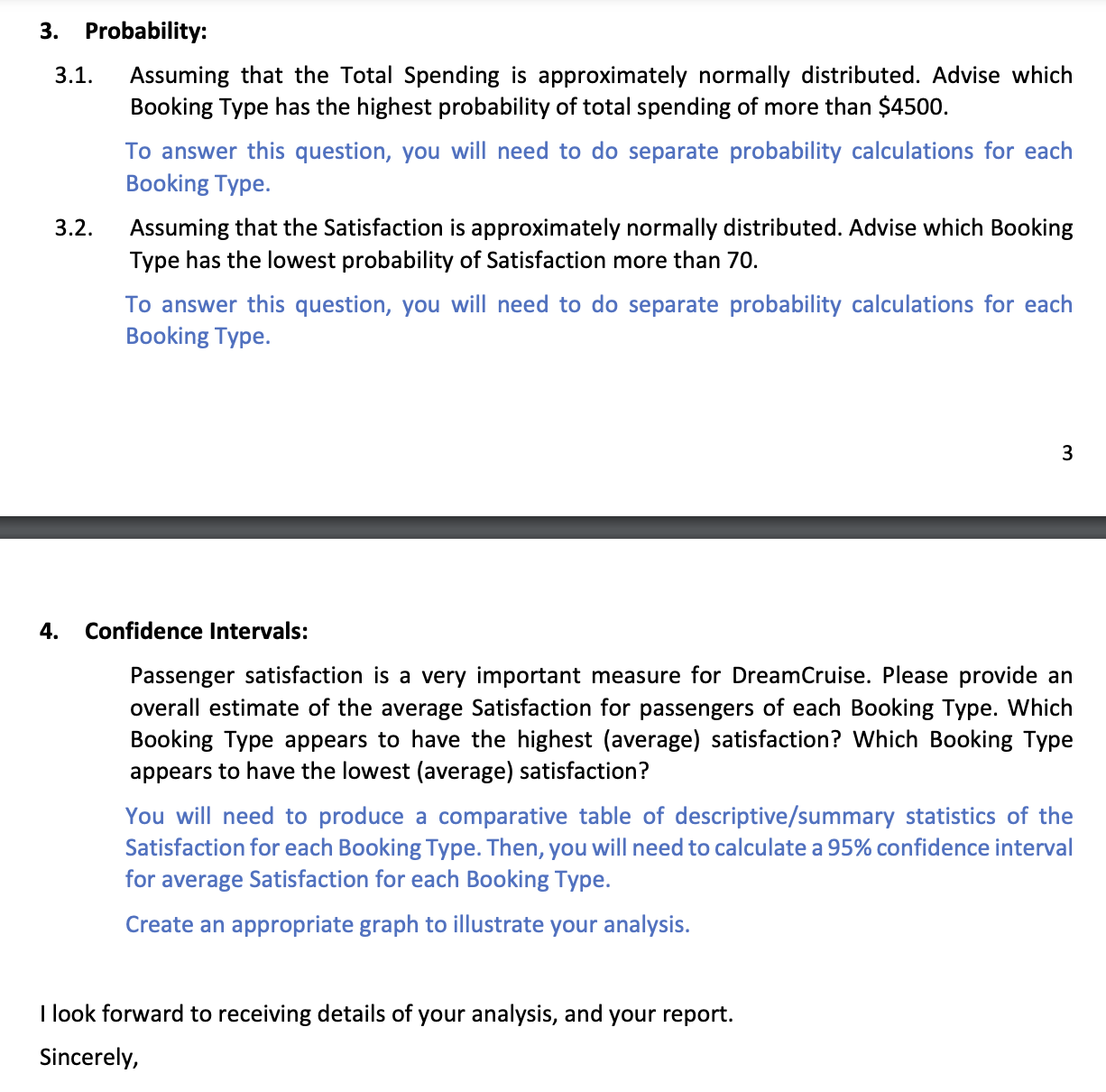
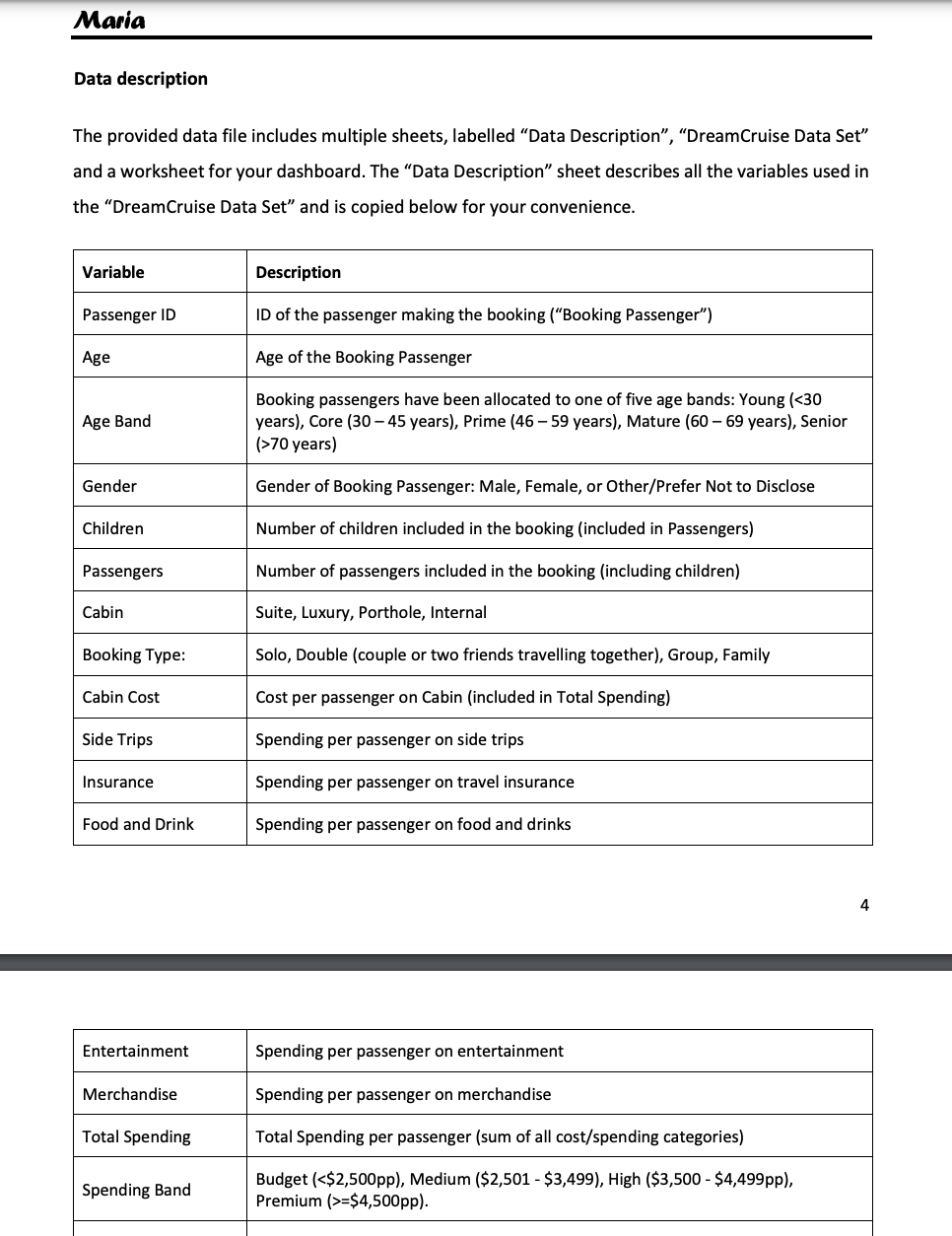
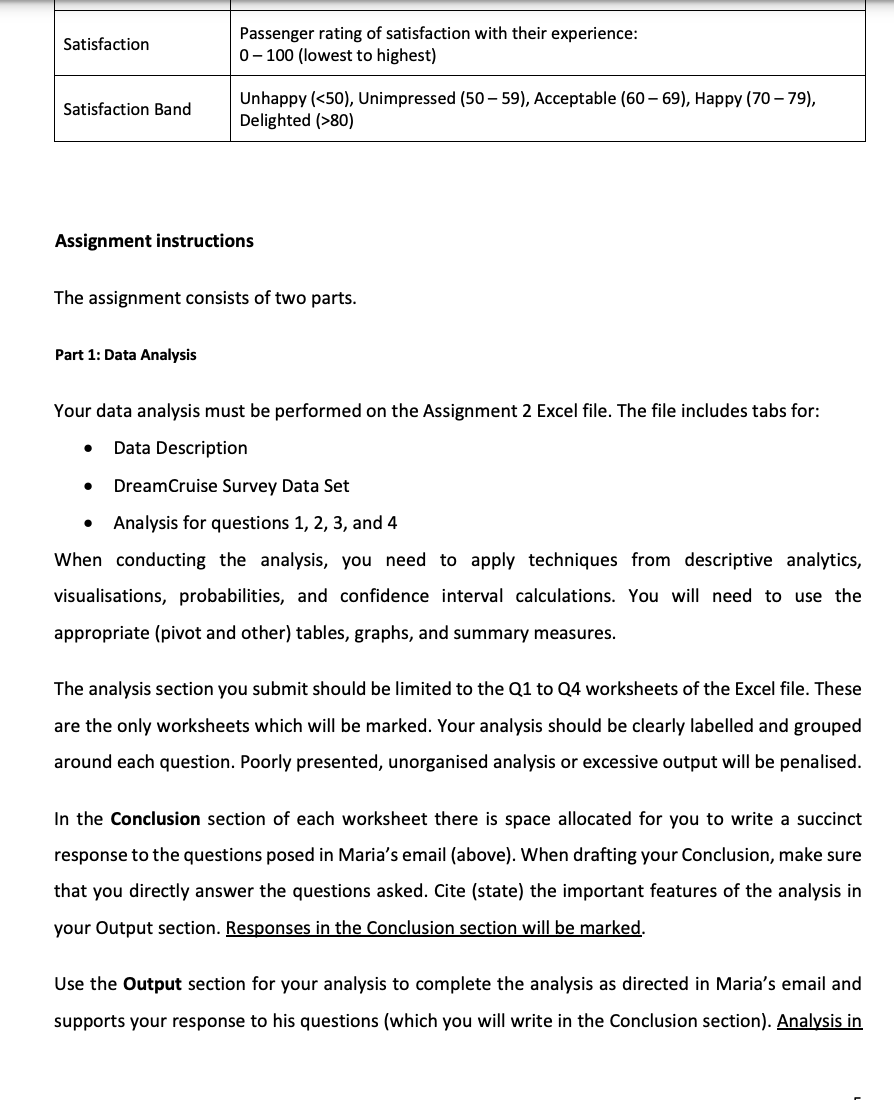
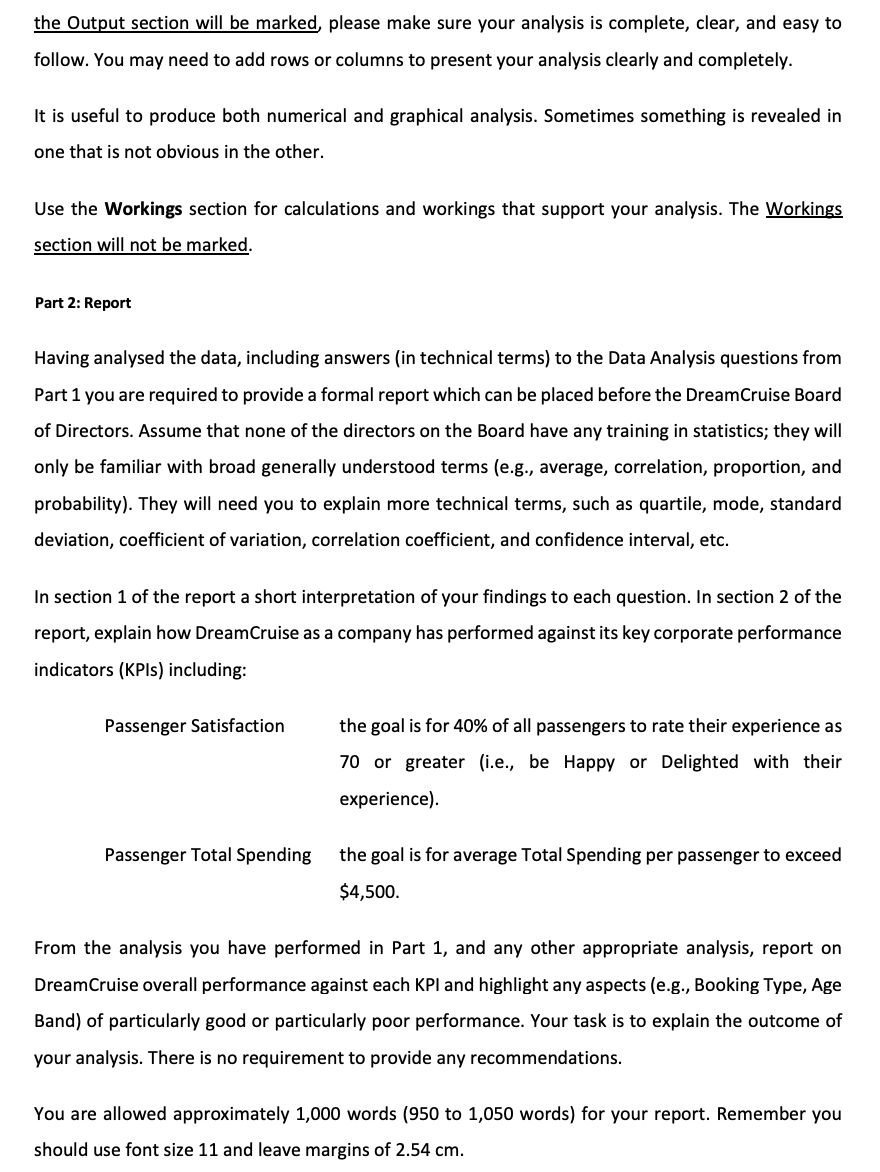
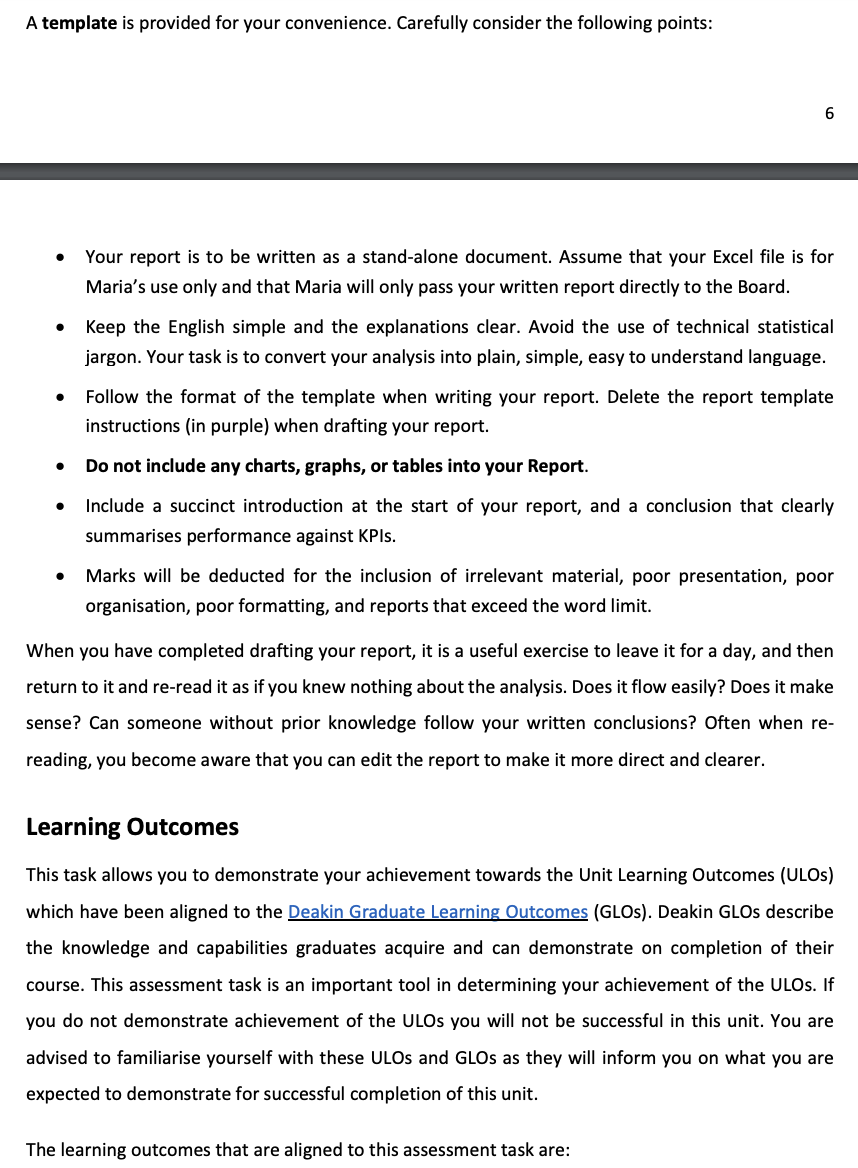
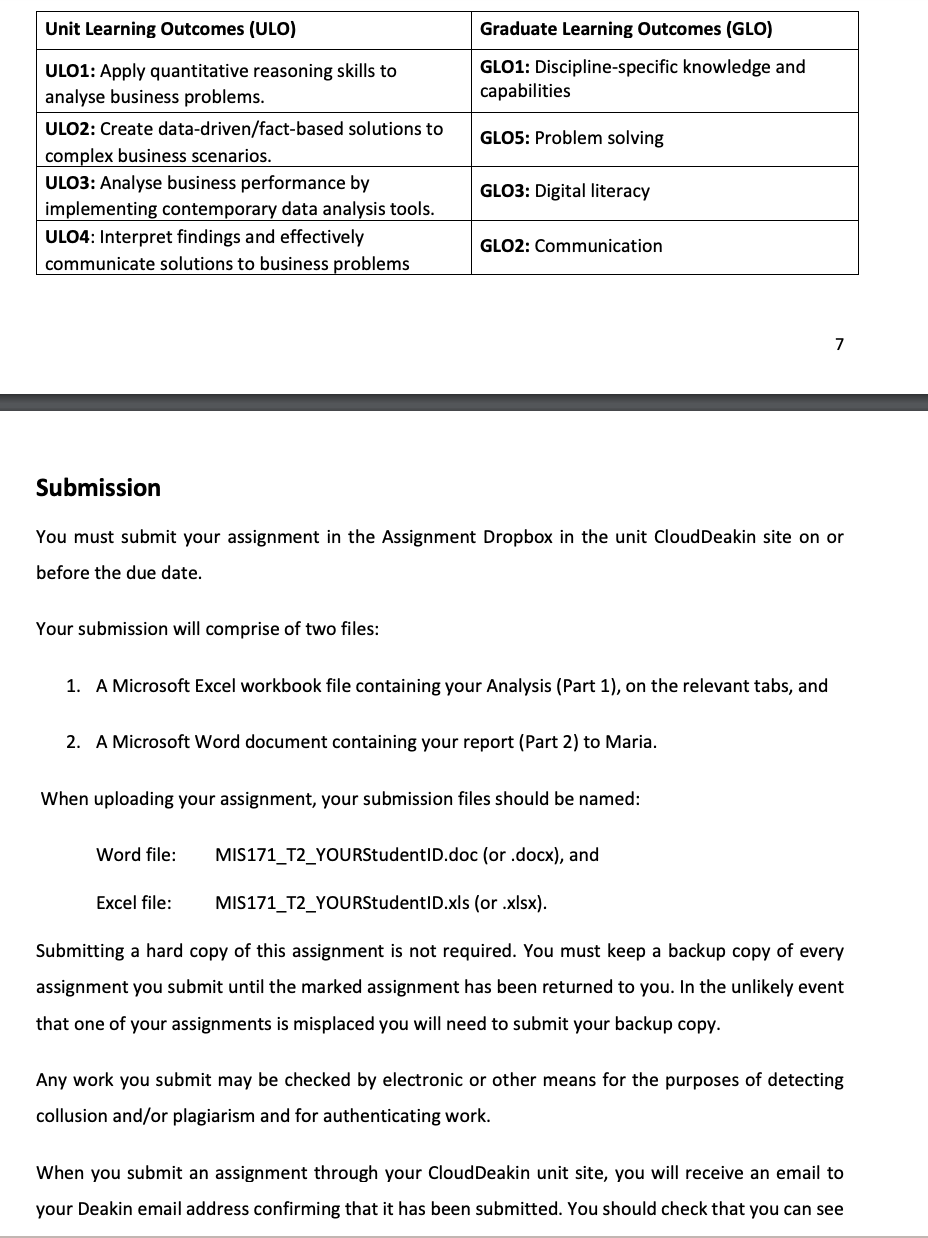
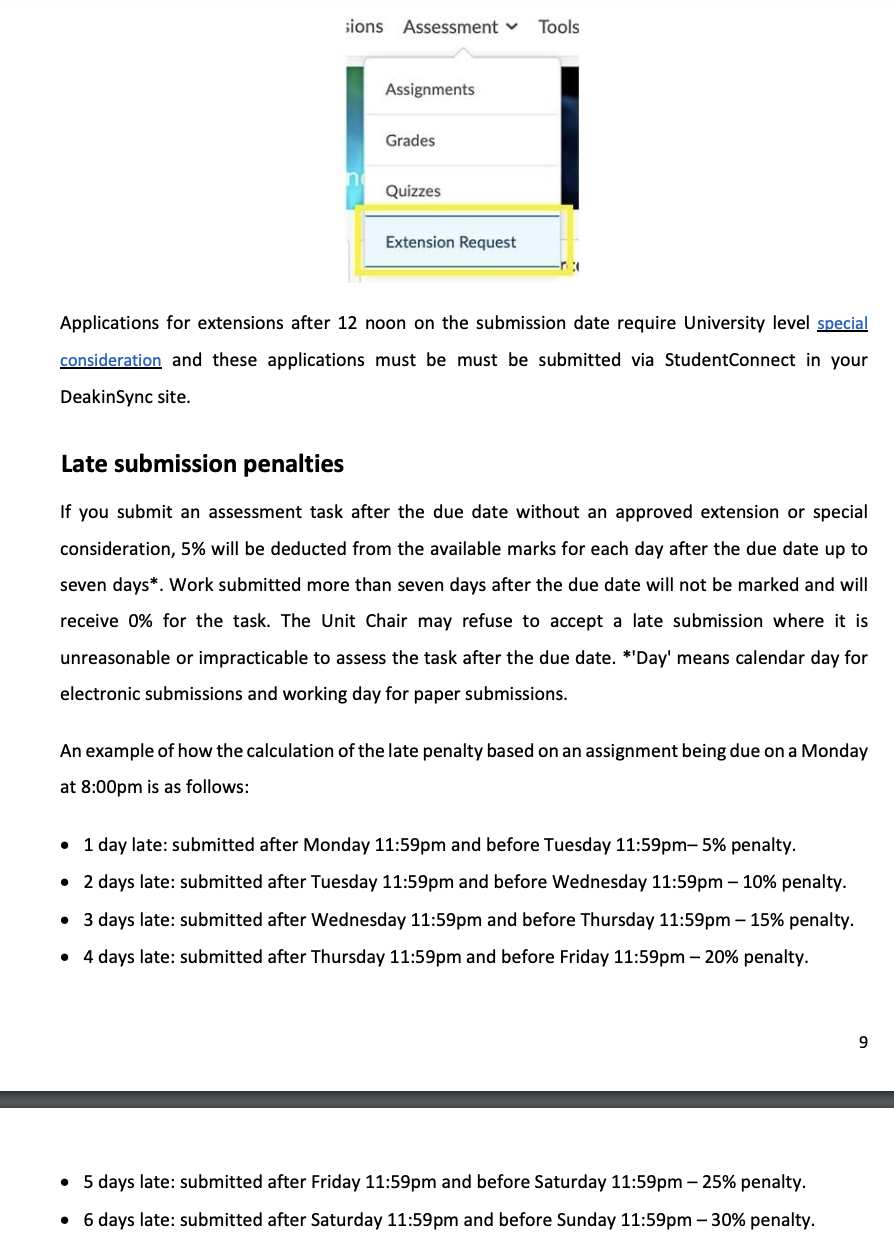
Description The assignment requires that you analyse a data set, interpret, and draw conclusions from your analysis, and then convey your conclusions in a written report. The assignment must be completed individually and must be submitted electronically in CloudDeakin by the due date. When submitting electronically, you must check that you have submitted the work correctly by following the instructions provided in CloudDeakin. Hard copies or assignments submitted via email will NOT be accepted. The assignment uses the file DreamCruise dotoset A2.xlsx which can be downloaded from CloudDeakin. The assignment focuses on materials presented up to and including Week 6. The Excel file which has been provided has different worksheets explaining and containing the DreamCruise dataset. For confidentiality reasons actual data has not been used in the assessment task. Following is an introduction to this scenario and detailed guidelines. Context/Scenario: DreamCruise Passenger Analysis DreamCruise1 is an established holiday company that specializes in providing leisure cruises from various ports in Australia to islands in the South Pacific. Before the Covid-19 pandemic, DreamCruise was a thriving business with a loyal customer base. However, like many other companies in the tourism industry, DreamCruise has been severely impacted by the pandemic and has had to suspend its operations. As the world looks forward to a post-Covid era, DreamCruise is now exploring ways to relaunch itself and rebuild its business. Assume that you are a business analyst recruited by DreamCruise. You have received an email from Maria Rodriguez, DreamCruise's Director of Analytics. Your response will be used as part of a report to the DreamCruise Board of Directors. Maria's email together with guidelines (shown in blue) are presented below: Email from Maria Rodriguez To: You From: Maria Rodriguez, Director of Analytics, DreamCruise Subject: Analysis of the DreamCruise's booking passengers dataset Hi We are very happy with the strong interest and business generated from the DreamCruise's booking passengers dataset. The Board wants a detailed understanding of some of the key aspects of the bookings. I have attached an Excel file with key data and included some guidelines (shown in blue) to direct your work. Please provide answers to the following questions. Return the Excel file to me. As I have training in business analytics, I am comfortable with technical language. The Board wants a report from you which explains the outcome of your analysis. As they do not have the benefit of training in business analytics your report must present the results of your analysis in plain, straightforward language. l have provided a template for you to use. 1. Univariate Analysis: Categorical Variables 1.1. Provide a profile of the categorical variable Booking Type. Our presumption is that there was an even spread of bookings across all booking types. If there was not an even spread of bookings across all booking types advise which was the most frequent (and least frequent) booking type. You will need to create a suitable table which includes the number and proportion of booking types. Create an appropriate graph to illustrate your analysis. Numerical Variables 1.2. A key promotional tool for DreamCruise is the total spending per passenger. Provide an analysis of the Total Spending. Provide THREE significant observations from your analysis. You will need to generate the appropriate Descriptive/Summary Statistics for Total Spending. Also include quartile details, and the interquartile range. Using an appropriate technique, determine whether or not there are any outliers. Create appropriate graph(s) to illustrate your analysis. 2. Bivariate Analysis: CategoricalZCategorical Variables 2.1. We are interested to understand more about our passenger mix, and any potential relationship between Age Band and Booking Type. We need you to provide THREE key observations from your analysis. 2.1. We are interested to understand more about our passenger mix, and any potential relationship between Age Band and Booking Type. We need you to provide THREE key observations from your analysis. You will need to create appropriate (pivot) table(s) and/or heat map(s) that identifies the number (and proportion) of Booking Types in each Age Band. Create appropriate graphs to illustrate your analysis. CategoricaIZNumerical Variables 2.2. We are interested to understand more about Spending of our passenger mix, and any potential relationship between Booking Type and Total Spending. We need you to provide key observations from your analysis in the provided table. You will need to create appropriate (pivot) table(s) and/or heat map(s) that identifies the Average Total Spending in each Booking Types. Create appropriate graphs to illustrate your analysis. NumericalZNumerical Variables 2.3. We believe that age of the booking passenger is a driver of total spending and spending on insurance. Also, Total Spending affects Satisfaction. We need you to advise the nature ofthe relationship (if any) between the following: a) Age and Total Spending b) Age and spending on Insurance c) Total Spending and Satisfaction You will need to calculate suitable association measures. Create appropriate graphs to illustrate your analysis. 3. Probability: 3.1. Assuming that the Total Spending is approximately normally distributed. Advise which Booking Type has the highest probability of total spending of more than $4500. 3. Probability: 3.1. Assuming that the Total Spending is approximately normally distributed. Advise which Booking Type has the highest probability of total spending of more than 54500. To answer this question, you will need to do separate probability calculations for each Booking Type. 3.2. Assuming that the Satisfaction is approximately normally distributed. Advise which Booking Type has the lowest probability of Satisfaction more than 70. To answer this question, you will need to do separate probability calculations for each Booking Type. 4. Confidence Intervals: Passenger satisfaction is a very important measure for DreamCruise. Please provide an overall estimate of the average Satisfaction for passengers of each Booking Type. Which Booking Type appears to have the highest (average) satisfaction? Which Booking Type appears to have the lowest (average) satisfaction? You will need to produce a comparative table of descriptive/summary statistics of the Satisfaction for each Booking Type. Then, you will need to calculate a 95% confidence interval for average Satisfaction for each Booking Type. Create an appropriate graph to illustrate your analysis. I look forward to receiving details of your analysis, and your report. Sincerely, Maria Data description I; a The provided data file includes multiple sheets, labelled \"Data Description , DreamCruise Data Set\" and a worksheet for your dashboard. The \"Data Description\" sheet describes all the variables used in the \"DreamCruise Data Set\" and is copied below for your convenience. Variable Description Passenger ID ID of the passenger making the booking [\"Booking Passengei\") Age Age of the Booking Passenger Booking passengers have been allocated to one of five age bands: Young [70 years} Gender Gender of Booking Passenger: Male. Female, or OtherfPrefer Not to Disclose Children Number of children included in the booking (included in Passengers} Passengers Number of passengers included in the booking [including children} Cabin Suite. Luxury. Porthole, Internal Booking Type: Solo, Double [couple or two friends travelling together}. Group, Family Cabin Cost Cost per passenger on Cabin (included in Total Spending} Side Trips Spending per passenger on side trips Insurance Spending per passenger on travel insurance Food and Drink Spending per passenger on food and drinks Entertainment Spending per passenger on entertainment Merchandise Spending per passenger on merchandise Total Spending Total Spending per passenger [sum ofall costfspending categories} Budget [=S4,500pp}. Spending Band Passenger rating of satisfaction with their experience: Satisfaction 0 100 (lowest to highest} Unhappy {80] Assignment instructions The assignment consists of two parts. Part 1: Data Analysis Your data analysis must be performed on the Assignment 2 Excel file. The file includes tabs for: 0 Data Description 0 DreamCruise Survey Data Set 0 Analysis for questions 1, 2, 3, and 4 When conducting the analysis, you need to apply techniques from descriptive analytics, visualisations, probabilities, and confidence interval calculations. You will need to use the appropriate [pivot and other] tables, graphs, and summary measures. The analysis section you submit should be limited to the C11 to Q4 worksheets of the Excel file. These are the only worksheets which will be marked. Your analysis should be clearly labelled and grouped around each question. Poorly presented, unorganised analysis or excessive output will be penalised. In the Conclusion section of each worksheet there is space allocated for you to write a succinct response to the questions posed in Maria's email [above]. When drafting your Conclusion, make sure that you directly answer the questions asked. Cite {state} the important features of the analysis in your Output section. Responses in the Conclusion section will be marked. Use the Output section for your analysis to complete the analysis as directed in Maria's email and supports your response to his questions [which you will write in the Conclusion section). Analysis in the Output section will be marked, please make sure your analysis is complete, clear, and easy to follow. You may need to add rows or columns to present your analysis clearly and completely. It is useful to produce both numerical and graphical analysis. Sometimes something is revealed in one that is not obvious in the other. Use the Workings section for calculations and workings that support your analysis. The Workings section will not be marked. Part 2: Report Having analysed the data, including answers [in technical terms] to the Data Analysis questions from Part 1 you are required to provide a formal report which can be placed beforethe DreamCruise Board of Directors. Assume that none of the directors on the Board have any training in statistics; they will only be familiar with broad generally understood terms [e.g., average, correlation, proportion, and probability}. They will need you to explain more technical terms, such as quartile, mode, standard deviation, coefficient of variation, correlation coefficient, and confidence interval, etc. In section 1 of the report a short interpretation of your findings to each question. In section 2 of the report, explain how DreamCruise as a company has performed against its key corporate performance indicators [KPlsl including: Passenger Satisfaction the goal is for 40% of all passengers to rate their experience as 70 or greater {i.e., be Happy or Delighted with their experience]. Passenger Total Spending the goal is for average Total Spending per passenger to exceed 54,5 00. From the analysis you have performed in Part 1, and any other appropriate analysis, report on DreamCruise overall performance against each KPI and highlight any aspects (e.g., Booking Type, Age Band] of particularly good or particularly poor performance. Your task is to explain the outcome of your analysis. There is no requirement to provide any recommendations. You are allowed approximately 1,000 words [950 to 1,050 words] for your report. Remember you should use font size 11 and leave margins of 2.54 cm. A template is provided for your convenience. Carefully consider the following points: 0 Your report is to be written as a stand-alone document. Assume that your Excel file is for Maria's use only and that Maria will only pass your written report directly to the Board. 0 Keep the English simple and the explanations clear. Avoid the use of technical statistical jargon. Your task is to convert your analysis into plain, simple, easy to understand language. 0 Follow the format of the template when writing your report. Delete the report template instructions (in purple] when drafting your report. 0 Do not include any charts, graphs, or tables into your Report. 0 Include a succinct introduction at the start of your report, and a conclusion that clearly summarises performance against KPls. 0 Marks will be deducted for the inclusion of irrelevant material, poor presentation, poor organisation, poor formatting, and reports that exceed the word limit. when you have completed drafting your report, it is a useful exercise to leave it for a day, and then return to it and re-read it as if you knew nothing about the analysis. Does it flow easily? Does it make sense? Can someone without prior knowledge follow your written conclusions? Often when re- reading, you become aware that you can edit the report to make it more direct and clearer. Learning Outcomes This task allows you to demonstrate your achievement towards the Unit Learning Outcomes (ULOs) which have been aligned to the Deakin Graduate Learning Outcomes [GLOs]. Deakin GLOs describe the knowledge and capabilities graduates acquire and can demonstrate on completion of their course. This assessment task is an important tool in determining your achievement of the ULOs. If you do not demonstrate achievement of the ULOs you will not be successful in this unit. You are advised to familiarise yourself with these ULOs and GLOs as they will inform you on what you are expected to demonstrate for successful completion of this unit. The learning outcomes that are aligned to this assessment task are: Unit Learning Outcomes [ULO] Graduate Learning Outcomes [GLO] UL01: Apply quantitative reasoning skills to 6'31: Discipline-specific knowledge and analyse business problems. capabilities ULOZ: Create data-driven/fact-based solutions to GLOS: Problem solving complex business scenarios. UL03: Analyse business performance by GLOS: Digital literacy implementing contemporary data analysis tools. ULO4: Interpret findings and effectively communicate solutions to business problems GLOZ: Communication Submission You must submit your assignment in the Assignment Dropbox in the unit CloudDeakin site on or before the due date. Your submission will comprise of two files: 1. A Microsoft Excel workbook file containing your Analysis (Part 1], on the relevant tabs, and 2. A Microsoft Word document containing your report [Part 2) to Maria. When uploading your assignment, your submission files should be named: Word file: Ml5171_T2_YOU RStudentID.doc [or .docx], a nd Excel file: Ml5171_T2_YOURStudentID.xls (or .xlsx]. Submitting a hard copy of this assignment is not required. You must keep a backup copy of every assignment you submit until the marked assignment has been returned to you. In the unlikely event that one of your assignments is misplaced you will need to submit your backup copy. Any work you submit may be checked by electronic or other means for the purposes of detecting collusion and/or plagiarism and for authenticating work. when you submit an assignment through your CloudDeakin unit site, you will receive an email to your Deakin email address confirming that it has been submitted. You should check that you can see In..." Hhlllll 5......" u\"...- h-.. nun-unnub u\"... u. ..u.. my...\" dHHIlllhhhH- .u .n........... nun...\" mu... l"""' he... .n..1.. your assignment in the Submissions View of the Assignment Dropbox folder after upload and check for, and keep, the email receipt for the submission. Marking and feedback The marking rubric indicates the assessment criteria for this task. It is available in the CIoudDeakin unit site in the Assessment folder, under Assessment Resources. Criteria act as a boundary around the task and help specify what assessors are looking for in your submission. The criteria are drawn from the ULOs and align with the GLOs. You should familiarise yourself with the assessment criteria before completing and submitting this task. Students who submit their work by the due date will receive their marks and feedback on CloudDea kin 15 working days after the submission date. Extensions Extensions can only be granted for exceptional and/or unavoidable circumstances outside ofyour control. Requests for extensions must be made by 12 noon on the submission date using the online Extension Request form under the Assessment tab on the unit CIoudDeakin site. All requests for extensions should be supported by appropriate evidence [e.g., a medical certificate in the case of ill health]. ilOf'lS AssessmentV Tools Assignments Grades Quizzes Extension Request I' II Applications for extensions after 12 noon on the submission date require University level special consideration and these applications must be must be submitted via StudentConnect in your Deaki nSync site. Late submission penalties If you submit an assessment task after the due date without an approved extension or special consideration, 5% will be deducted from the available marks for each day after the clue date up to seven days\". Work submitted more than seven days after the clue date will not be marked and will receive 0% for the task. The Unit Chair may refuse to accept a late submission where it is unreasonable or impracticable to assess the task after the due date. *'Day' means calendar day for electronic submissions and working day for paper submissions. An example of how the calculation ofthe late penalty based on an assignment being due on a Monday at 8:00pm is as follows: a 1 day late: submitted after Monday 11:59pm and before Tuesday 11:59pm 5% penalty. 0 2 days late: submitted after Tuesday 11:59pm and before Wednesday 11:59pm 10% penalty. 0 3 days late: submitted after Wednesday 11:59pm and before Thursday 11:59pm 15% penalty. 0 4 clays late: submitted after Thursday 11:59pm and before Friday 11:59pm 20% penalty. 0 5 days late: submitted after Friday 11:59pm and before Saturday 11:59pm 25% penalty. 0 6 days late: submitted after Saturday 11:59pm and before Sunday 11:59pm 30% penalty. o 6 days late: submitted after Saturday 11:59pm and before Sunday 11:59pm 30% penalty. - 7 days late: submitted after Sunday 11:59pm and before Monday 11:59pm 35% penalty. The Dropbox closes the Monday after 11:59pm AEST/AEDT time. Support The Division of Student Life provides a range of Study Support resources and services, available throughout the academic year, including Writing Mentor and Maths Mentor online drop ins and the SmartThinking 24 hour writing feedback service at this link. If you would prefer some more in depth and tailored support, make an appointment online with a Language and Learning Adviser. Referencing and Academic Integrity Deakin takes academic integrity very seriously. It is important that you {and if a group task, your group) complete your own work in every assessment task Any material used in this assignment that is not your original work must be acknowledged as such and appropriately referenced. You can find information about referencing {and avoiding breaching academic integrity) and other study support resources at the following website: htt : www.deakin.edu.au students stud -su Your rights and responsibilities as a student As a student you have both rights and responsibilities. Please refer to the document Your rights and responsibilities as a student in the Unit Guide & Information section in the Content area in the CloudDeakin unit site
Step by Step Solution
There are 3 Steps involved in it

Get step-by-step solutions from verified subject matter experts
 Study Help