







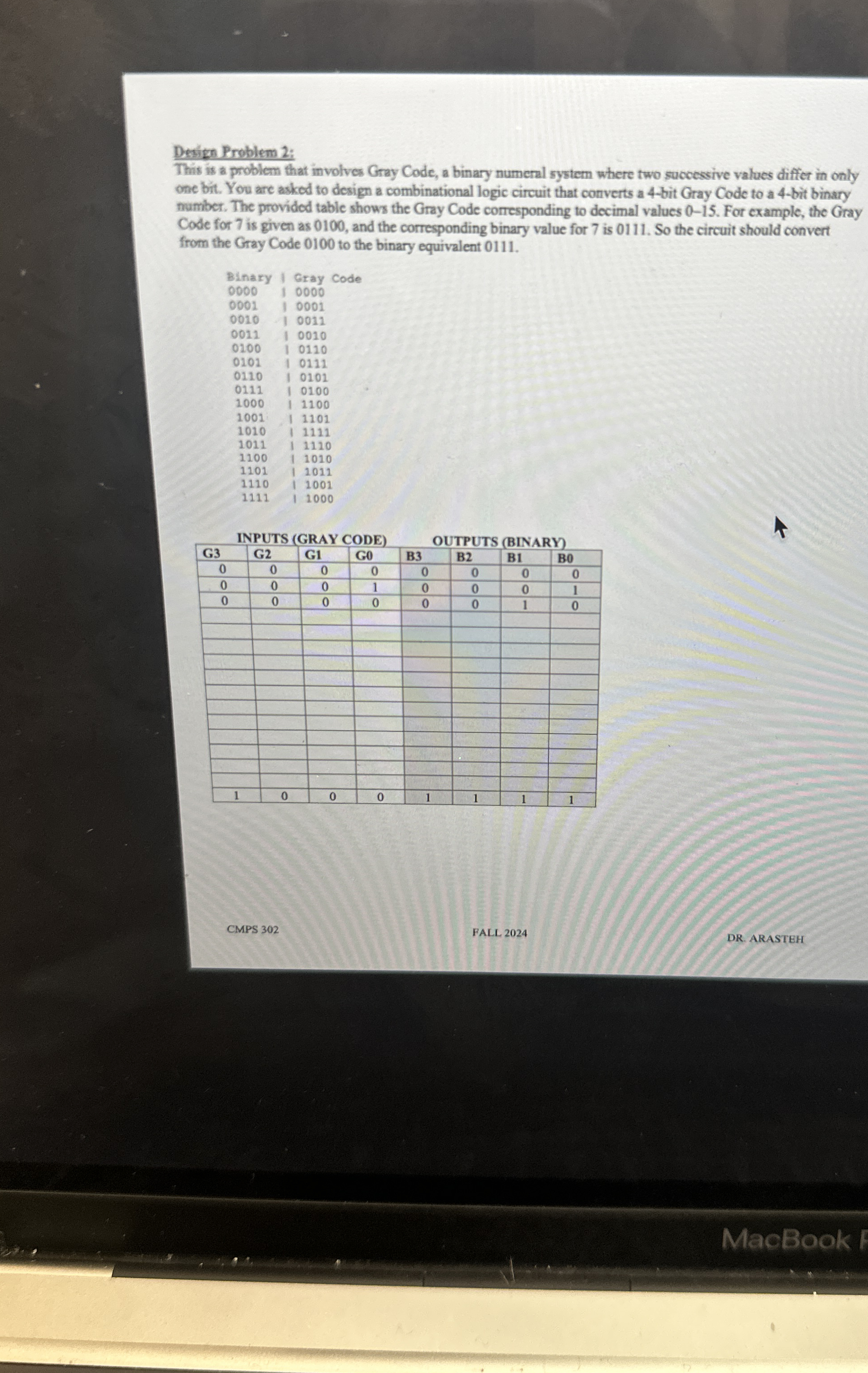
Question: Design Problem 2 : This is a problem that involves Gray Code, a binary numeral system where two successive values differ in only one bit.
Design Problem :
This is a problem that involves Gray Code, a binary numeral system where two successive values differ in only one bit. You are asked to design a combinational logic circuit that converts a bit Gray Code to a bit binary number. The provided table shows the Gray Code corresponding to decimal values For example, the Gray Code for is given as and the corresponding binary value for is So the circuit should convert from the Gray Code to the binary equivalent
tableBinaryGray Code
tableINPUTS GRAY CODEtableGGGGBBBB
Step by Step Solution
There are 3 Steps involved in it
1 Expert Approved Answer
Step: 1 Unlock

Question Has Been Solved by an Expert!
Get step-by-step solutions from verified subject matter experts
Step: 2 Unlock
Step: 3 Unlock
 Study Help