







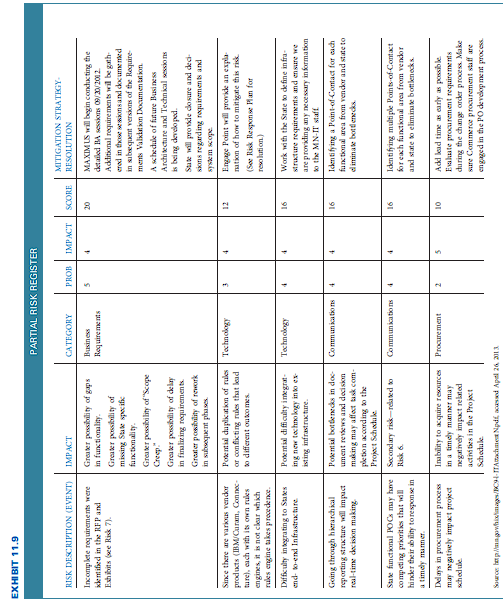
Question: Develop a risk register for your example project. Categorize each risk, list potential causes, and list potential responses for each cause, as shown in Exhibit
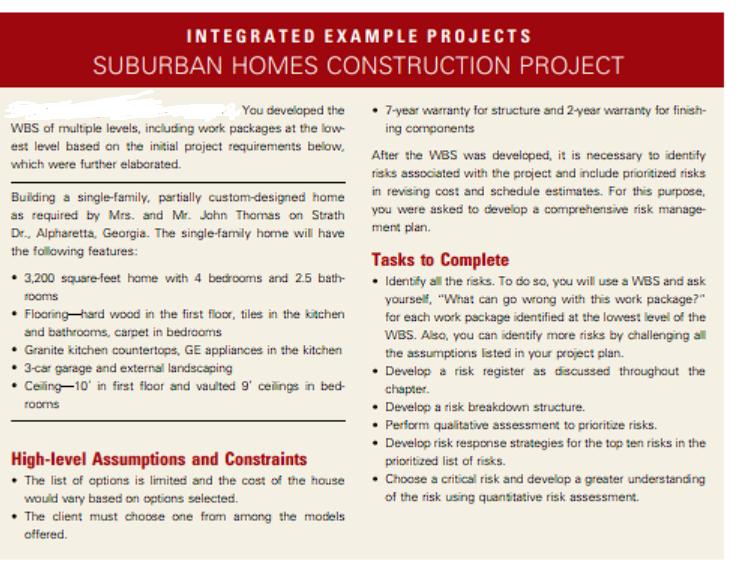
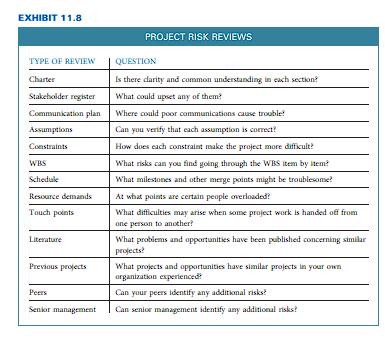
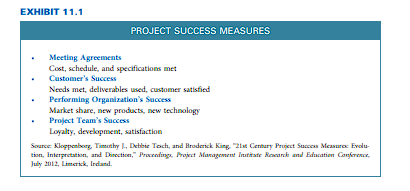
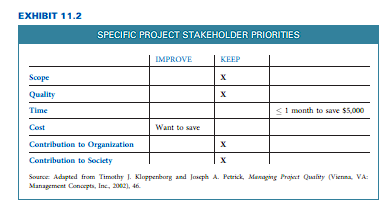
Develop a risk register for your example project. Categorize each risk, list potential causes, and list potential responses for each cause, as shown in Exhibit 11.9. Describe what each project success measure (from Exhibit 11.1) looks like on your example project. Identify at least three risks to each success measure, determine which are major risks, and for each major risk, develop one or more contingency plans. Identify whether the contingency plan is an avoidance plan (reducing the probability of the risk event), a mitigation plan (reducing the impact of the event), or both. Facilitate a discussion with the sponsor and other key stakeholders of your project. Have them determine the relative importance of their priorities and document them, as shown in Exhibit 11.2. Perform a risk review for your example project. Use at least three types of review, as shown in Exhibit 11.8. Which of these types gave you the most useful information? Why?
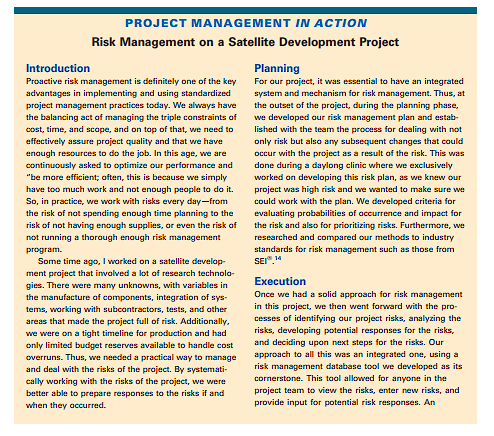
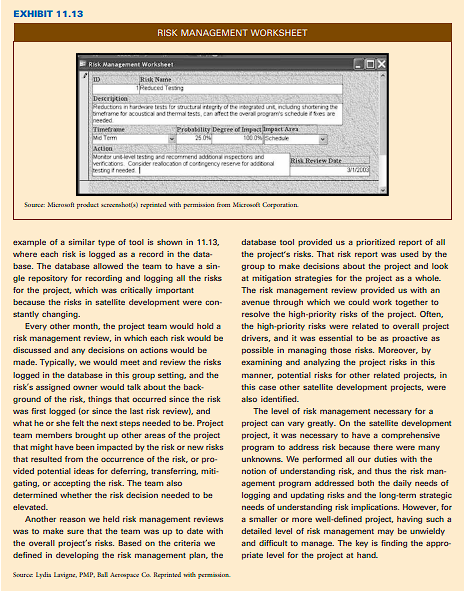
PROJECT MANAGEMENT IN ACTION Risk Management on a Satellite Development Project Introduction Proactive risk management is definitely one of the key advantages in implementing and using standardized project management practices today. We always have the balancing act of managing the triple constraints of cost, time, and scope, and on top of that, we need to effectively assure project quality and that we have enough resources to do the job. In this age, we are continuously asked to optimize our performance and "be more efficient; often, this is because we simply have too much work and not enough people to do it. So, in practice, we work with risks every day-from the risk of not spending enough time planning to the risk of not having enough supplies, or even the risk of not running a thorough enough risk management program. Some time ago, I worked on a satellite develop- ment project that involved a lot of research technolo- gies. There were many unknowns, with variables in the manufacture of components, integration of sys- tems, working with subcontractors, tests, and other areas that made the project full of risk. Additionally, we were on a tight timeline for production and had only limited budget reserves available to handle cost overruns. Thus, we needed a practical way to manage and deal with the risks of the project. By systemati- cally working with the risks of the project, we were better able to prepare responses to the risks if and when they occurred. Planning For our project, it was essential to have an integrated system and mechanism for risk management. Thus, at the outset of the project, during the planning phase, we developed our risk management plan and estab- lished with the team the process for dealing with not only risk but also any subsequent changes that could occur with the project as a result of the risk. This was done during a daylong clinic where we exclusively worked on developing this risk plan, as we knew our project was high risk and we wanted to make sure we could work with the plan. We developed criteria for evaluating probabilities of occurrence and impact for the risk and also for prioritizing risks. Furthermore, we researched and compared our methods to industry standards for risk management such as those from SEI, 14 Execution Once we had a solid approach for risk management in this project, we then went forward with the pro- cesses of identifying our project risks, analyzing the risks, developing potential responses for the risks, and deciding upon next steps for the risks. Our approach to all this was an integrated one, using a risk management database tool we developed as its cornerstone. This tool allowed for anyone in the project team to view the risks, enter new risks, and provide input for potential risk responses. An
Step by Step Solution
There are 3 Steps involved in it

Get step-by-step solutions from verified subject matter experts
 Study Help