







Question: Develop risk register for your example project. Categorize each risk, list potential causes, and list potential responses for each cause, as shown in Exhibit 11.9.
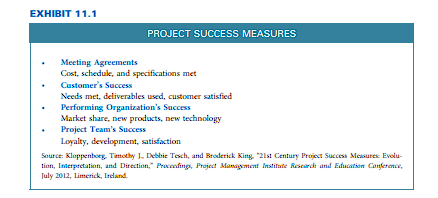
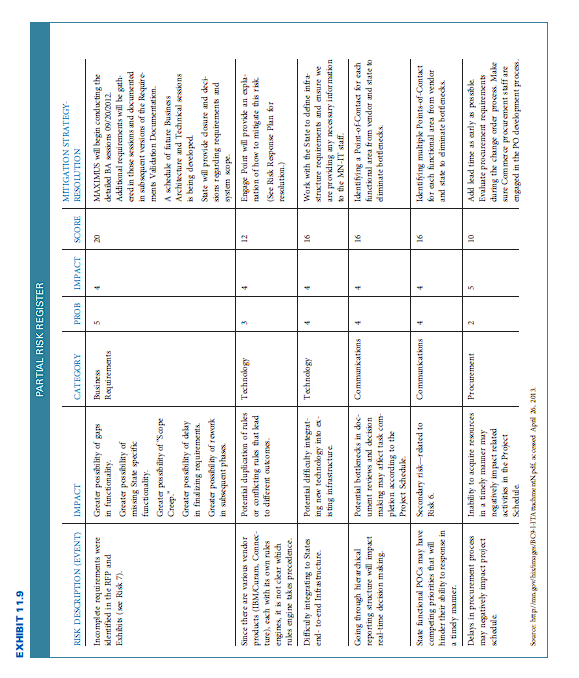
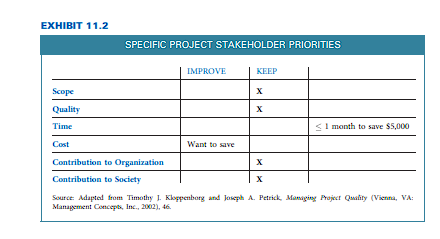
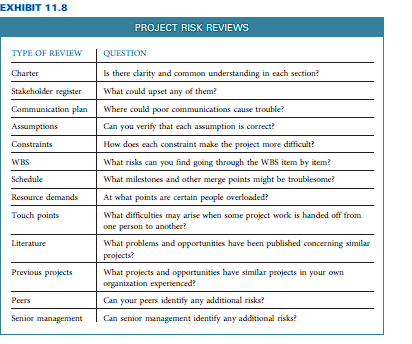
Develop risk register for your example project. Categorize each risk, list potential causes, and list potential responses for each cause, as shown in Exhibit 11.9. Describe what each project success measure (from Exhibit 11.1) looks like on your example project. Identify at least three risks to each success measure, determine which are major risks, and for each major risk, develop one or more contingency plans. Identify whether the contingency plan is an avoidance plan (reducing the probability of the risk event), a mitigation plan (reducing the impact of the event), or both. Facilitate a discussion with the sponsor and other key stakeholders of your project. Have them determine the relative importance of their priorities and document them, as shown in Exhibit 11.2. Perform a risk review for your example project. Use at least three types of review, as shown in Exhibit 11.8. Which of these types gave you the most useful information? Why?
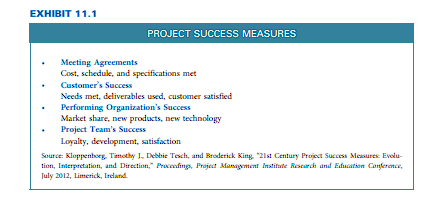
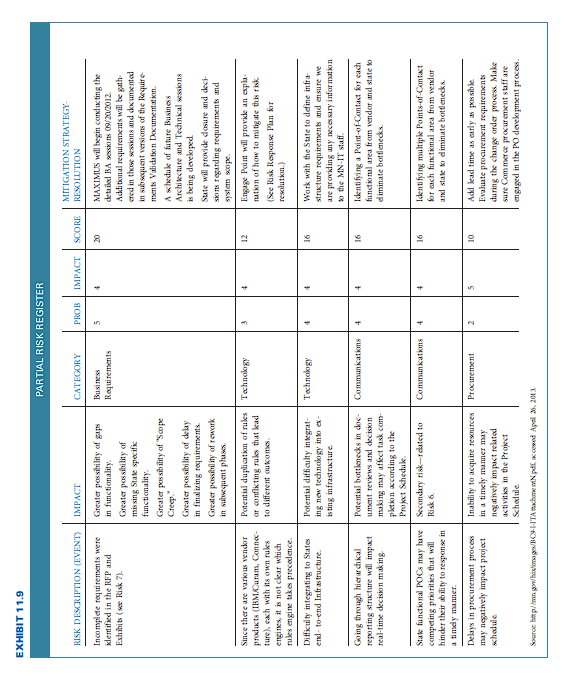
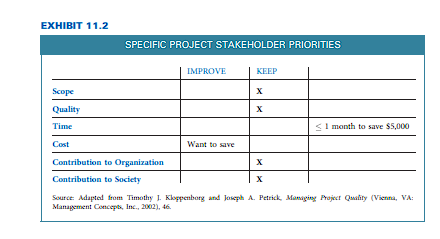
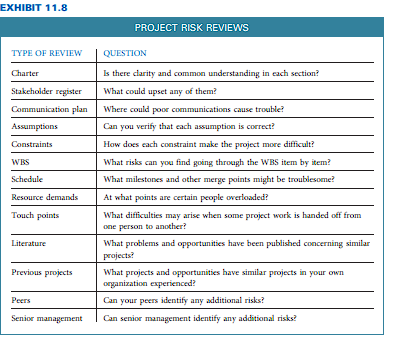
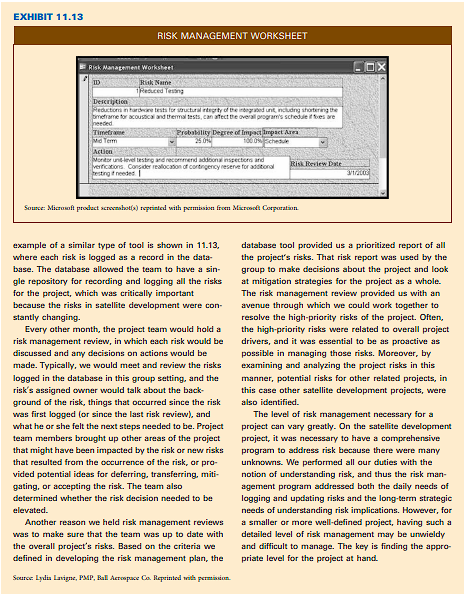
EXHIBIT 11.1 PROJECT SUCCESS MEASURES Meeting Agreements Cost, schedule, and specifications met Customer's Success Needs met, deliverables used, customer satisfied Performing Organization's Success Market share, new products, new technology Project Team's Success Loyalty, development, satisfaction Source: Kloppenborg Timothy J. Debbie Teach, and Broderick King, "21st Century Project Success Measures Evolu- tion, Interpretation, and Direction," Paveafing, Profat Mauryment Intimate Ranch and Education Contract, July 2012, Limerick, IrelandEXHIBIT 11.9 PARTIAL RISK REGISTER MITIGATION STRATEGY RISK DESCRIPTION (EVENT) IMPACT CATEGORY PROB IMPACT SCORE RESOLUTION Incomplete requirements were Greater possibility of gaps Business in MAXIMUS will begin conducting the identified in the RFP and in functionality Requirements detailed BA sessions 09/20/2012 Exhibits ( see Risk 7) Greata possibility of Ackditional requirements will be gath missing State specific cred in those sessions and documented functionality. in subsequent versions of the Require Greater possibility of "Scope ments Validation Documentation Creep." A schedule of future Business Greater possibility of delay Architecture and Technical sessions in finalizing requirements is being developed Greater possibility of rework State will provide dosure and deci- sions regarding requirements and in subsequent phise System scope. since there are various vendor Potential duplication of rules Technology Engage Point will provide an expla products (IBM/ Curam, Connec of conflicting rules that bad nation of how to mitigate this risk ture), cach with its own ruks to different oukonks (See Risk Response Plan for engines, it is not clear which resolution-} rules engine take precedence. Difficulty integrating to States Potential difficulty integrat- Technology Work with the State to define infra end- to-end Infrastructure. ing new technology ink ex- structure requirements and ensure we is ting infrastructure are providing any necessary information to the MIN-IT staff Going through hierarchical Potential bottlenecks in doc- Communkations Identifying a Point-of Contact for each reporting structure will impact ument reviews and decision functional area from vendor and state to real-time decision making- making may affect tack cam- diminate bottlenecks pktion according to the Project Sheduk. State functional POCs may have Secondary risk-rdated to Communications 16 Identifying multiple Points-of-Contact competing priorities that will Risk 6 for each functional area from vendor hinder their ability to response in and state to diminate bottlenecks. a timey manner Delays in procurement process Inability to acquire resources Procurement 2 in Add lead time as early as possible may negatively impact project in a timely manner may Evaluate procurement requirements shodule negatively impact related during the change order process Make activities in the Project sure Commerce procurement staff are Schedule engaged in the PO development processEXHIBIT 11.2 SPECIFIC PROJECT STAKEHOLDER PRIORITIES IMPROVE KEEP Scope X Quality X Time
Step by Step Solution
There are 3 Steps involved in it

Get step-by-step solutions from verified subject matter experts
 Study Help