







Question: Develop a SWOT analysis for La Croix. Include at least one item in each of the four categories: Strengths, Weaknesses, Opportunities, and Threats. European brands
Develop a SWOT analysis for La Croix. Include at least one item in each of the four categories: Strengths, Weaknesses, Opportunities, and Threats. 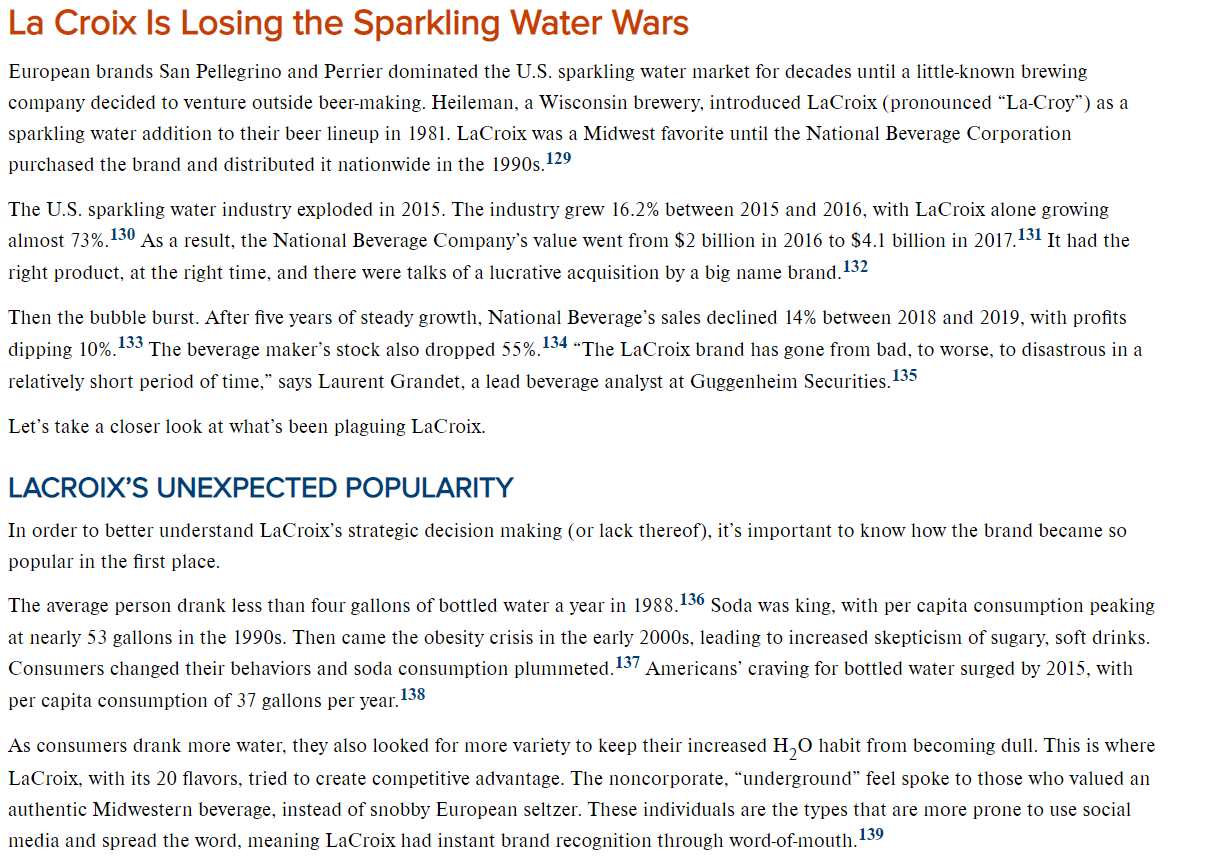
European brands San Pellegrino and Perrier dominated the U.S. sparkling water market for decades until a little-known brewing company decided to venture outside beer-making. Heileman, a Wisconsin brewery, introduced LaCroix (pronounced "La-Croy") as a sparkling water addition to their beer lineup in 1981. LaCroix was a Midwest favorite until the National Beverage Corporation purchased the brand and distributed it nationwide in the 1990s. 129 The U.S. sparkling water industry exploded in 2015. The industry grew 16.2\% between 2015 and 2016, with LaCroix alone growing almost 73%.130 As a result, the National Beverage Company's value went from $2 billion in 2016 to $4.1 billion in 2017.131 It had the right product, at the right time, and there were talks of a lucrative acquisition by a big name brand. 132 Then the bubble burst. After five years of steady growth, National Beverage's sales declined 14\% between 2018 and 2019, with profits dipping 10%.133 The beverage maker's stock also dropped 55%. 134 "The LaCroix brand has gone from bad, to worse, to disastrous in a relatively short period of time," says Laurent Grandet, a lead beverage analyst at Guggenheim Securities. 135 Let's take a closer look at what's been plaguing LaCroix. LACROIX'S UNEXPECTED POPULARITY In order to better understand LaCroix's strategic decision making (or lack thereof), it's important to know how the brand became so popular in the first place. The average person drank less than four gallons of bottled water a year in 1988.136 Soda was king, with per capita consumption peaking at nearly 53 gallons in the 1990s. Then came the obesity crisis in the early 2000 s, leading to increased skepticism of sugary, soft drinks. Consumers changed their behaviors and soda consumption plummeted. 137 Americans' craving for bottled water surged by 2015 , with per capita consumption of 37 gallons per year. 138 As consumers drank more water, they also looked for more variety to keep their increased H2O habit from becoming dull. This is where LaCroix, with its 20 flavors, tried to create competitive advantage. The noncorporate, "underground" feel spoke to those who valued an authentic Midwestern beverage, instead of snobby European seltzer. These individuals are the types that are more prone to use social media and spread the word, meaning LaCroix had instant brand recognition through word-of-mouth. 139
Step by Step Solution
There are 3 Steps involved in it

Get step-by-step solutions from verified subject matter experts
 Study Help