







Question: Developing a Theory-based Evaluation Framework Notes: Theory-based approaches to evaluation use an explicit theory of change to draw conclusions about whether and how an intervention
![Trust for Cultural and Creative Industries [1], based in Cannes, France has](https://s3.amazonaws.com/si.experts.images/answers/2024/06/666a455e7d671_606666a455e593c1.jpg)
Developing a Theory-based Evaluation Framework
Notes:
Theory-based approaches to evaluation use an explicittheory of changeto draw conclusions aboutwhether and howan intervention contributes to observed results.
Evaluation is a branch ofapplied researchthat attempts to identify cause-effect (if-then) relationships within a specific intervention context.
Anevaluation frameworksets the parameters of the evaluation - its purposes, key evaluation questions and the criteria and standards to be used.
Context:
TheGlobal Trust for Cultural and Creative Industries [1], based in Cannes, France has partnered with the Lowveld Chamber of Business and Tourism (LCBT) and the Mbombela Local Municipality (MLM). The partnership has agreed toexplore options for rolling out initiativesin the cultural and creative industries that supportsustainable youth employment.
You have been appointed to evaluate theE3YDH'sCreating Opportunities for Youth Program[2]to inform the partnership's decision topursue, re-engineer or rejectthe program's approach.
Note: The E3YDH Case Study and the fictitious partnership are provided as a means for you to anchor your submission. You arenotrequired to evaluate the intervention, but you may use elements of the context provided to ground/illustrate your argument.
Assignment Task
- Describe and comment on the E3YDH program'sunderlying theory of change. (Case Study attached)
- Propose a comprehensive, "fit for purpose"evaluation approach and methodthat will inform and guide the implementation of your program evaluation.
- Describe the strengths and weaknesses of various evaluation approaches
- Critically interrogate the potential of theory-based evaluation
- Formulate evaluation questions for different evaluation purposes
- Identify appropriate methods to respond to different evaluation questions
- Describe the linkages between research and evaluation methods
Guidance:
- Your proposal should be structured asa well-reasoned and substantiated argumentthat convinces your client that your approach is appropriate, practical, feasible and ethical.
[1]This is a fictitious organization,[2]E3GIZCCILessonsLearned_30012020.pdf
![been appointed to evaluate theE3YDH'sCreating Opportunities for Youth Program[2]to inform the partnership's](https://s3.amazonaws.com/si.experts.images/answers/2024/06/666a456056fd3_608666a456037b95.jpg)
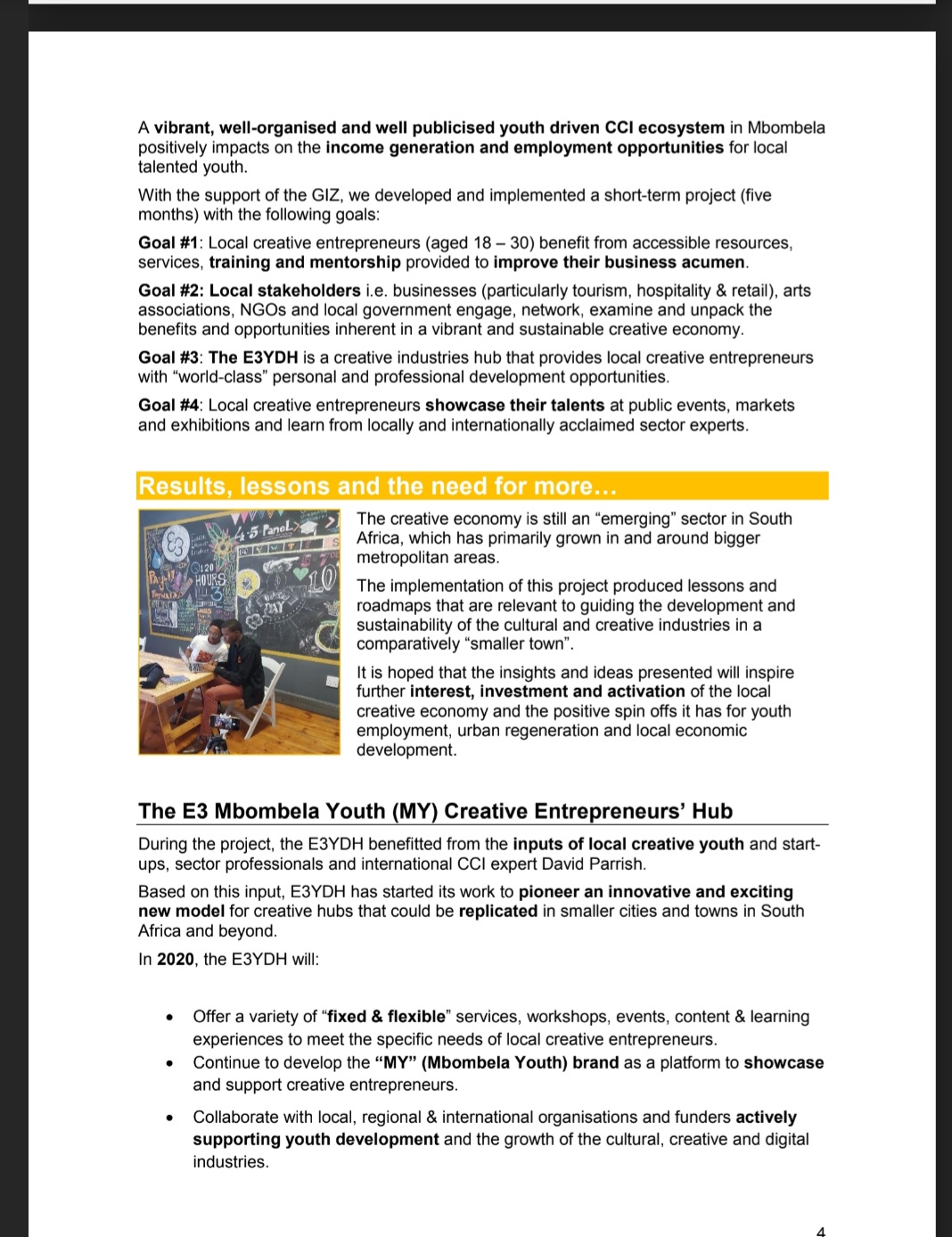
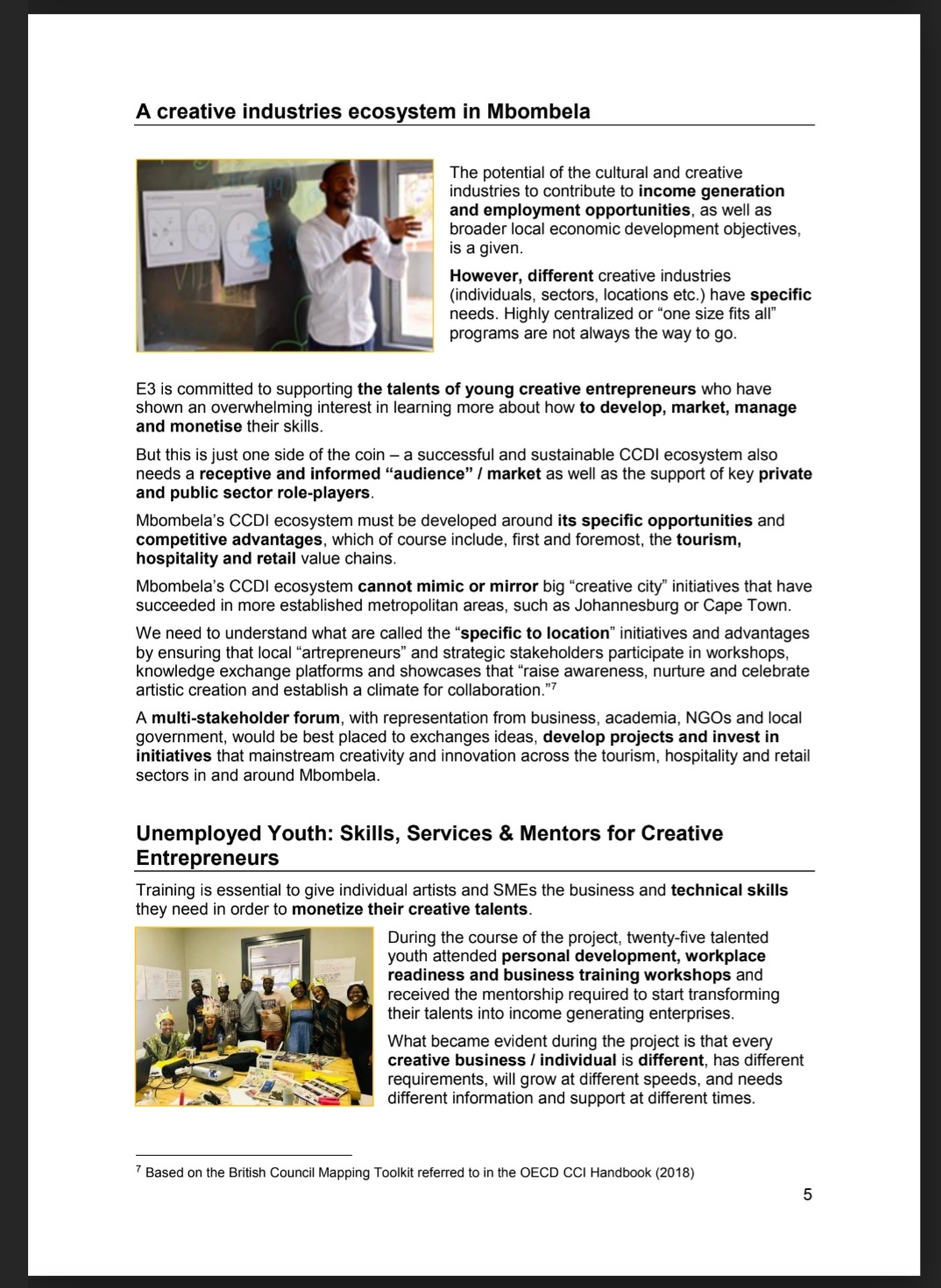
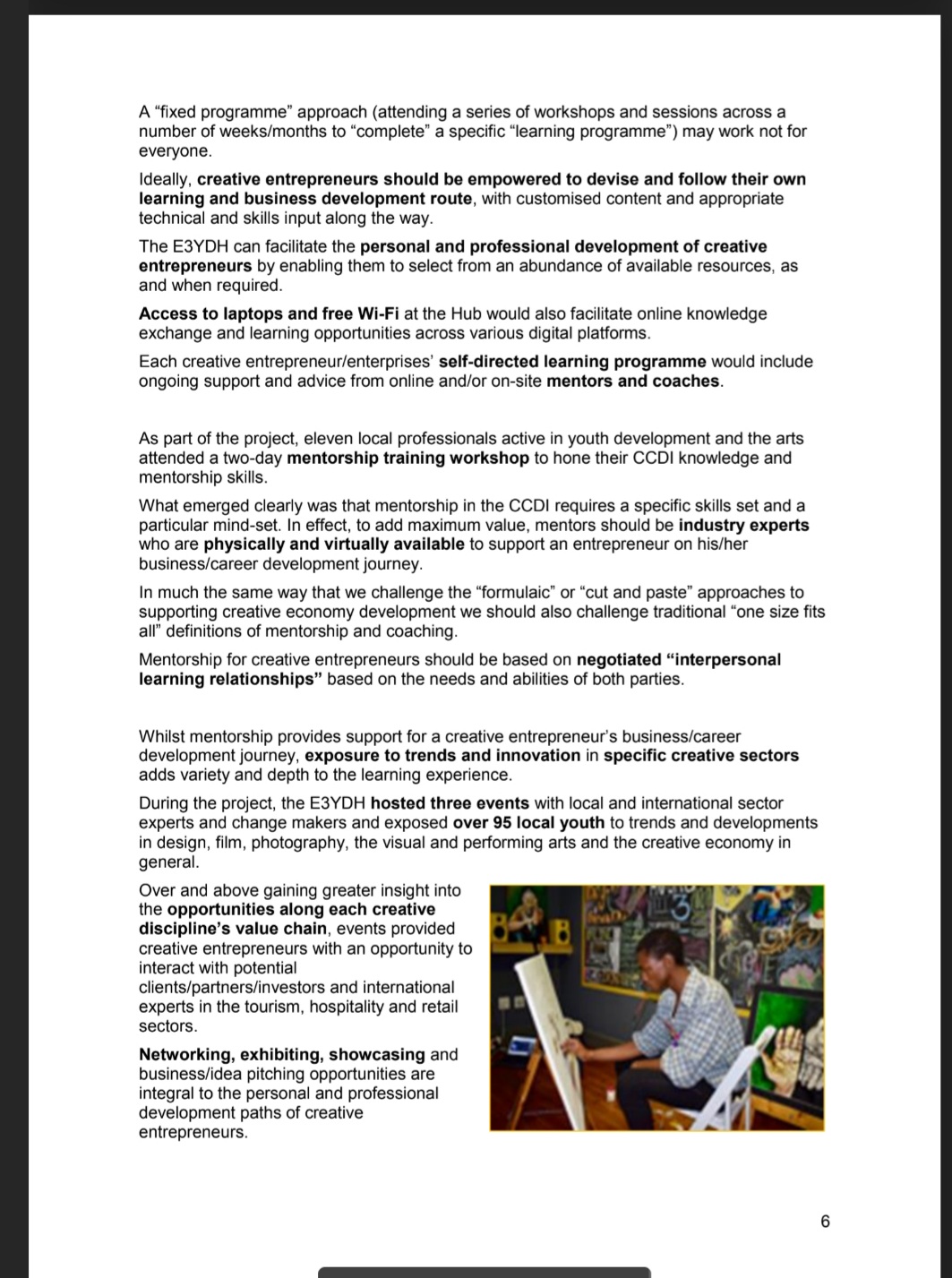
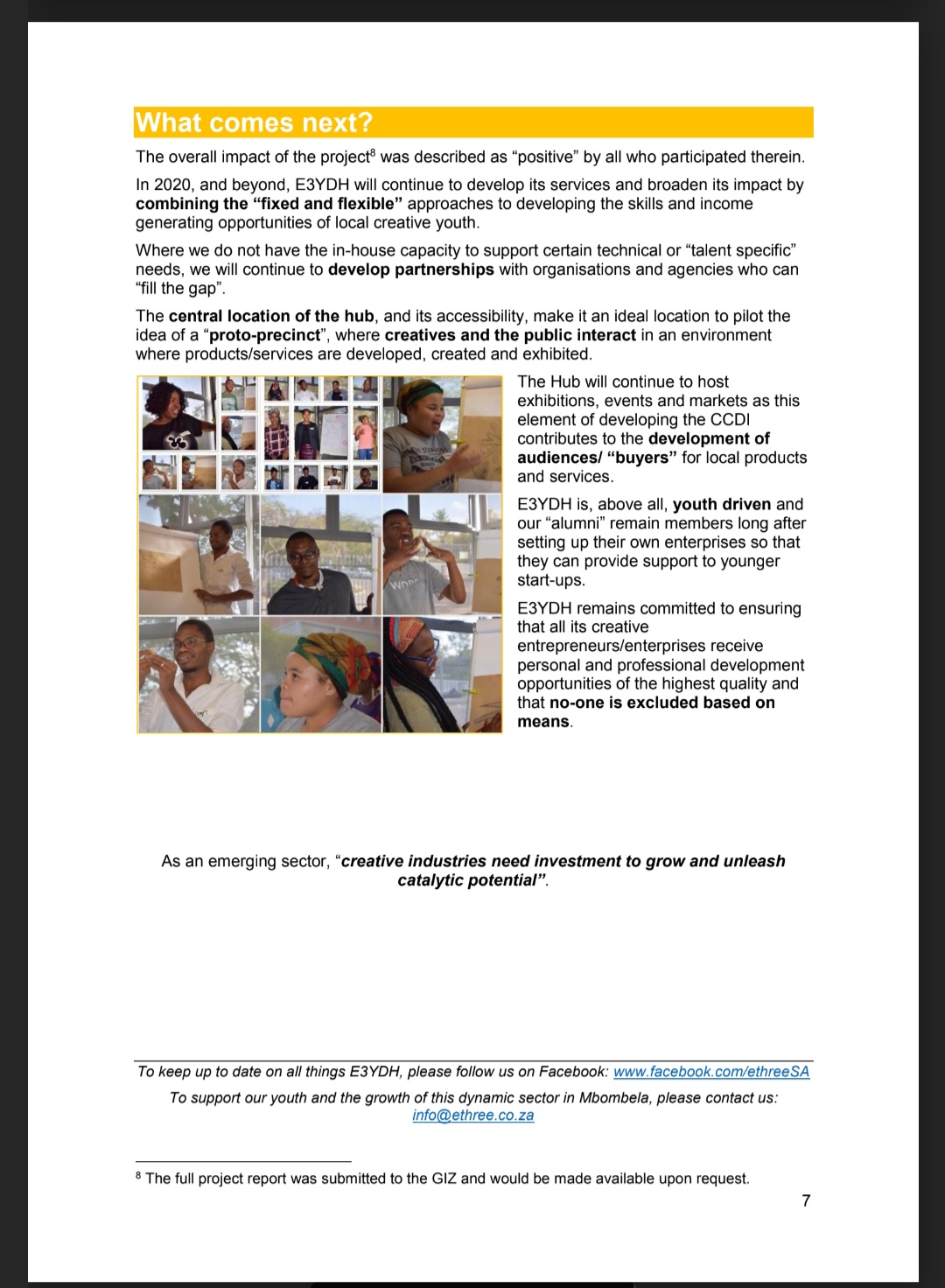
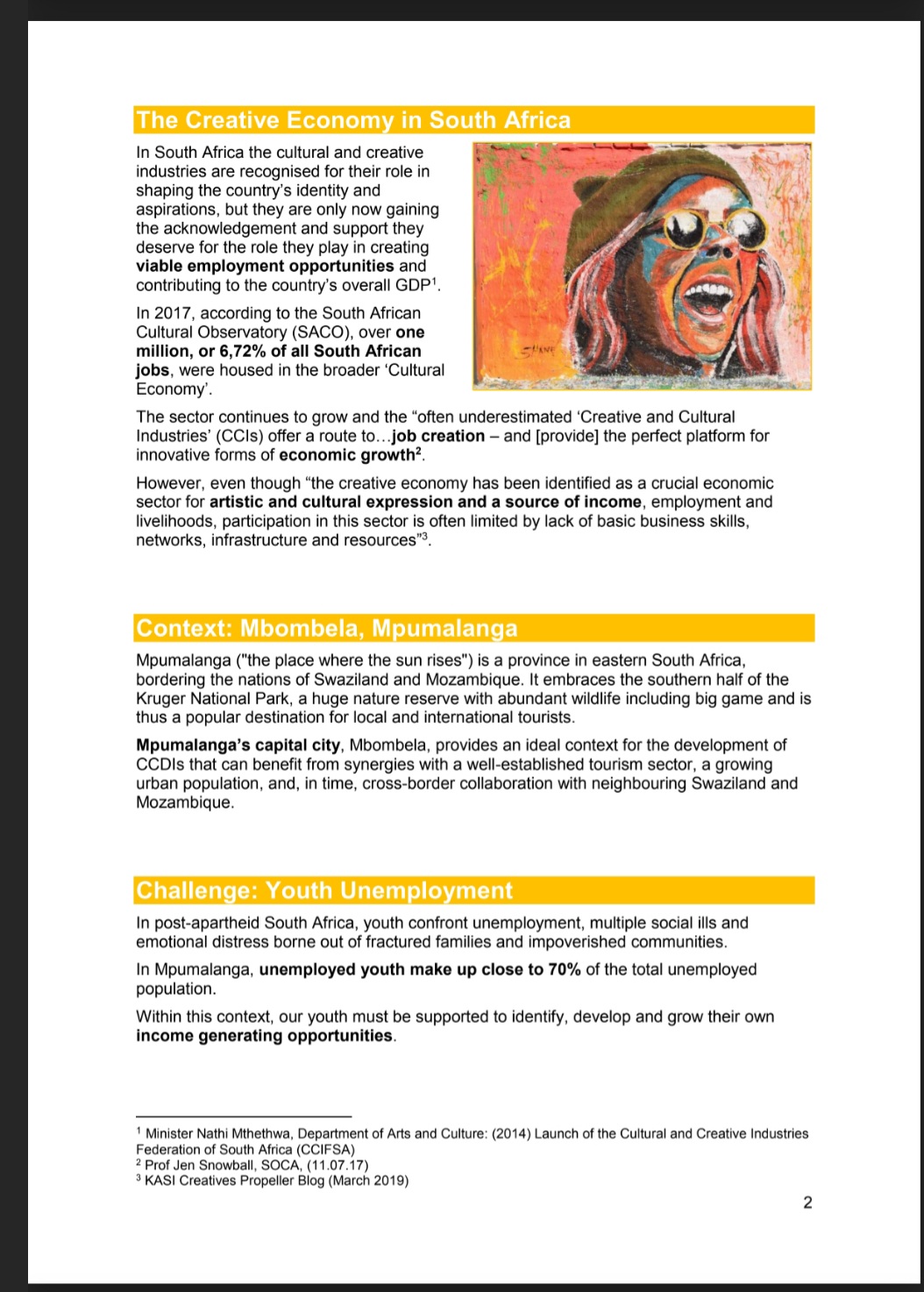
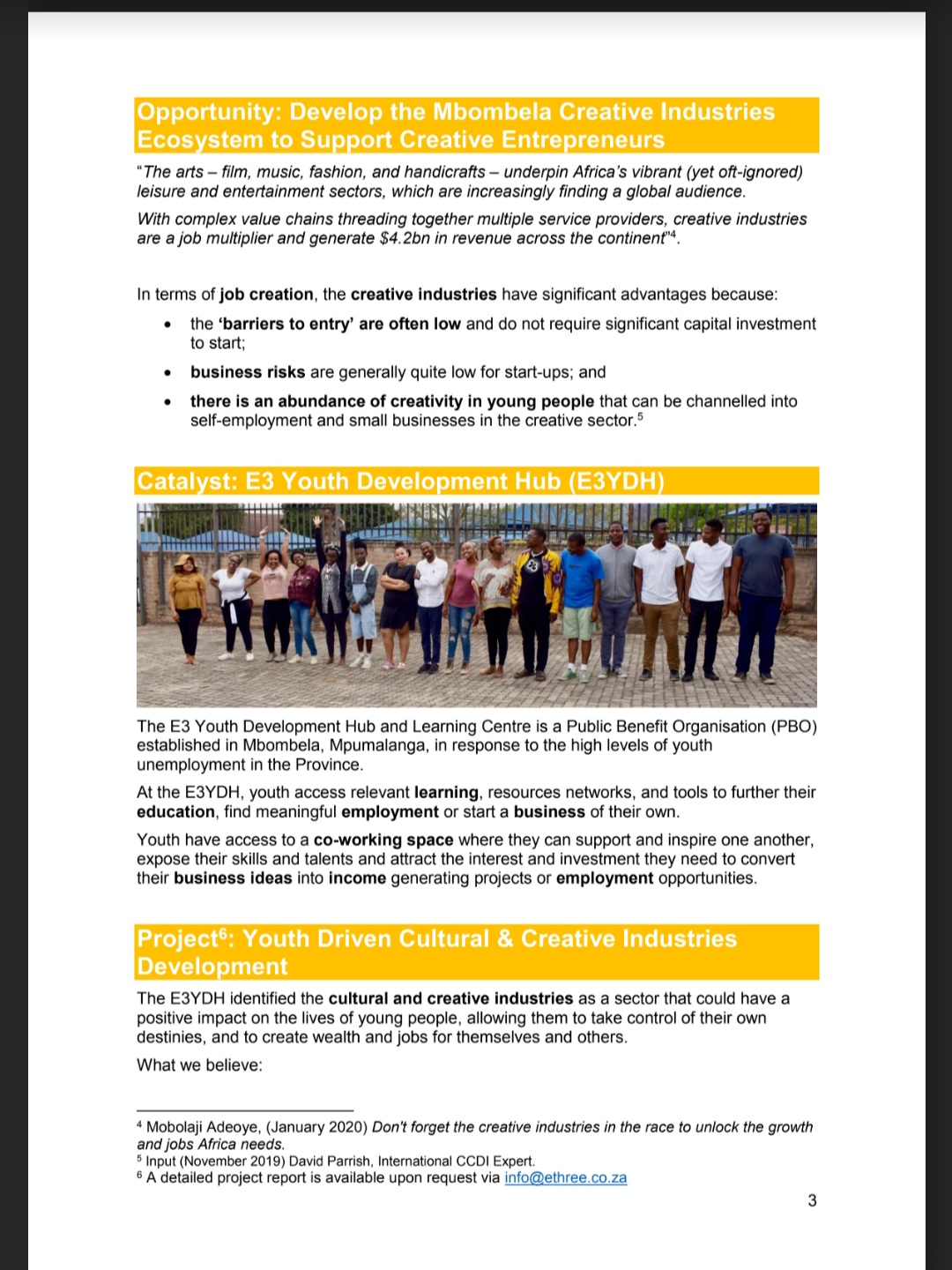
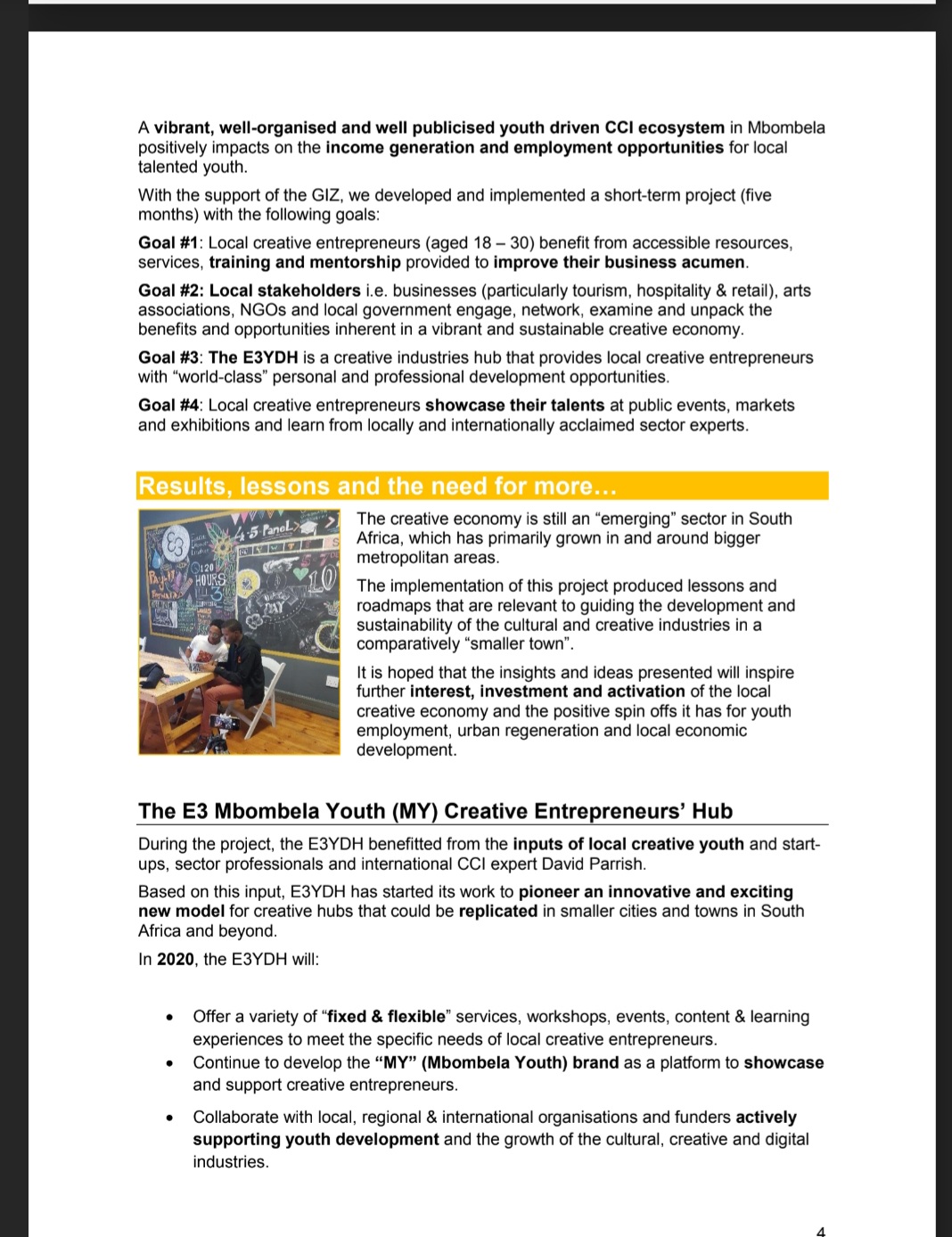
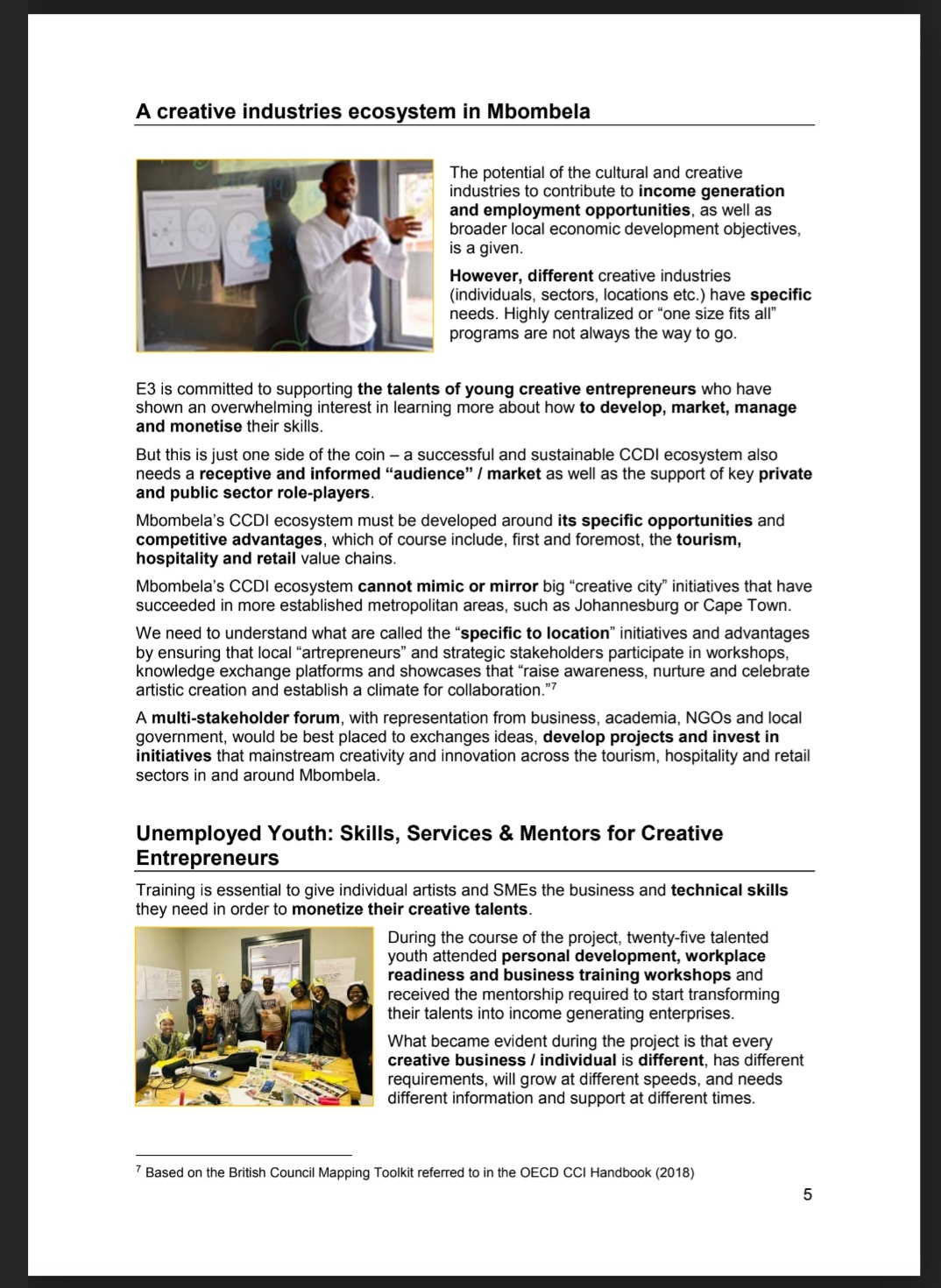
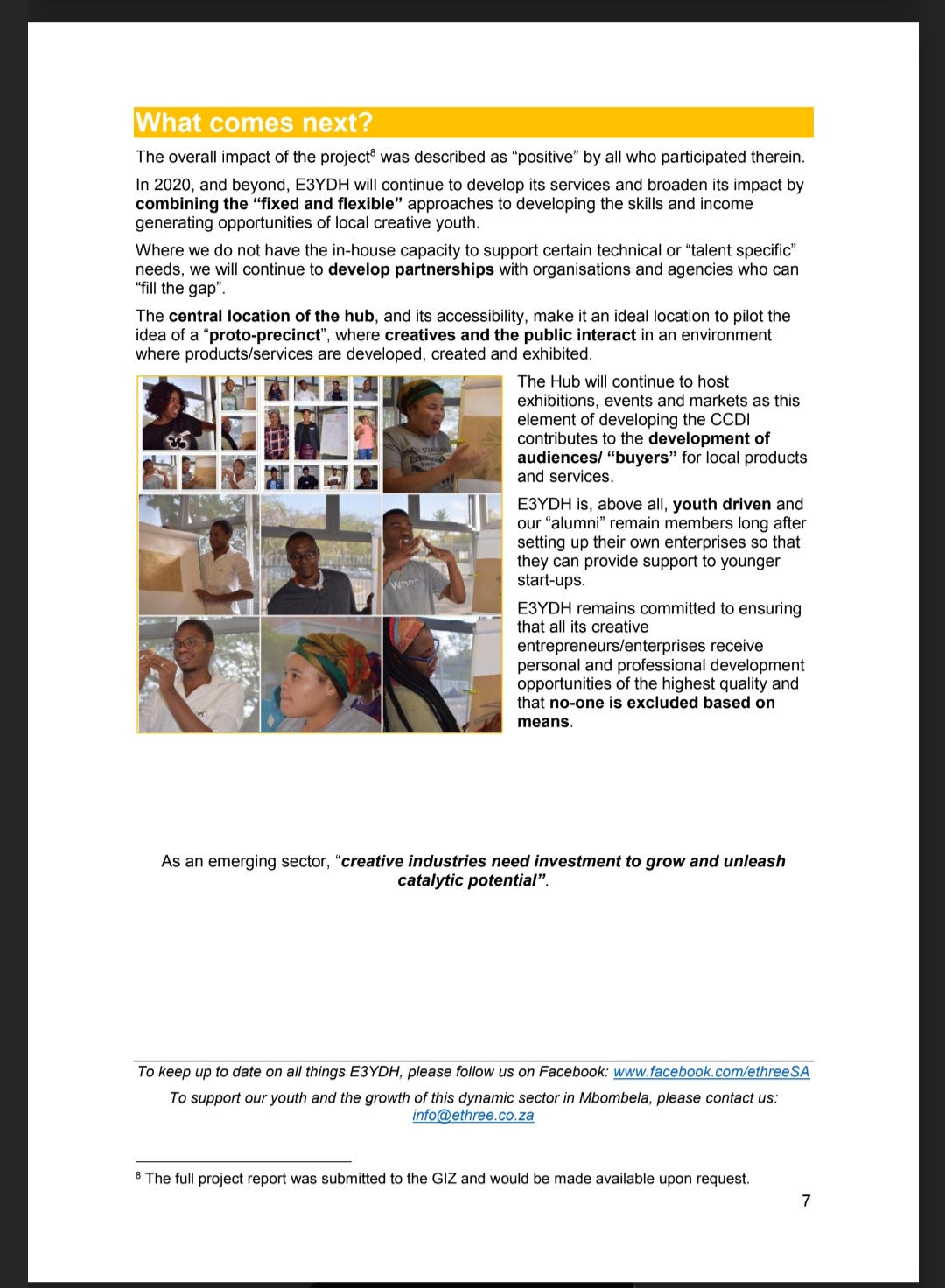
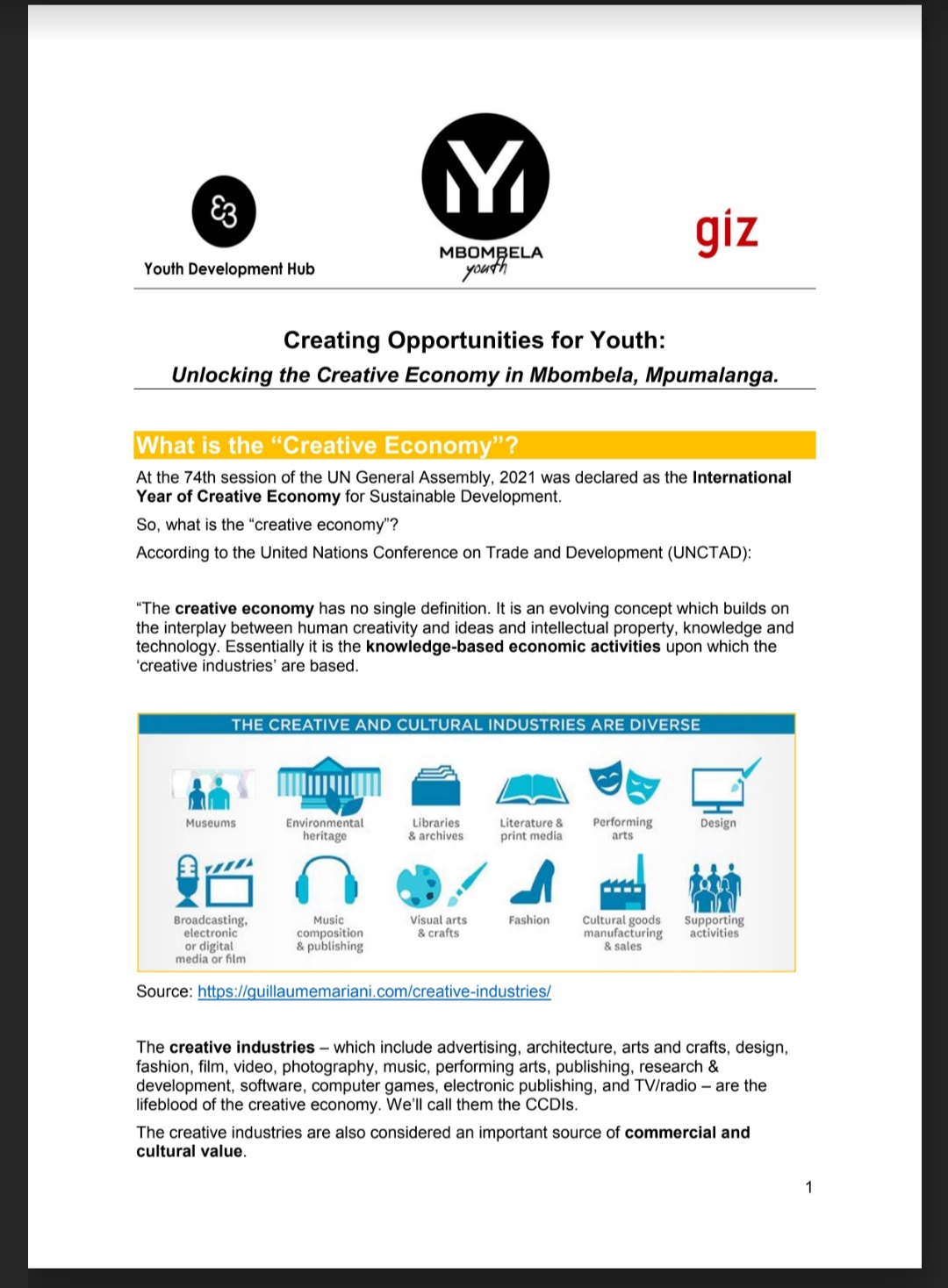
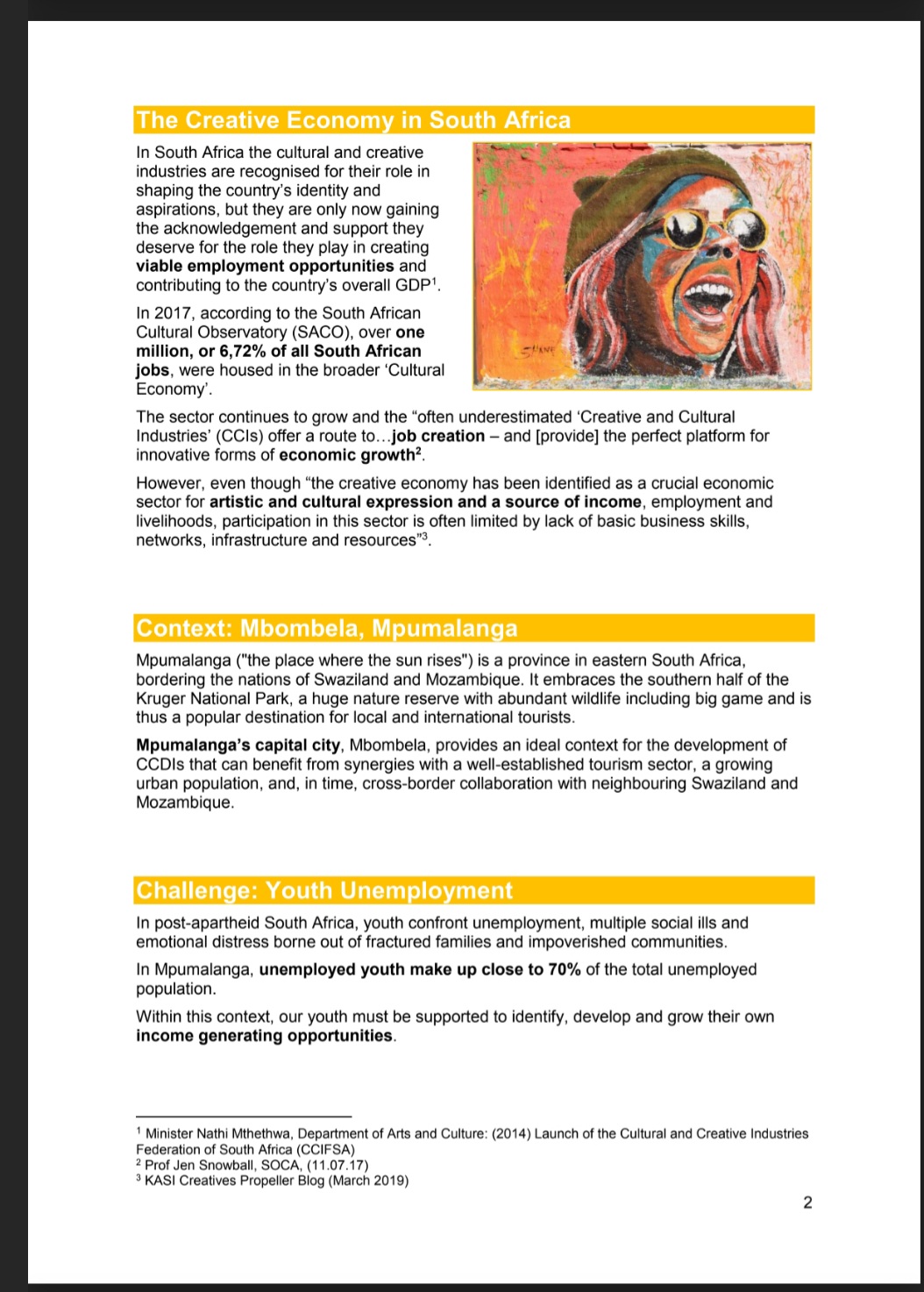
MBOMBELA giz Youth Development Hub youth Creating Opportunities for Youth: Unlocking the Creative Economy in Mbombela, Mpumalanga. What is the "Creative Economy"? At the 74th session of the UN General Assembly, 2021 was declared as the International Year of Creative Economy for Sustainable Development. So, what is the "creative economy"? According to the United Nations Conference on Trade and Development (UNCTAD): "The creative economy has no single definition. It is an evolving concept which builds on the interplay between human creativity and ideas and intellectual property, knowledge and technology. Essentially it is the knowledge-based economic activities upon which the creative industries' are based. THE CREATIVE AND CULTURAL INDUSTRIES ARE DIVERSE Museums Environmental Libraries Literature & Performing Design heritage & archives print media arts Broadcasting. Music Visual arts Fashion Cultural goods Supporting electronic composition & crafts manufacturing activities or digital & publishing & sales media or film Source: https://guillaumemariani.com/creative-industries/ The creative industries - which include advertising, architecture, arts and crafts, design, fashion, film, video, photography, music, performing arts, publishing, research & development, software, computer games, electronic publishing, and TV/radio - are the lifeblood of the creative economy. We'll call them the CCDIs. The creative industries are also considered an important source of commercial and cultural value.In South Africa the cultural and creative industries are recognised for their role in shaping the country's identity and aspirations. but they are only now gaining the acknowledgement and support they deserve for the role they play in creating viable employment opportunities and contributing to the country's overall GDP'. In 2017, according to the South African Cultural Observatory (SACO). over one million, or 6,72% of all South African jobs. were housed in the broader 'Cultural Economy'. The sector continues to grow and the "often underestimated 'Creative and Cultural Industries' (CCls) offer a route to. . .job creation and [provide] the perfect platform for innovative forms of economic growth\". However. even though \"the creative economy has been identified as a crucial economic sector for artistic and cultural expression and a source of income, employment and livelihoods, participation in this sector is often limited by lack of basic business skills. networks, infrastructure and resources\". Mpumalanga ("the place where the sun rises") is a province in eastern South Africa. bordering the nations of Swaziland and Mozambique. It embraces the southern half of the Kruger National Park. a huge nature reserve with abundant wildlife including big game and is thus a popular destination for local and international tourists. Mpumalanga's capital city. Mbombela. provides an ideal context for the development of CCDIs that can benet from synergies with a well-established tourism sector. a growing urban population. and. in time, crossborder collaboration with neighbouring Swaziland and Mozambique. In post-apartheid South Africa. youth confront unemployment. multiple social ills and emotional distress borne out of fractured families and impoverished communities. In I'vlpumalanga, unemployed youth make up close to 70% of the total unemployed population. Within this context. our youth must be supported to identify. develop and grow their own income generating opportunities. ' Minister Nathi Mthethwa. Department of Arts and Culture: (2014) Launch oi the Cultural and Creative Industries Federation of South Africa lCClFSA} 2 Prof Jen Snowball. SOCA. (11.07.17) 3 KASI Creatives Propeller Blog (March 2019) Opportunity: Develop the Mbombela Creative Industries Ecosystem to Support Creative Entrepreneurs "The arts - film, music, fashion, and handicrafts - underpin Africa's vibrant (yet oft-ignored) leisure and entertainment sectors, which are increasingly finding a global audience. With complex value chains threading together multiple service providers, creative industries are a job multiplier and generate $4.2bn in revenue across the continent". In terms of job creation, the creative industries have significant advantages because: the 'barriers to entry' are often low and do not require significant capital investment to start; business risks are generally quite low for start-ups; and there is an abundance of creativity in young people that can be channelled into self-employment and small businesses in the creative sector.5 Catalyst: E3 Youth Development Hub (E3YDH) The E3 Youth Development Hub and Learning Centre is a Public Benefit Organisation (PBO) established in Mbombela, Mpumalanga, in response to the high levels of youth unemployment in the Province. At the E3YDH, youth access relevant learning, resources networks, and tools to further their education, find meaningful employment or start a business of their own. Youth have access to a co-working space where they can support and inspire one another, expose their skills and talents and attract the interest and investment they need to convert their business ideas into income generating projects or employment opportunities. Project : Youth Driven Cultural & Creative Industries Development The E3YDH identified the cultural and creative industries as a sector that could have a positive impact on the lives of young people, allowing them to take control of their own destinies, and to create wealth and jobs for themselves and others. What we believe: * Mobolaji Adeoye, (January 2020) Don't forget the creative industries in the race to unlock the growth and jobs Africa needs 5 Input (November 2019) David Parrish, International CCDI Expert 6 A detailed project report is available upon request via info@ethree.co.za 3A vibrant, well-organised and well publicised youth driven CCI ecosystem in Mbombela positively impacts on the Income generation and employment opportunities for local talented youth. With the support of the GIZ, we developed and implemented a short-term project {five months) with the following goals: Goal #1: Local creative entrepreneurs (aged 18 30) benefit from accessible resources, services, training and mentorship provided to improve their business acumen. Goal #2: Local stakeholders i.e. businesses (particularly tourism. hospitality & retail). arts associations, NGOs and local government engage, network, examine and unpack the benefits and opportunities inherent in a vibrant and sustainable creative economy. Goal #3: The E3YDH is a creative industries hub that provides local creative entrepreneurs with "world-class" personal and professional development opportunities. Goal #4: Local creative entrepreneurs showcase their talents at public events, markets and exhibitions and learn from locally and internationally acclaimed sector experts. Africa, which has primarily grown in and around bigger metropolitan areas. The implementation of this project produced lessons and roadmaps that are relevant to guiding the development and sustainability of the cultural and creative industries in a comparatively \"smaller town\". It is hoped that the insights and ideas presented will inspire further interest, investment and activation of the local creative economy and the positive spin offs it has for youth employment. urban regeneration and local economic development. The E3 Mbombela Youth (MY) Creative Entrepreneurs' Hub During the project, the EBYDH benefitted from the inputs of local creative youth and start ups, sector professionals and international CCI expert David Parrish. Based on this input. E3YDH has started its work to pioneer an innovative and exciting new model for creative hubs that could be replicated in smaller cities and towns in South Africa and beyond. In 2020, the E3YDH will: I Offer a variety of \"fixed 8. flexible" services, workshops, events, content & learning experiences to meet the specific needs of local creative entrepreneurs. . Continue to develop the \"MY" (Mbombela Youth) brand as a platform to showcase and support creative entrepreneurs. - Collaborate with local, regional at international organisations and funders actively supporting youth development and the growth of the cultural, creative and digital industries. A creative industries ecosystem in Mbombela The potential of the cultural and creative industries to contribute to income generation and employment opportunities. as well as broader local economic development objectives, is a given. However, different creative industries (individuals. sectors, locations etc.) have specific needs. Highly centralized or "one size fits all\" programs are not always the way to go. E3 is committed to supporting the talents of young creative entrepreneurs who have shown an overwhelming interest in learning more about how to develop, market, manage and monetlse their skills. But this is just one side of the coin a successful and sustainable CCDI ecosystem also needs a receptive and informed \"audience\" t market as well as the support of key private and public sector role-players. Mbombela's CCDI ecosystem must be developed around its specic opportunities and competitive advantages, which of course include, rst and foremost, the tourism, hospitality and retail value chains. Mbombela's CCDI ecosystem cannot mimic or mirror big "creative city\" initiatives that have succeeded in more established metropolitan areas, such as Johannesburg or Cape Town. We need to understand what are called the "specific to location" initiatives and advantages by ensuring that local \"artrepreneurs" and strategic stakeholders participate in workshops, knowledge exchange platforms and showcases that \"raise awareness, nurture and celebrate artistic creation and establish a climate for collaboration.\" A mutti-stakeholder forum, with representation from business, academia, NGOs and local government, would be best placed to exchanges ideas. develop projects and invest in initiatives that mainstream creativity and innovation across the tourism. hospitality and retail sectors in and around Mbombeia. Unemployed Youth: Skills, Services 8: Mentors for Creative Entrepreneurs Training is essential to give individual artists and SMEs the business and technical skills they need in order to monetize their creative talents. Y' - During the course of the project, twenty-five talented youth attended personal development, workplace readiness and business training workshops and received the mentorship required to start transforming their talents into income generating enterprises. What became evident during the project is that every creative business 1 individual is different, has different requirements, will grow at different speeds. and needs different information and support at different times. ? Based on the British Council Mapping Toolkit referred to in the OECD CCI Handbook (2018} A "fixed programme" approach (attending a series of workshops and sessions across a number of weeksimonths to "complete" a specific \"learning programme\") may work not for everyone. Ideally, creative entrepreneurs should be empowered to devise and follow their own learning and business development route, with customised content and appropriate technical and skills input along the way. The ESYDH can facilitate the personal and professional development of creative entrepreneurs by enabling them to select from an abundance of available resources. as and when required. Access to laptops and free Wl-Fl at the Hub would also facilitate online knowledge exchange and learning opportunities across various digital platforms. Each creative entrepreneun'enterprises' self-directed learning programme would include ongoing support and advice from online andtor on-site mentors and coaches. As part of the project, eleven local professionals active in youth development and the arts attended a two-day mentorship training workshop to hone their CCDI knowledge and mentorship skills. What emerged clearly was that mentorship in the CCDI requires a specific skills set and a particular mind-set. In effect, to add maximum value, mentors should be industry experts who are physically and virtually available to support an entrepreneur on hislher businesstcareer developmentjourney. In much the same way that we challenge the "formulaic" or "Cut and paste" approaches to supporting creative economy development we should also challenge traditional \"one size fits all\" definitions of mentorship and coaching. Mentorship for creative entrepreneurs should be based on negotiated \"interpersonal learning relationships" based on the needs and abilities of both parties. Whilst mentorship provides support for a creative entrepreneur's businessicareer development journey, exposure to trends and innovation in specic creative sectors adds variety and depth to the learning experience. During the project. the ESYDH hosted three events with local and international sector experts and change makers and exposed over 95 local youth to trends and developments in design, film, photography, the visual and performing arts and the creative economy in general. Over and above gaining greater insight into the opportunities along each creative discipline's value chain, events provided creative entrepreneurs with an opportunity to interact with potential clientslpartnersiinvestors and international experts in the tourism, hospitality and retail sectors. Networking, exhibiting, showcasing and businesslidea pitching opportunities are integral to the personal and professional development paths of creative entrepreneurs. What comes next? The overall impact of the project was described as "positive" by all who participated therein. In 2020, and beyond, E3YDH will continue to develop its services and broaden its impact by combining the "fixed and flexible" approaches to developing the skills and income generating opportunities of local creative youth. Where we do not have the in-house capacity to support certain technical or "talent specific" needs, we will continue to develop partnerships with organisations and agencies who can "fill the gap". The central location of the hub, and its accessibility, make it an ideal location to pilot the idea of a "proto-precinct", where creatives and the public interact in an environment where products/services are developed, created and exhibited The Hub will continue to host exhibitions, events and markets as this element of developing the CCDI contributes to the development of audiences/ "buyers" for local products and services. E3YDH is, above all, youth driven and our "alumni" remain members long after setting up their own enterprises so that they can provide support to younger start-ups. E3YDH remains committed to ensuring that all its creative entrepreneurs/enterprises receive personal and professional development opportunities of the highest quality and that no-one is excluded based on means. As an emerging sector, "creative industries need investment to grow and unleash catalytic potential". To keep up to date on all things E3YDH, please follow us on Facebook: www.facebook.com/ethreeSA To support our youth and the growth of this dynamic sector in Mbombela, please contact us: info@ethree.co.za 8 The full project report was submitted to the GIZ and would be made available upon request. 7
Step by Step Solution
There are 3 Steps involved in it

Get step-by-step solutions from verified subject matter experts
 Study Help