







Question: Direction: Length: Speed: . What about when the ball is falling? Direction: Length: Speed: B. As the ball is hit fonrvard, what do you notice
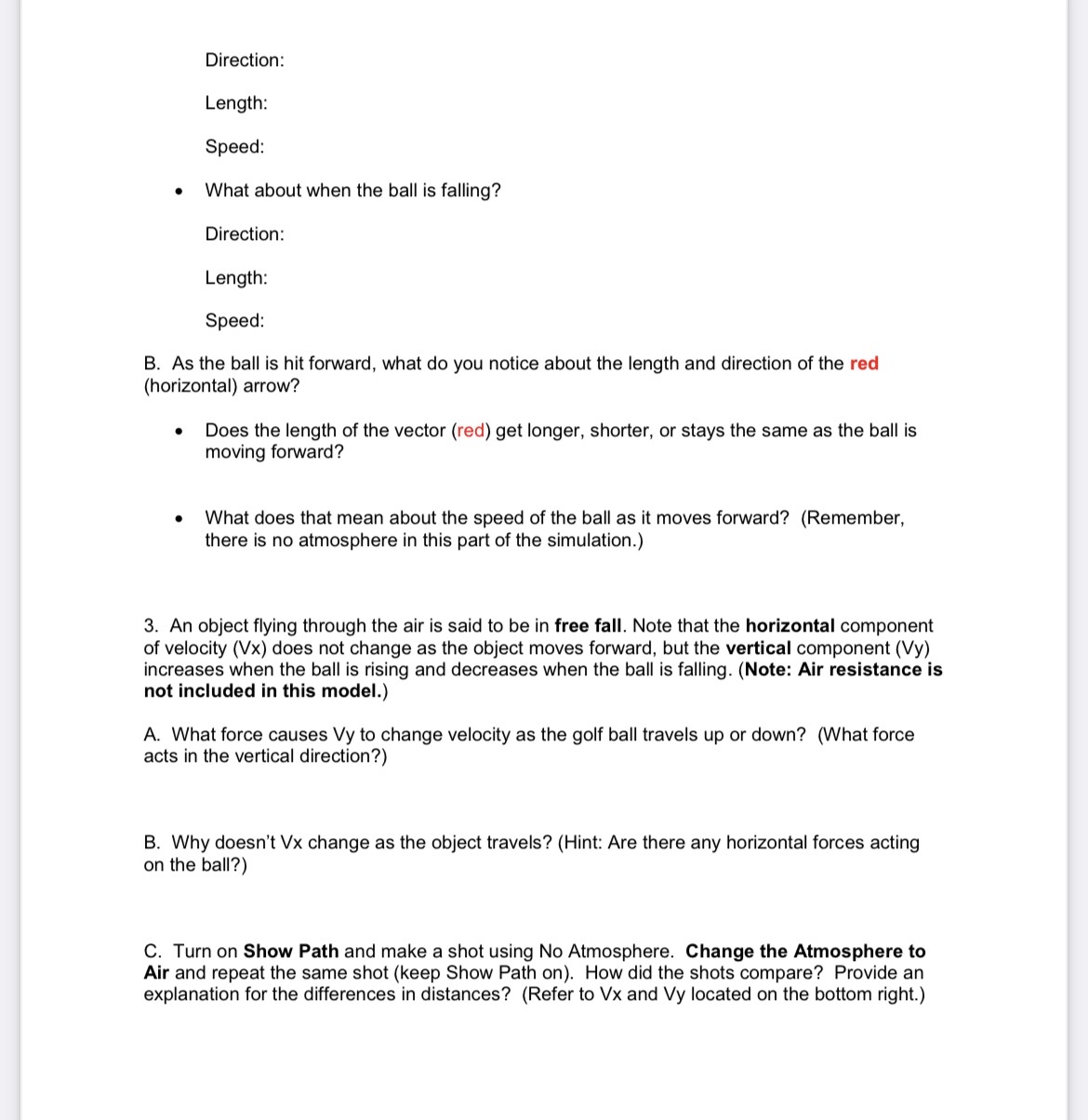
Direction: Length: Speed: . What about when the ball is falling? Direction: Length: Speed: B. As the ball is hit fonrvard, what do you notice about the length and direction of the red (horizontal) arrow? . Does the length of the vector (red) get longer, shorter, or stays the same as the ball is m0ving fonrvard? . What does that mean about the speed of the ball as it moves fonrvard? (Remember, there is no atmosphere in this part of the simulation.) 3. An object flying through the air is said to be in free fall. Note that the horizontal component of velocity (Vx) does not change as the object moves forward. but the vertical component (Vy) increases when the ball is rising and decreases when the ball is falling. (Note: Air resistance is not included in this model.) A. What force causes Vy to change velocity as the golf ball travels up or down? (What force acts in the vertical direction?) B. Why doesn't Vx change as the object travels? (Hint: Are there any horizontal forces acting on the ball?) 0. Turn on Show Path and make a shot using No Atmosphere. Change the Atmosphere to Air and repeat the same shot (keep Show Path on). How did the shots compare? Provide an explanation for the differences in distances? (Refer to Vx and Vy located on the bottom right.)
Step by Step Solution
There are 3 Steps involved in it

Get step-by-step solutions from verified subject matter experts
 Study Help