







Question: Direction: This case study is prepared to improve students skills of applying what they have learned in this course to real marketing situations. By using
Direction: This case study is prepared to improve students skills of applying what they have learned in this course to real marketing situations. By using this worksheet, students can figure out appropriate solutions for resolving one suggested marketing problem. After reading the main goal of this case study, students need to prepare one WORD or PDF answer file and submit it to the dropbox by due date. If they do not submit answer file, they will not achieve any participation scores. points
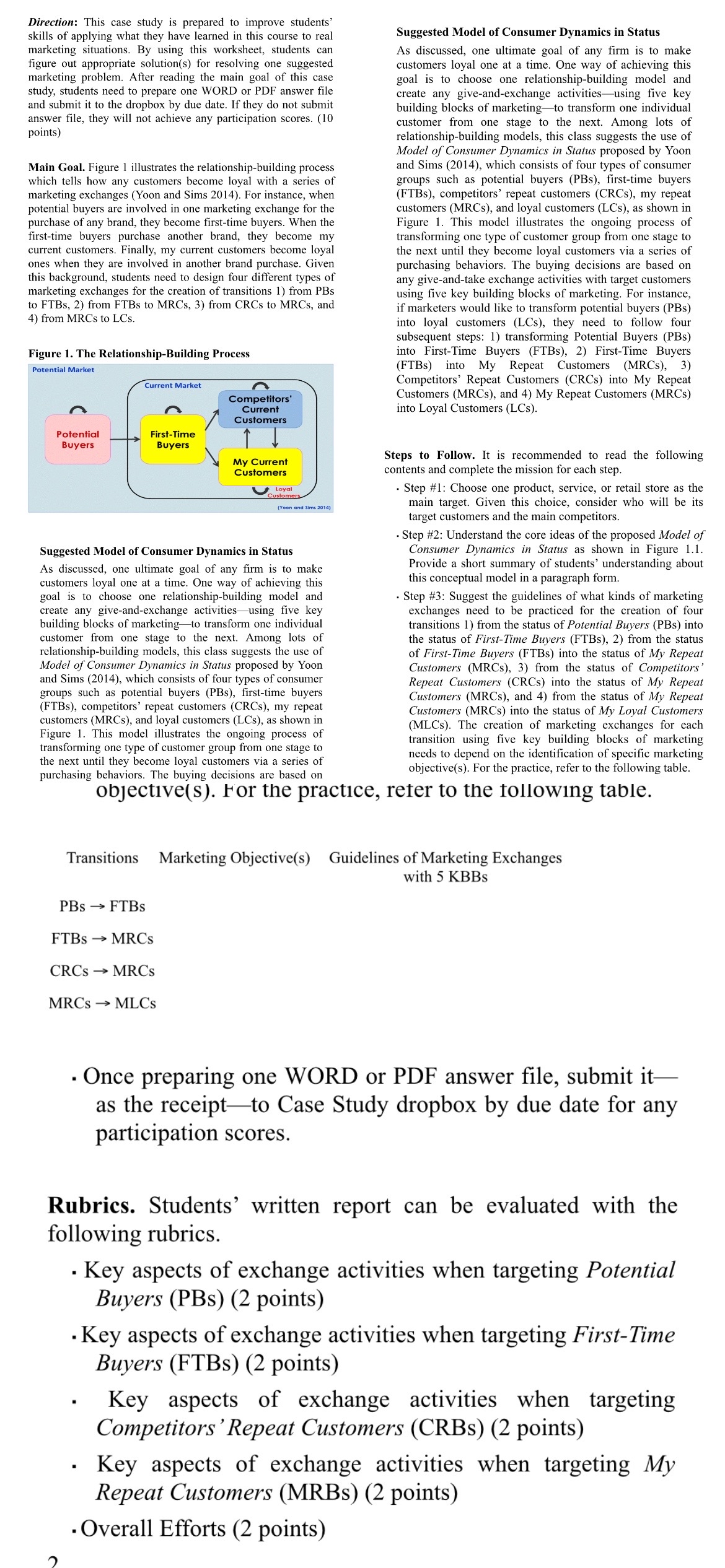
Main Goal. Figure illustrates the relationshipbuilding process which tells how any customers become loyal with a series of marketing exchanges Yoon and Sims For instance, when potential buyers are involved in one marketing exchange for the purchase of any brand, they become firsttime buyers. When the firsttime buyers purchase another brand, they become my current customers. Finally, my current customers become loya ones when they are involved in another brand purchase. Given this background, students need to design four different types of marketing exchanges for the creation of transitions from PBs to FTBs from FTBs to MRCs from CRCs to MRCs and from MRCs to LCs
Figure The RelationshipBuilding Process
Suggested Model of Consumer Dynamics in Status
As discussed, one ultimate goal of any firm is to make customers loyal one at a time. One way of achieving this goal is to choose one relationshipbuilding model and create any giveandexchange activitiesusing five key building blocks of marketingto transform one individual customer from one stage to the next. Among lots of relationshipbuilding models, this class suggests the use of Model of Consumer Dynamics in Status proposed by Yoon and Sims which consists of four types of consumer groups such as potential buyers PBs firsttime buyers FTBs competitors' repeat customers CRCs my repeat customers MRCs and loyal customers LCs as shown in Figure This model illustrates the ongoing process of transforming one type of customer group from one stage to the next until they become loyal customers via a series of purchasing behaviors. The buying decisions are based on objectives Hor the practice, reter to the following table.Once preparing one WORD or PDF answer file, submit itas the receiptto Case Study dropbox by due date for any participation scores.
Rubrics. Students' written report can be evaluated with the following rubrics.
Key aspects of exchange activities when targeting Potential Buyers PBs points
Key aspects of exchange activities when targeting FirstTime Buyers FTBs points
Key aspects of exchange activities when targeting Competitors' Repeat Customers CRBs points
Key aspects of exchange activities when targeting My Repeat Customers MRBs points
Overall Efforts points
Step by Step Solution
There are 3 Steps involved in it
1 Expert Approved Answer
Step: 1 Unlock

Question Has Been Solved by an Expert!
Get step-by-step solutions from verified subject matter experts
Step: 2 Unlock
Step: 3 Unlock
 Study Help